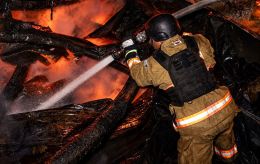
'It's a manhunt.' Frontline report from Kherson under Russian drone terror

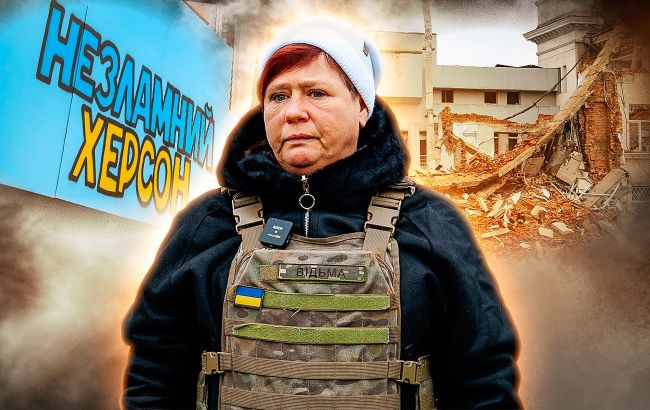 Employee of Kherson Parks Municipal Utility, Olha Chupikova (Photo: RBC-Ukraine)
Kherson is a frontline city where everyday life continues alongside constant danger. But despite relentless shelling and loss, people refuse to give up and hold on to what is theirs—because they already know what it means to live under occupation and to return home. Read more in the RBC-Ukraine report.
Kherson was among the first Ukrainian cities to fall under Russian attack after the launch of the full-scale invasion. By late February 2022, it was surrounded.
After fierce fighting on the outskirts, Kherson was captured, marking the first time since 2014 that a Ukrainian regional capital fell under Russian occupation. Ukraine's Defense Forces liberated the city on November 11 of the same year.
Olha Chupikova works for the municipal enterprise Kherson Parks, where she is responsible for maintaining and greening the city. She clearly remembers the first days of the invasion. At the time, she lived near the Antonivskyi Bridge, the route used by Russian troops as they entered the city.
"We lived long and happily. We had a son. Everything was fine until this invasion came to our country. We were among the first to face the Russian army coming in. They were entering for three days. They tried to break through, and they were pushed back bit by bit. So when people say Kherson was handed over without a fight—that’s not true. We tried to resist somehow, but they were much stronger."
Before the war, Olha lived in Antonivka. There, she and her husband built a home and started a plant nursery. Sadly, all of that now exists only in memories.
"I didn’t know if I would ever be able to return home. I asked a drone pilot to take a look, to fly over. And it turned out that my house no longer exists. There's just a crater where it used to be, a black crater."
The family's greatest loss came this year. Olha's son, Dmytro, was killed in the war. On March 2, she received the devastating phone call. Dmytro was a conscript, and at 21, he could have avoided going to the army, but he could not stay on the sidelines. Despite his young age, he fought in some of the hottest areas of the front.
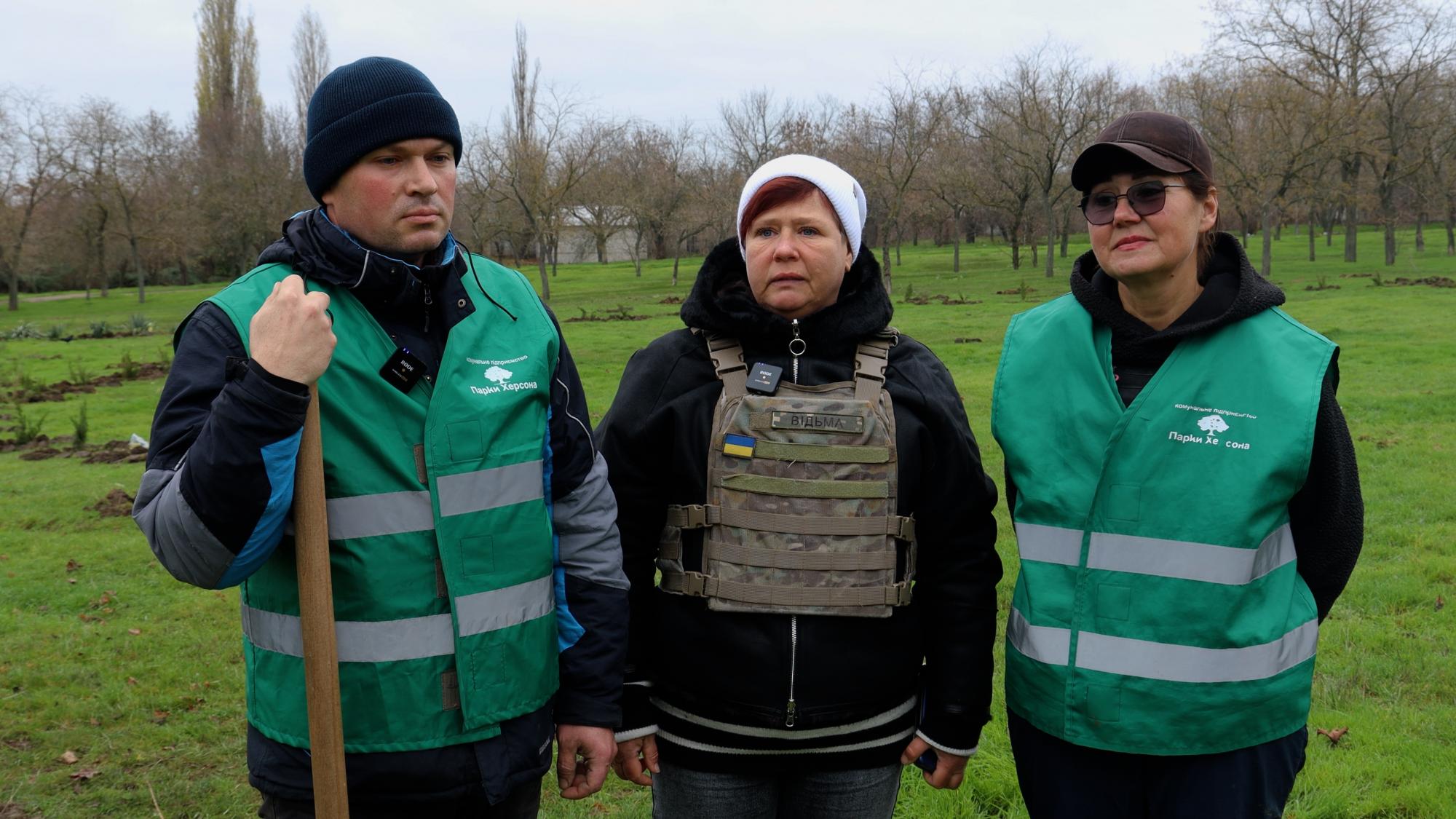
Olha with her colleagues from Kherson Parks, who not only maintain public spaces but also respond to strike sites (Photo: RBC-Ukraine)
"Russia has taken almost everything from me, leaving me only my life. And now I'm trying to pull myself together. My husband and I are left alone. We went to work at Kherson Parks."
In memory of her son, prisoners of war, and all those missing, the woman decided to plant an alley of trees in the city as a symbol of remembrance for fallen soldiers.
"We must bring everyone home. We also want to install a memorial marker here with a QR code, so people can scan it and see the names."
The scope of work carried out by the municipal enterprise Kherson Parks goes far beyond landscaping. Employees not only keep the city clean and orderly, but also help residents repair their homes after constant shelling. Since 2023, Kostiantyn and Ihor have boarded up thousands of shattered windows across the city.
"After shelling, once we deal with the aftermath, we board up and secure buildings and windows so people can stay warm. At first, when the bridge to the island was still there, we worked on the island too and sealed up a lot of houses there as well. Now we’re advised not to go there anymore—our guys have come under fire there many times. Drone activity is extremely high."
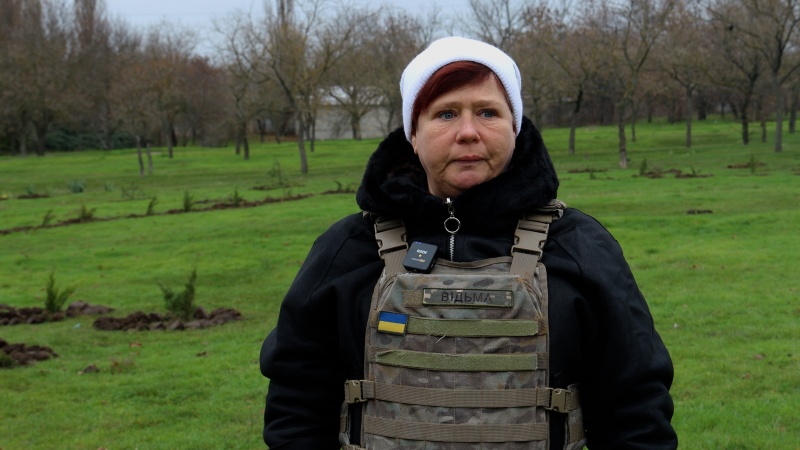
In memory of her son, prisoners of war, and all those missing, Olha decided to plant an alley of trees in the city (Photo: RBC-Ukraine)
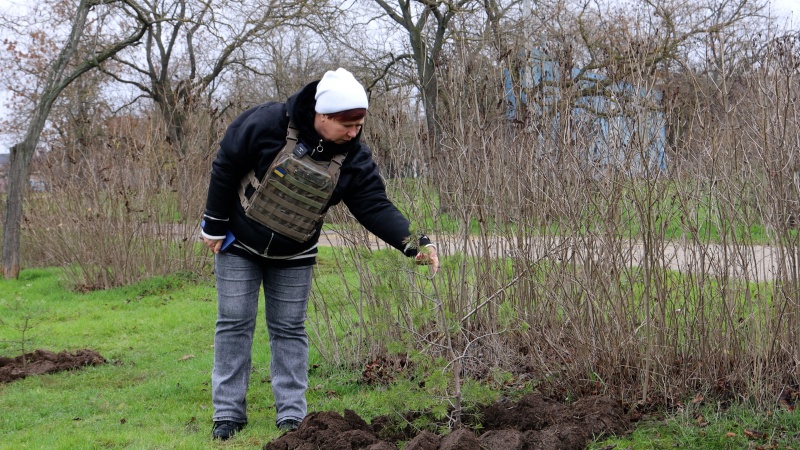
In memory of her son, prisoners of war, and all those missing, Olha decided to plant an alley of trees in the city (Photo: RBC-Ukraine)
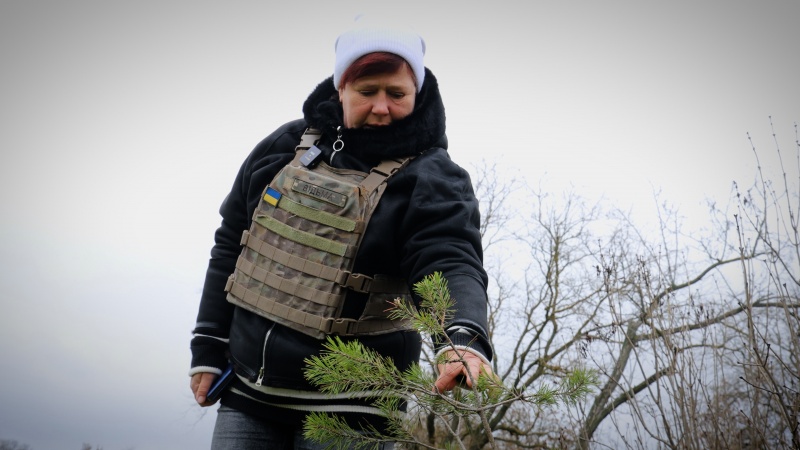
In memory of her son, prisoners of war, and all those missing, Olha decided to plant an alley of trees in the city (Photo: RBC-Ukraine)
Russians are cynically hunting civilians. For them, it's entertainment. The green safety vests worn by municipal workers are an especially tempting target. As soon as Russians spot them, drones are launched immediately, says Kostiantyn.
"They monitor our vehicles, and the moment they do, they swoop in and start shelling. It happened the day before yesterday as well. A drone spotted our vehicle and followed it. The driver barely managed to reach us, and we all ran into the building entrance. We only had time to slam the door shut. Bang, bang — that was it. Everyone survived."
The men are convinced the enemy drone pilots were not interested in the vehicle itself. As soon as people jumped out, the drone began maneuvering after them. The Russians have even created a Telegram channel where they boast about their so-called "successes."
"This is outright terror against civilians. They hunt not only utility workers, but grandmothers, grandfathers, and children. They don't care who they attack. We have an example of our own. Our garbage truck, which was collecting household waste in one of the city's districts, was clearly marked 'Parks of Kherson.' It was obvious it was a garbage truck. They attacked it anyway. A drone hit the windshield, and the driver was blinded," says Volodymyr Tsytkor, director of the municipal enterprise Parks of Kherson.
Kherson is now being called a "human safari," as Russians have turned the city into a hunting ground for residents. Parts of the city are covered with anti-drone netting. In broad daylight, streets are almost empty. Everyone tries to run errands as quickly as possible and stay home where it's safer.
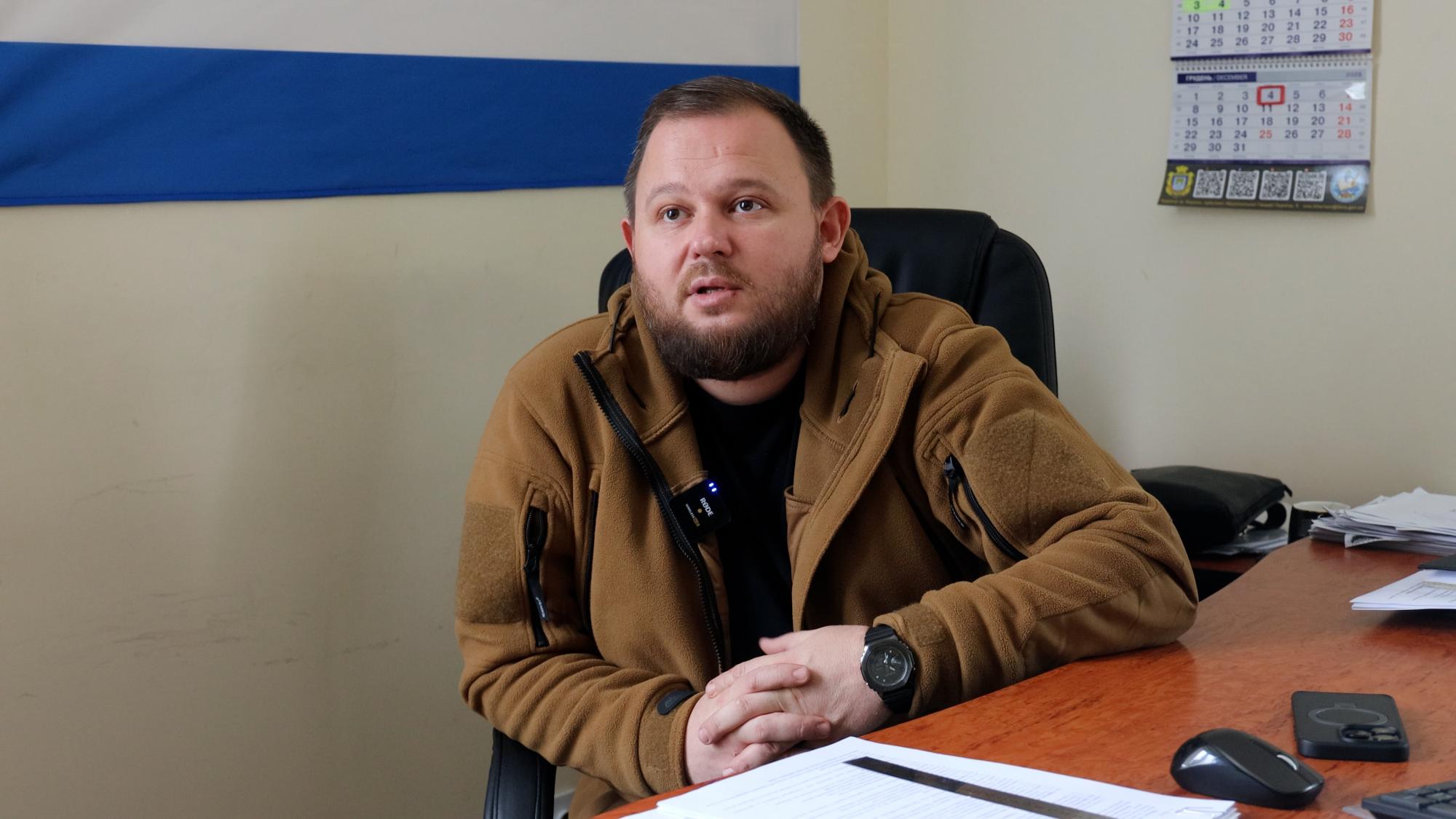
Volodymyr Tsytkor, director of Parks of Kherson (Photo: RBC-Ukraine)
"Since the beginning of the year, 293 people have been killed, including six children, and nearly 2,500 have been wounded — more than 200 of them children. These are grim statistics. Over the three years since the start of the full-scale invasion and de-occupation, more than 6,500 people have been affected by these circumstances," says Oleksandr Tolokonnikov, deputy head of the Kherson Regional Military Administration.
According to the official, if you divide the number of shells fired over the past three years by minutes, it means that, on average, a projectile landed every three minutes. At present, however, Russia is using aviation most actively.
"They see a target, people of any kind. It could be children, a hospital, or an ambulance. They know there are people there, and they launch everything they have. What matters to them is the process of destroying civilians," Tolokonnikov adds.
Russians terrorize the population in various ways, also trying to leave people without electricity, heat, and water during winter. On the eve of our visit to Kherson, Russians cynically shelled a thermal power plant, firing hundreds of shells.
"Right now, the situation with all our municipal services is extremely difficult. What to do with our thermal power plant, we will decide together, but we must understand that this will most likely be a very hard road and a very hard winter," explains Anton Samoilenko, deputy head of the Kherson Regional Military Administration for infrastructure.
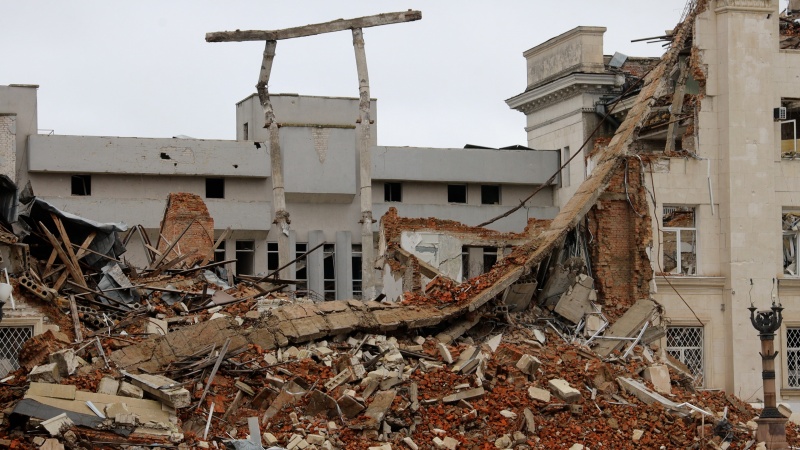
Kherson survived occupation and now lives under constant threat of enemy attacks (Photo: RBC-Ukraine)

Kherson survived occupation and now lives under constant threat of enemy attacks (Photo: RBC-Ukraine)
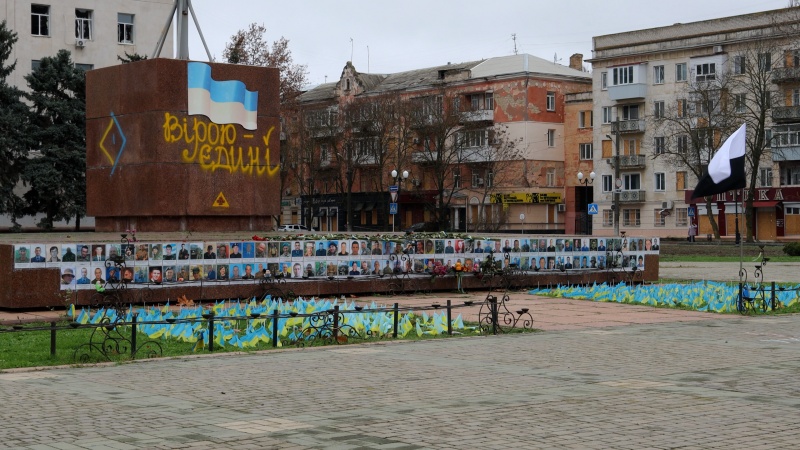
Kherson survived occupation and now lives under constant threat of enemy attacks (Photo: RBC-Ukraine)
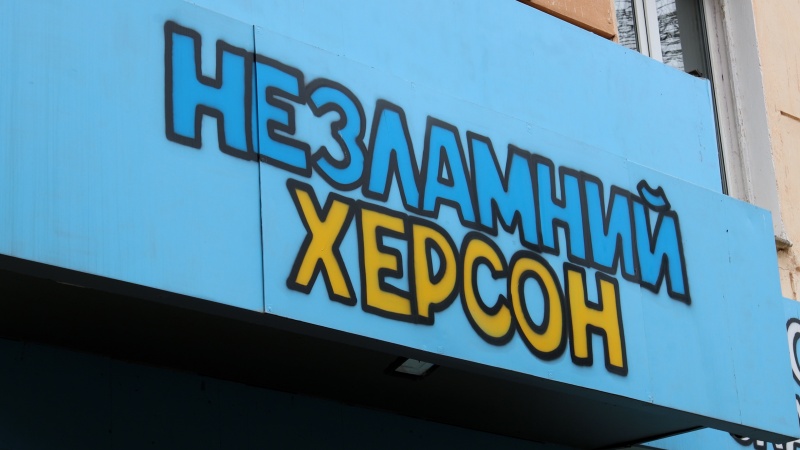
Kherson survived occupation and now lives under constant threat of enemy attacks (Photo: RBC-Ukraine)

Kherson survived occupation and now lives under constant threat of enemy attacks (Photo: RBC-Ukraine)
The occupation lasted more than eight months. During that time, Kherson endured repression, kidnappings of activists and journalists, torture chambers, pressure on civilians, the destruction of Ukrainian symbols, and attempts to impose a so-called "Russian order."
But the city did not surrender. Despite constant danger, Kherson residents went out to pro-Ukrainian rallies, sang the national anthem at gunpoint, and openly demonstrated resistance.
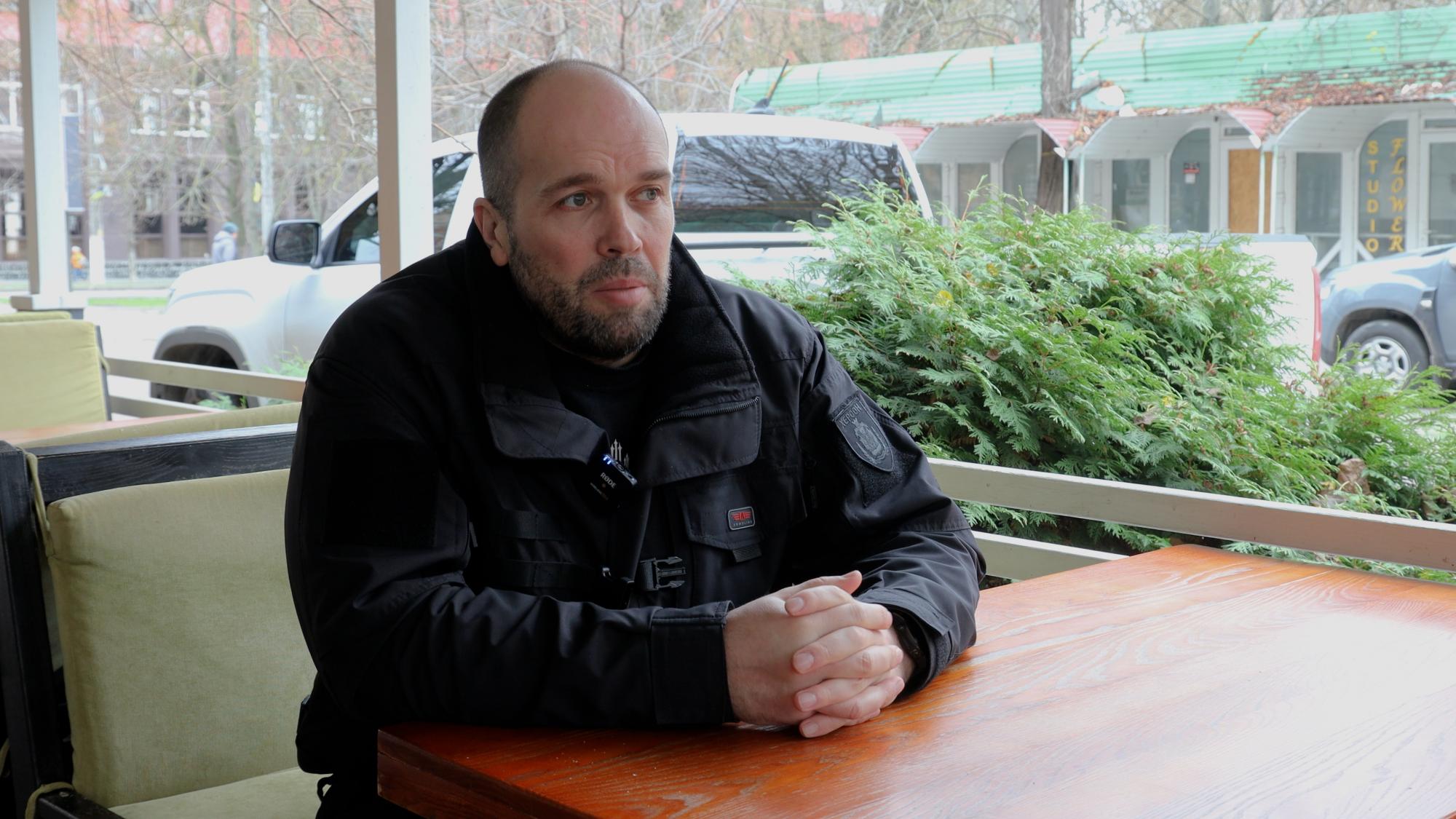
Oleksandr Tolokonnikov, deputy head of the Kherson Regional Military Administration (Photo: RBC-Ukraine)
The director of the Kherson Drama Theater was abducted by FSB officers.
"I spent a month under occupation in Oleshky, and then they came to arrest me like I was bin Laden — 40 men armed to the teeth. They took me to a detention center and interrogated me until evening," recalls theater director Oleksandr Knyha.
The Russians pressured Oleksandr to cooperate, but he refused. No one knows how it might have ended, but the global theater community raised an outcry and appealed all the way to the office of Turkish President Erdoğan to secure his release. Other theater employees were also abducted.
"They took our chief director several times. He was visible at rallies — we couldn't hide. The FSB took him about five times, but had to release him because he became a leader of the protests. They understood there would be resistance," Knyha says.
During the occupation, the theater turned into a shelter for people. Adults and children lived within walls that once hosted performances. But after the tragedy in Mariupol, where Russians destroyed the drama theater, everyone had to leave the building. Today, the walls still stand. Staff come to work every day, stage performances underground, and eagerly await the day the theater can once again welcome audiences.
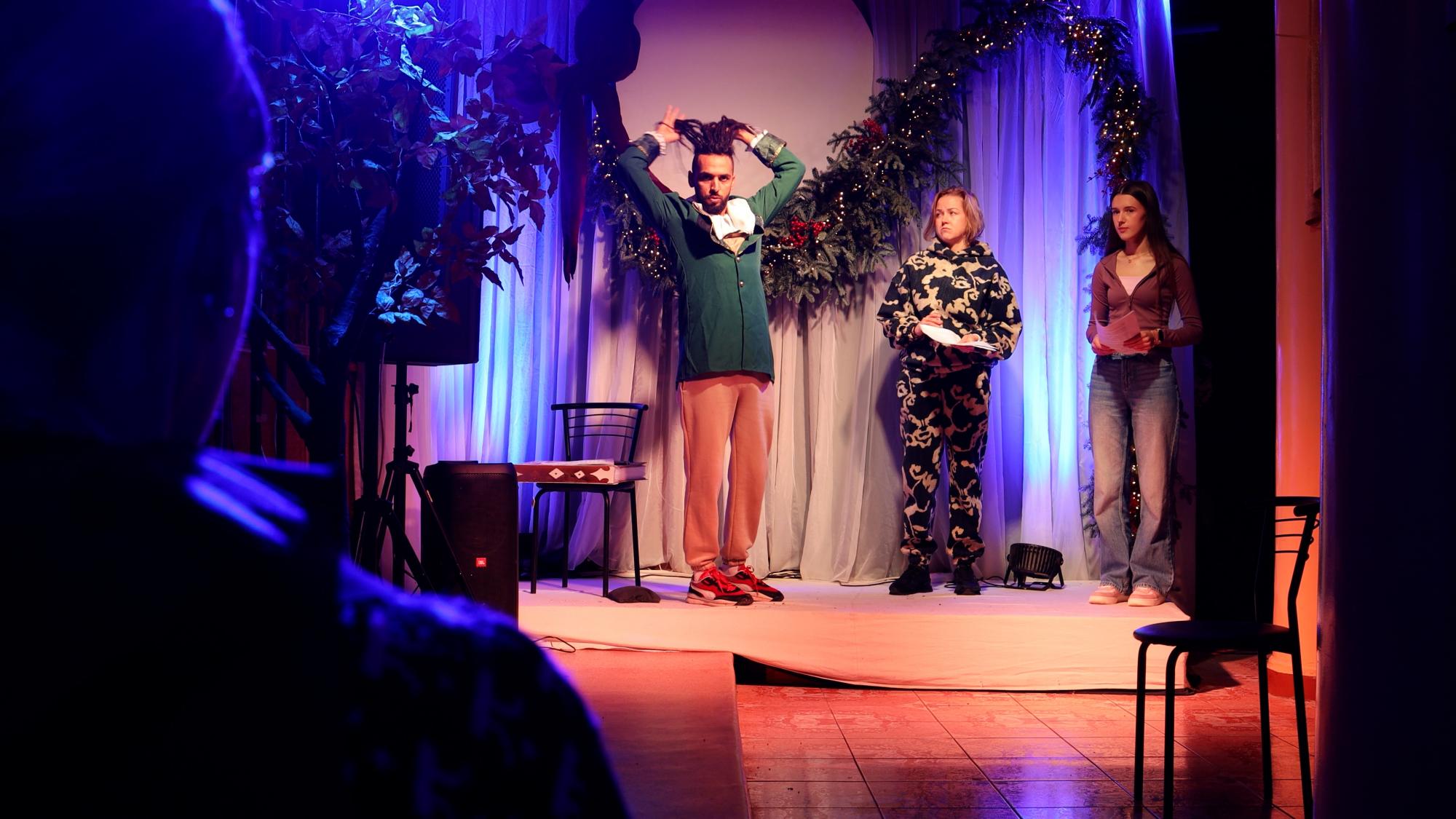
The Kherson Drama Theater continues to operate (Photo: RBC-Ukraine)
"On February 23, 2022, we staged our last performance. It was called Eternity and One Day. Symbolically, we rehearsed it for almost a year but performed it only once. Later, when we resumed theater work in Kyiv, a woman approached me after a show and said, 'When I fled Kherson, I kept my ticket. I was supposed to attend your performance on the 24th.' I told her, 'Keep the ticket — we will perform every single show,'" the director says.
Five minutes after we left the theater, Russians shelled a perinatal center across the street. At that very moment, women were giving birth there. Fortunately, none of the newborns, patients, or medical staff were injured. But outside, a theater employee was wounded.
Overall, the situation in Kherson and in the de-occupied areas of the region remains tense. Shelling continues around the clock. The enemy uses the full range of weapons at its disposal, explains Andrii Kovanyi, head of communications for the National Police in the Kherson region.
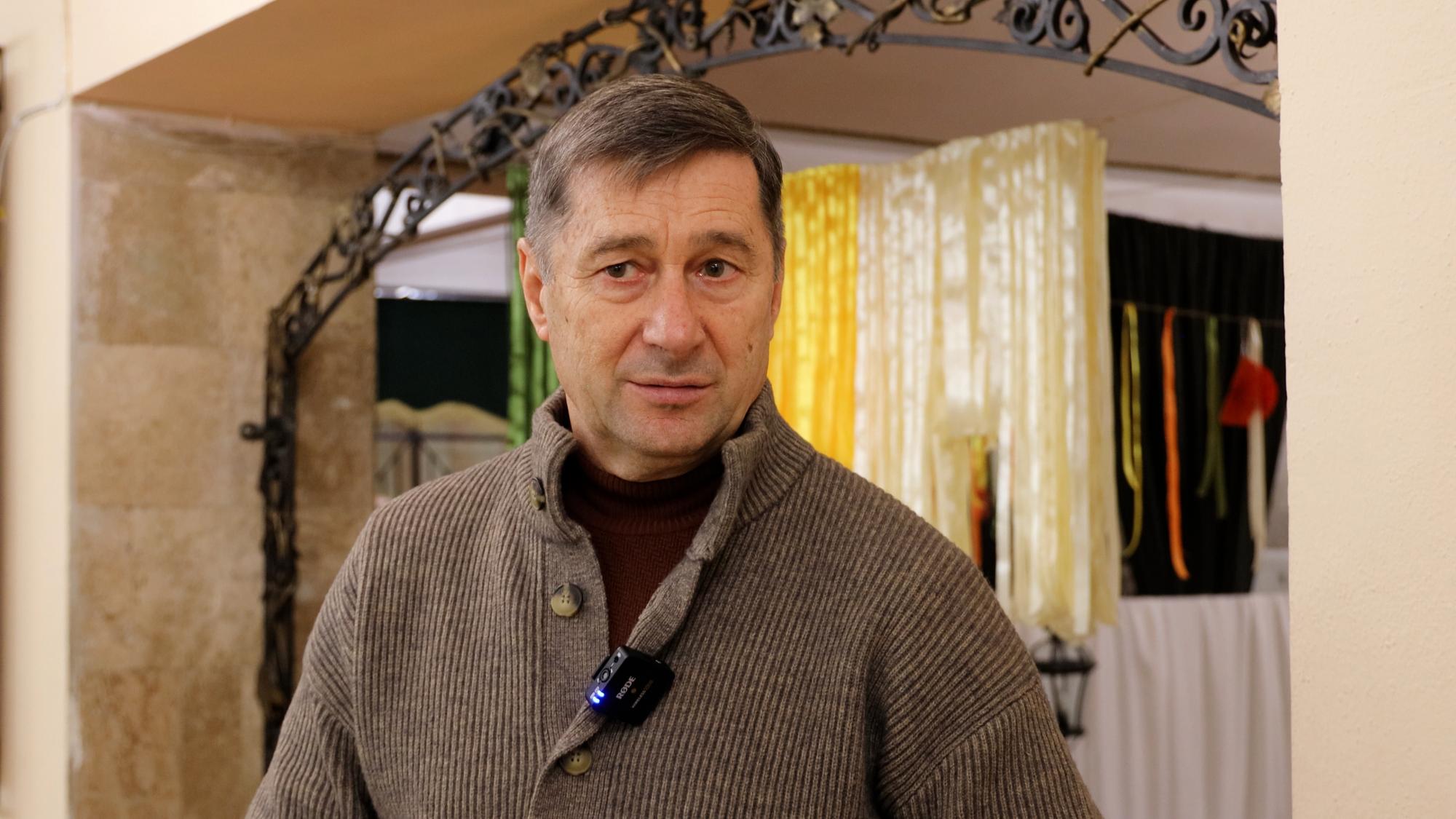
Oleksandr Knyha, Kherson theater director (Photo: RBC-Ukraine)
"Civilians suffer the most from the fighting. The enemy treacherously attacks peaceful residents, deliberately terrorizes them, and literally hunts people with drones in riverside communities. Almost every day, we have wounded and killed civilians — innocent people who are simply living in their own homes," he says.
According to Kovanyi, while the enemy occupied territories that have since been liberated, war crimes were committed there — crimes against civilians, including torture and unlawful detention. Cases of sexual violence were also documented, he adds.
How many people live in Kherson now
Currently, about 60,000 people live in Kherson, including around 5,000 children. Along with adults, children are forced to take shelter from shelling every day and live under constant danger. Despite this, local volunteers and organizations are trying to give children at least a small sense of celebration. To do so, they have set up a real New Year's residence in basements.
"The goal of this event is to show children at least a bit of a holiday spirit in Kherson, because above ground, the situation is dangerous, and we have all gone underground. Even underground, it's important to show that life is alive and that it goes on. We believe children deserve such a celebration and this kind of rest," says Iryna Kostiuk, head of the NGO United by Love.

Local volunteers have set up a real New Year's residence for children in basements (Photo: RBC-Ukraine)

Local volunteers have set up a real New Year's residence for children in basements (Photo: RBC-Ukraine)
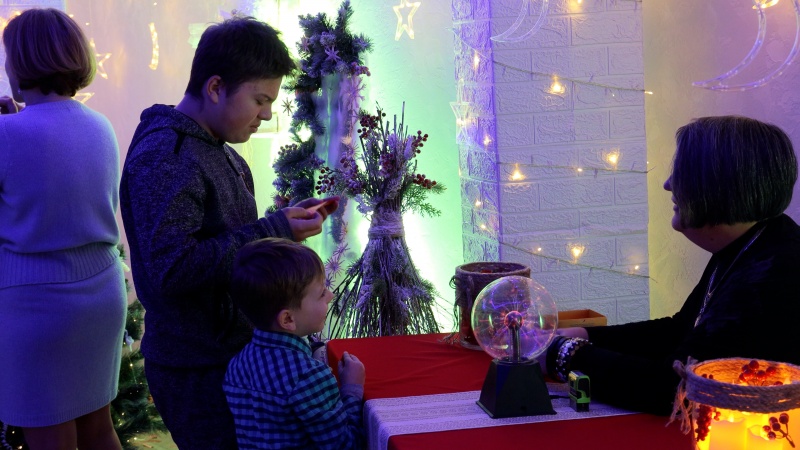
Local volunteers have set up a real New Year's residence for children in basements (Photo: RBC-Ukraine)

Local volunteers have set up a real New Year's residence for children in basements (Photo: RBC-Ukraine)
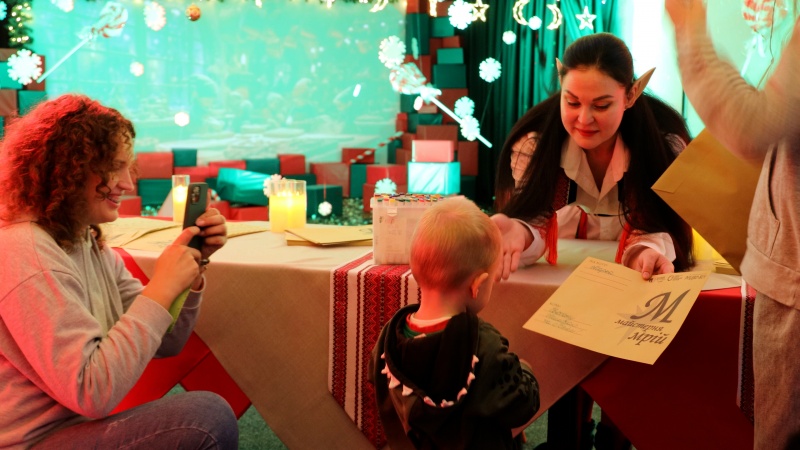
Local volunteers have set up a real New Year's residence for children in basements (Photo: RBC-Ukraine)
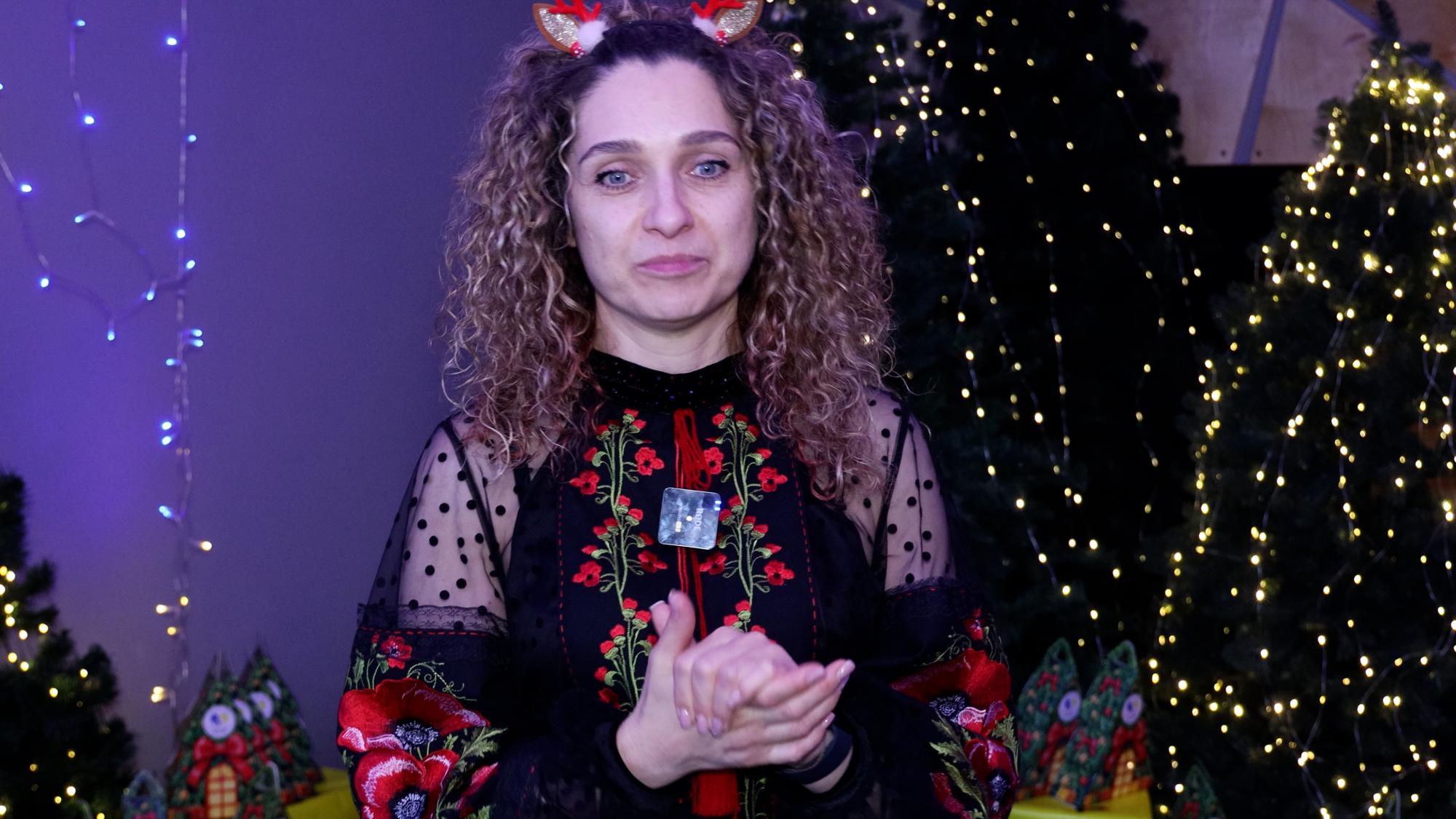
Head of the NGO United by Love, Iryna Kostiuk (Photo: RBC-Ukraine)
The volunteers created a space with a quest, Saint Nicholas, elves, and police officers who protect the children and, together with them, teach road safety rules.
"We wanted to involve as many children as possible in the celebration, to show them how it can be and to instill faith that victory will come, and that Ukraine must celebrate no matter what," Iryna says.