Wet car mats in winter: Simple ways to prevent moisture buildup

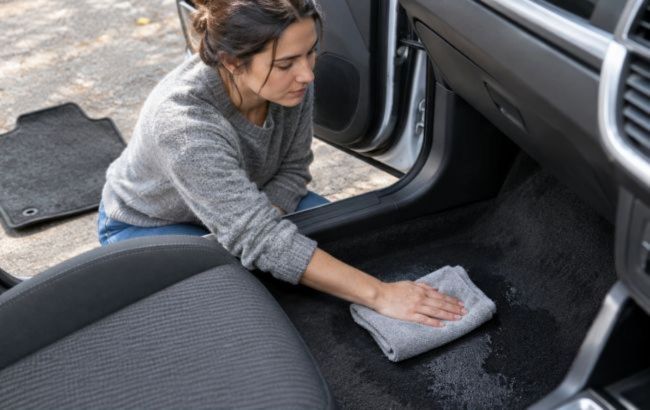 Dry wet car floor mats along with the carpeting underneath, since even a small amount of water can cause an extremely unpleasant smell inside the car and lead to mold growth (collage: RBC-Ukraine)
Moisture often builds up inside a car after rain, snow, or when wet shoes bring water into the cabin. If floor mats are left damp, a musty smell may develop over time, and the carpeting can start to deteriorate. That is why experienced drivers and auto service technicians advise against leaving them wet.
RBC-Ukraine explains in detail how to quickly remove water from car floor mats, dry the floor, and prevent moisture from returning.
How to properly dry car floor mats
First, remove the floor mats from the car. Rubber mats can simply be wiped with a dry cloth, while fabric mats should be thoroughly blotted with a towel to remove excess water.
If the mats are heavily soaked, leave them to dry separately in a warm, well-ventilated room. Do not put them back in the car until they are completely dry.
The American Automobile Association (AAA) recommends speeding up the drying process by leaving the doors or windows open in a safe location and using sunlight and a fan to improve air circulation.
How to remove water from underneath car floor mats
This is the most important step, as significantly more moisture can accumulate beneath the carpeting than may be apparent at first glance.
-
Remove any standing water. If puddles remain on the surface, use a wet/dry vacuum. A regular household vacuum is not suitable for this purpose.
-
Blot the carpeting. Place dry towels over the wet area and press down to absorb the water.
-
Improve air circulation. Direct a fan toward the damp floor and leave the car to air out in a dry location.
-
Check the results. Do not rely solely on the surface feeling dry: the padding underneath the carpeting must also be completely dry.
General Motors recommends a similar water-removal procedure in its 2025 service instructions: first use a wet-dry vacuum, followed by towels and a fan.
How to prevent mold and musty odors
Don't delay drying. The US Environmental Protection Agency (EPA) states that wet materials should ideally be dried within 24–48 hours. In most cases, this helps prevent mold growth.
If water has seeped deep beneath the carpeting, simply airing out the car may not be enough. In such cases, professional drying may be necessary, including partial removal of the interior carpeting.
Do not try to mask the smell with air fresheners: they do not eliminate the source of the moisture.
Why car floor mats keep getting wet
If moisture keeps returning, find the cause rather than simply drying the interior regularly.
Possible causes include:
-
Water entering through door or window seals
-
A compromised windshield seal
-
Clogged drainage channels in the sunroof or air conditioning system
-
Water accumulating after driving through deep puddles
-
Damage to the car body or its seams.
If the floor under the mats stays wet, a musty smell develops, or you hear water sloshing while driving, we recommend taking the car to an auto repair shop to inspect the body seals and hidden cavities.
The main rule is simple: don't put wet floor mats back in the vehicle until the floor underneath is completely dry. This helps prevent mold, unpleasant odors, and further interior damage.