US to boost UAE missile shield with THAAD: Details

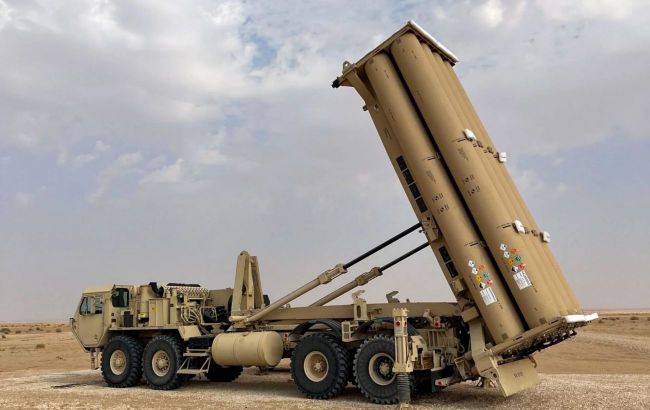 Photo: THAAD system (US Department of Defense)
Lockheed Martin Space will manufacture new launchers for the THAAD missile defense system in Configuration 3 for the United Arab Emirates for $211.435 million, according to Army Recognition.
What new contract entails
Amendment P00082 to Contract HQ0147-19-C-5001, signed under the Foreign Military Sales (FMS) program, provides for the delivery of THAAD launchers of the new C3 standard to the UAE.
Each launcher carries eight interceptor missiles, which engage ballistic targets using the hit-to-kill method. The contracting party is the US Missile Defense Agency (MDA), and the introduction of the C3 standard is directly linked to the new hardware included in the THAAD System Build 5.0 software package.
According to MDA budget documents, the Configuration 3 update is intended to replace outdated equipment, address cybersecurity vulnerabilities, and improve the system's maintainability, while Build 5.0 additionally includes an update to the Link 16 interface and the integration of Common X-Band 6.0 software for the AN/TPY-2 radar.
Why UAE expanding THAAD network
The modernization is part of a broader transition to a distributed THAAD architecture: the MDA is developing the Radio Frequency Remote THAAD Launcher concept, which allows fire control elements to maintain radio frequency communication with launchers located away from the battery's main position.
For the UAE, this approach aligns with the geographic distribution of the facilities requiring protection—air bases, ports, energy infrastructure, and densely populated cities in various parts of the country.
The dispersal of launchers makes it more difficult for the enemy to take out an entire battery with a single strike and increases the ability to intercept multiple ballistic missiles attacking from different directions simultaneously.
The effectiveness of this approach was confirmed by the UAE's experience during its confrontation with Iran in 2026, when the country faced massive attacks by ballistic missiles and drones targeting military, energy, and civilian facilities, demonstrating that missile defense depends not only on radars and interceptors but also on the ability to withstand repeated strikes over an extended period.
The issue of missile armaments for air defense and missile defense systems has also been actively discussed in recent months in the context of Ukraine.
President Volodymyr Zelenskyy stated that the Ukrainian team expected to acquire the technical capability to independently produce missiles for air defense systems by the end of 2026; in particular, it is working on licenses to manufacture missiles for Patriot systems.
At the same time, negotiations between Kyiv and Washington regarding the localization of such production have been progressing unevenly: despite the agreements reached on the sidelines of the NATO summit in Ankara, US Ambassador to NATO Matthew Whitaker clarified that Ukraine had not yet received an official license to manufacture Patriot interceptors.