US strikes over 100 Iranian targets, weakening threat in Hormuz Strait — Axios

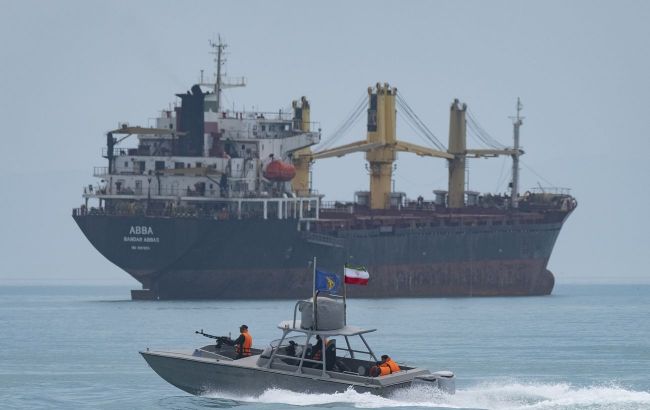 Photo: A tanker in the Strait of Hormuz (Getty Images)
The US struck about 100 Iranian military targets. According to Washington's assessment, this has weakened Iran's ability to attack ships in the Strait of Hormuz for at least a month, Axios reports.
On Tuesday, the US military carried out a series of strikes against Iran, hitting approximately 100 targets. Among them were two Iranian government tankers, which US drones struck with missiles in their engine rooms.
Other targets included air defense facilities of the Islamic Revolutionary Guard Corps (IRGC), radar systems, mine-laying platforms, communications facilities, as well as launchers for anti-ship missiles and attack drones.
According to a US official, the strikes weakened Iran's offensive capabilities and bought at least a month of reduced threat to commercial vessels. He describes the idea itself as an effort to "mow the lawn"—to reduce the risk of Iranian attacks on US tankers, ships, and aircraft.
New "tanker for tanker" policy
The strikes on tankers marked the first time the US attacked Iranian vessels specifically in response to Iranian attacks, rather than to prevent a breach of the naval blockade. According to the official, this is part of the new "tanker for tanker " policy approved by Donald Trump.
Despite this, according to US officials, Iran's response proved unsuccessful. About 25 ballistic missiles were launched, but only half reached Jordanian airspace—10 were intercepted, and three fell without causing any casualties. In addition, Iran launched about two dozen drones at US bases in Bahrain, as well as missiles and drones at bases in Kuwait. Most of the targets were intercepted.
While the US and Iran exchanged fire, American troops continued to escort ships through the strait. According to an official, on Tuesday, about 40 vessels carrying millions of barrels of oil were entering and leaving countries in the region.
Dispute over casualties
The sides disagreed on the casualty figures following Iran's reports of civilian deaths. Iranian media claimed that one of the US strikes hit a wedding ceremony in the city of Kuhestak, killing at least four people and wounding more than 35 others.
CENTCOM spokesperson Tim Hawkins responded that the military is aware of the reports from Iranian state media, but that the US military, unlike the IRGC, never attacks civilians.
In July, Washington revoked Iran’s oil license due to attacks on ships, while Tehran itself has repeatedly threatened to close the strait.