US startup raises $200 million to clone and genetically edit military working dogs


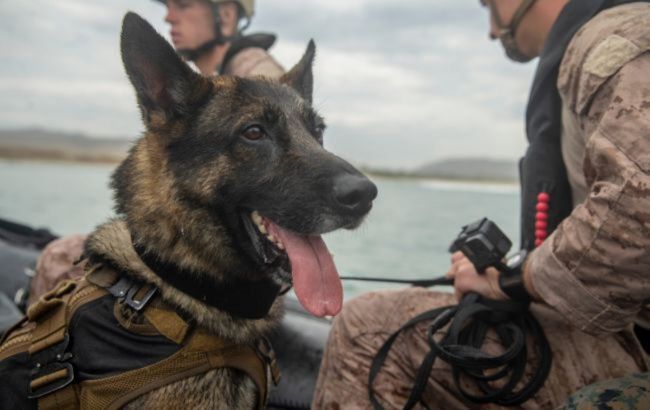 A US Army military working dog (photo: US Army)
Anduril founder Palmer Luckey has responded to criticism of Warhound, a new Texas-based startup that plans to clone and genetically edit working dogs for the US military, law enforcement, and emergency responders. The company emerged on October 22, 2026, after a $200 million funding round that raised its valuation to $1.2 billion, according to Fortune.
Palmer Luckey has pushed back against critics of Warhound, a concept he developed with Ben Lamm, CEO of Colossal Biosciences. After the project's announcement, it drew online criticism, prompting Luckey to defend it in a post on X. He emphasized the protective equipment and genetic modifications meant to improve the dogs' health.
"Which part of this do you object to? The hearing protection? The eye protection? The body armor? Or gene edits that make them less likely to develop cancer and joint problems? There is a reason the American Humane Society is supporting this," Luckey wrote.
Why Warhound is needed
The company says its project addresses a shortage of working dogs for the US military. Warhound says the US Army established its K-9 Corps in 1942, and the Department of War's working dog program now includes more than 2,200 canine teams.
More than 80% of military working dogs are purchased in Europe. Fewer than half of the animals acquired are deemed fit for service after an approximately three-year procurement and training cycle. As a result, the Army must purchase and train about 200 dogs to field 100. Lamm told Fortune that the United States is competing with other countries, including China and Russia, for the same animals.
What company plans
Warhound will take a phased approach. First, the company will identify top-performing dogs that have completed training, biobank their genetic material, and clone proven animals. At the same time, it plans to pursue targeted gene editing.
The company will initially focus on the two breeds most commonly used by the military: Belgian Malinois and German Shepherds. It says it will screen out known harmful genetic variants associated with muscle degeneration and other inherited diseases. This would prevent any dog carrying genetic markers for common career-ending conditions, such as hip dysplasia, from entering service.
Lamm said the company is still determining which other traits it can responsibly modify. He has pointed to potential future improvements in speed, agility, and sense of smell for tasks such as explosive detection. The first group of dogs has already undergone biobanking, and researchers are editing its genetic material. Viagen, a cloning company owned by Colossal, is helping produce the animals. Lamm expects the first dogs to be born early next year and enter service in about two years.
Anduril's and other partners' role
According to Lamm, Anduril's role is "on top of the dog and not in it." The defense company provides eye and hearing protection, bulletproof vests, and integration with its Eagle Eye system, allowing dogs, handlers, and autonomous systems to operate as a single team. The vests will feature sensors that transmit information to handlers.
The American Humane Society will certify Warhound's training programs and help reunite retired dogs with their former handlers through its Military Working Dog Reunification Program. Luckey and Lamm developed the concept after a conversation at Peter Diamandis' Moonshots Summit. Luckey has no ownership stake in Warhound, Anduril does not own shares in the company, and Colossal licenses its technology to Warhound and has an economic interest in the venture.
Warhound is led by David Spirk, a former Marine who served as the first chief data officer of US Special Operations Command and later held the same role at the Pentagon. The company's investors include In-Q-Tel, Sequoia Capital, ARK Invest, Franklin Templeton, 8VC, and Lux Capital.
The company has already briefed government agencies but has not yet signed any customers or set a price per dog. It is discussing a Canine-as-a-Service model under which the government would purchase a steady supply of trained dogs. Warhound plans to build national-scale infrastructure to house and train the animals, initially using private capital.
Read also: Lockheed Martin offers Ukraine its own version of F-16
Earlier, the US Army awarded a $10.64 million contract to Skyeton's American subsidiary to supply Raybird reconnaissance drones. On September 16, troops from the 1st Armored Division and Joint Task Force-Southern Border prepared a 20-kW AMP-HEL laser system mounted on a light Infantry Squad Vehicle for testing at Fort Bliss.
In October, Anduril also unveiled its Steelfin family of air-defense missiles, designed to offer a cheaper alternative to the Patriot's PAC-3 interceptors. Flight tests of various versions are scheduled for 2027.