US Secretary of State granted unprecedented powers over Venezuela — NYT

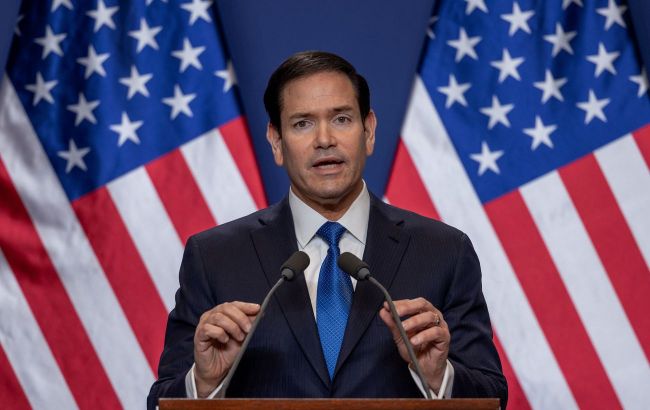 Photo: US Secretary of State Marco Rubio (GettyImages)
Six months after the change of government in Venezuela, the United States has gained unprecedented influence over the country’s financial system, oil industry, and the functioning of its state institutions, according to The New York Times.
How governance system changed
According to The New York Times, which cites over a dozen US and Venezuelan officials, US Secretary of State Marco Rubio is effectively coordinating key areas of the Venezuelan government’s work.
The agency notes that modern history has seen virtually no precedent for a single US official exerting this level of influence over a sovereign state.
According to the agency’s sources, Rubio maintains constant contact via WhatsApp with Delcy Rodríguez, who, following the change in government, has been acting as the country’s leader with Washington’s support.
Despite regular contact, journalists emphasize that the relationship between the two sides cannot be described as an equal one.
Finance and oil sector under control
According to the NYT, the US Treasury Department receives proceeds from the bulk of Venezuela’s exports, after which the funds are returned through the country’s banking system.
At the same time, the US side determines what the money can be spent on and who has the right to dispose of it. According to the agency, this mechanism has made it possible to put an end to corruption schemes and protect state revenues from creditors’ claims.
At the same time, sources note that Rodríguez has become dependent on Washington’s decisions, as without coordinated funding she cannot ensure the payment of salaries or support the national currency.
In addition, according to the agency, Rubio oversees US sanctions policy toward Venezuela and the reform of the oil industry, and is also involved in approving key personnel decisions, including the appointment of the defense minister.
Influence extends to foreign policy
The authors of the article assert that US influence extends not only to domestic governance but also to Caracas’s international activities. In particular, the NYT cites the example of Rodríguez’s trip to India, which Rubio disclosed to Venezuelan officials before it was made public.
The agency also reports that following the US strike on Iran, the US administration demanded the removal of a post by Venezuelan Foreign Minister Yvan Gil criticizing Washington’s actions, and the post was taken down within a few hours.
According to journalists, Rubio’s current policy differs markedly from his previous statements in support of democratic reforms in Latin America.
Meanwhile, as the agency notes, US President Donald Trump stated that Washington intended to manage Venezuela until a safe, orderly, and reasonable transfer of power took place, and later suggested that this process could take many more years.
Earlier, US President Donald Trump suggested that a possible military operation in Cuba could be carried out following the model of Washington’s recent actions in Venezuela.