US eases sanctions on Iranian oil 'stranded at sea' - US Treasury Secretary

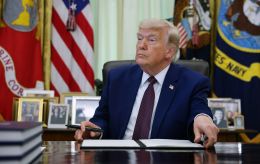
 Photo: US Treasury Secretary Scott Bessent (Getty Images)
The US Treasury has issued a license allowing the sale of nearly 140 million barrels of Iranian oil currently stranded on tankers at sea, according to US Treasury Secretary Scott Bessent.
“Today, the Department of the Treasury is issuing a narrowly tailored, short-term authorization permitting the sale of Iranian oil currently stranded at sea,” Bessent said.
He explained that this move will allow 140 million barrels of oil to quickly reach global markets, easing temporary pressure on supplies caused by Iran.
“In essence, we will be using the Iranian barrels against Tehran to keep the price down as we continue Operation Epic Fury,” the minister added.
Bessent stressed that the temporary authorization applies only to oil already in transit and does not allow new purchases or production.
He also noted that Tehran will struggle to receive any revenue, while the United States will continue to “maintain maximum pressure on Iran and its ability to access the international financial system.”
“So far, the Trump Administration has been working to bring around 440 million additional barrels of oil to the global market, undercutting Iran’s ability to leverage its disruptions in the Strait of Hormuz,” he said.
A document published by the US Treasury’s Office of Foreign Assets Control states that the license allows the sale of Iranian oil loaded onto tankers before March 20 for a period of one month.
The authorization for the sale, supply, and unloading of Iranian oil and petroleum products will remain in effect until April 19.
Situation in energy markets
It should be recalled that amid the war involving the United States and Israel against Iran, the situation on energy markets has sharply escalated.
One of the key risks remains the Strait of Hormuz, through which a significant share of global oil supplies passes.
Fears of disruptions have already caused price volatility, prompting the United States to look for ways to quickly offset potential shortages and stabilize the market.
In particular, Washington has already partially eased restrictions on Russian oil, citing the need to stabilize supply.