US and China refuse to sign declaration on military use of AI

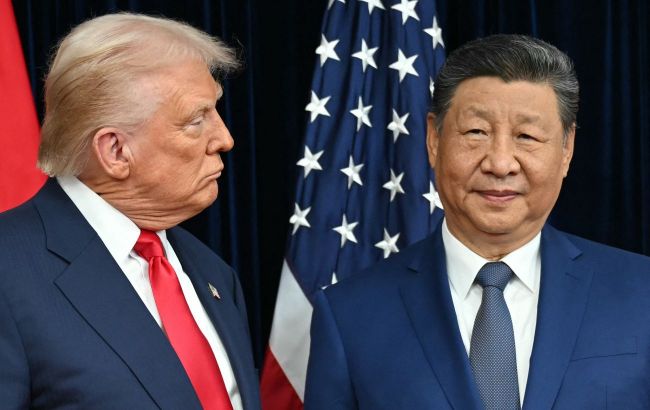 US President Donald Trump and Chinese President Xi Jinping (Photo: Getty Images)
On Thursday, February 5, Spain hosted a summit on the use of artificial intelligence (AI) for military purposes. However, the United States and China chose not to sign the declaration outlining principles for its application, reports Reuters.
What is known about the declaration and who signed it
According to Reuters, only 35 of the 85 countries that took part in the summit signed the declaration on the military use of AI.
Key signatories included Canada, Germany, France, the UK, the Netherlands, South Korea, and Ukraine. Major powers such as China and the US did not sign the document.
The declaration affirms human responsibility for weapons that use artificial intelligence. It also promotes the establishment of clear chains of command and control, as well as the sharing of information on national oversight mechanisms, where consistent with national security.
The document further emphasizes the importance of risk assessment, thorough testing, and the training and upskilling of personnel working with military AI systems.
Why signing the declaration proved problematic and Western concerns
According to several participants and delegates, tensions between the US and its European allies, as well as uncertainty about what transatlantic relations will look like in the coming months and years, have made some countries hesitant to sign joint agreements.
At the same time, the declaration highlights growing concern among some governments that the rapid development of artificial intelligence could outpace the rules governing its military use, increasing the risk of accidents, miscalculations, or unintended escalation.
Dutch Defense Minister Ruben Brekelmans told Reuters that governments face a prisoner’s dilemma, caught between the need to introduce responsible restrictions and the reluctance to limit themselves compared with their adversaries.
“Russia and China are moving very fast. That creates urgency to make progress in developing AI. But seeing it going fast also increases the urgency to keep working on its responsible use. The two go hand-in-hand,” Brekelmans said.
At the two previous military AI summits, held in The Hague and Seoul in 2023 and 2024, about 60 countries, excluding China but including the US, endorsed a non-binding action plan.
Yasmin Afina, a researcher at the UN Institute for Disarmament Research who advised the process, noted that this year’s document also had no legally binding force. Even so, some participants were uncomfortable with the idea of endorsing more specific policy measures.