Ukrainian scientists capture rare 'soap bubble' in sky near Antarctica's Vernadsky station

 Illustrative photo (collage: RBC-Ukraine)
Ukrainian polar explorers observed iridescence in cirrus clouds near the Akademik Vernadsky Antarctic station. According to the National Antarctic Scientific Center (NASC), this amazing phenomenon in the sky resembled a giant so-called soap bubble.
Iridescence
The National Academy of Sciences of Ukraine reported that Ukrainian polar explorers near the Vernadsky station photographed an amazing phenomenon—the iridescence of cirrus clouds.
"It looks like an irregular colored patch in the sky: as if a large soap bubble were floating there," the scientists explain.
This optical effect occurs when sunlight bends around small obstacles and passes behind them (diffraction).
Afterward, the light waves overlap, creating colorful shimmering patterns (interference).
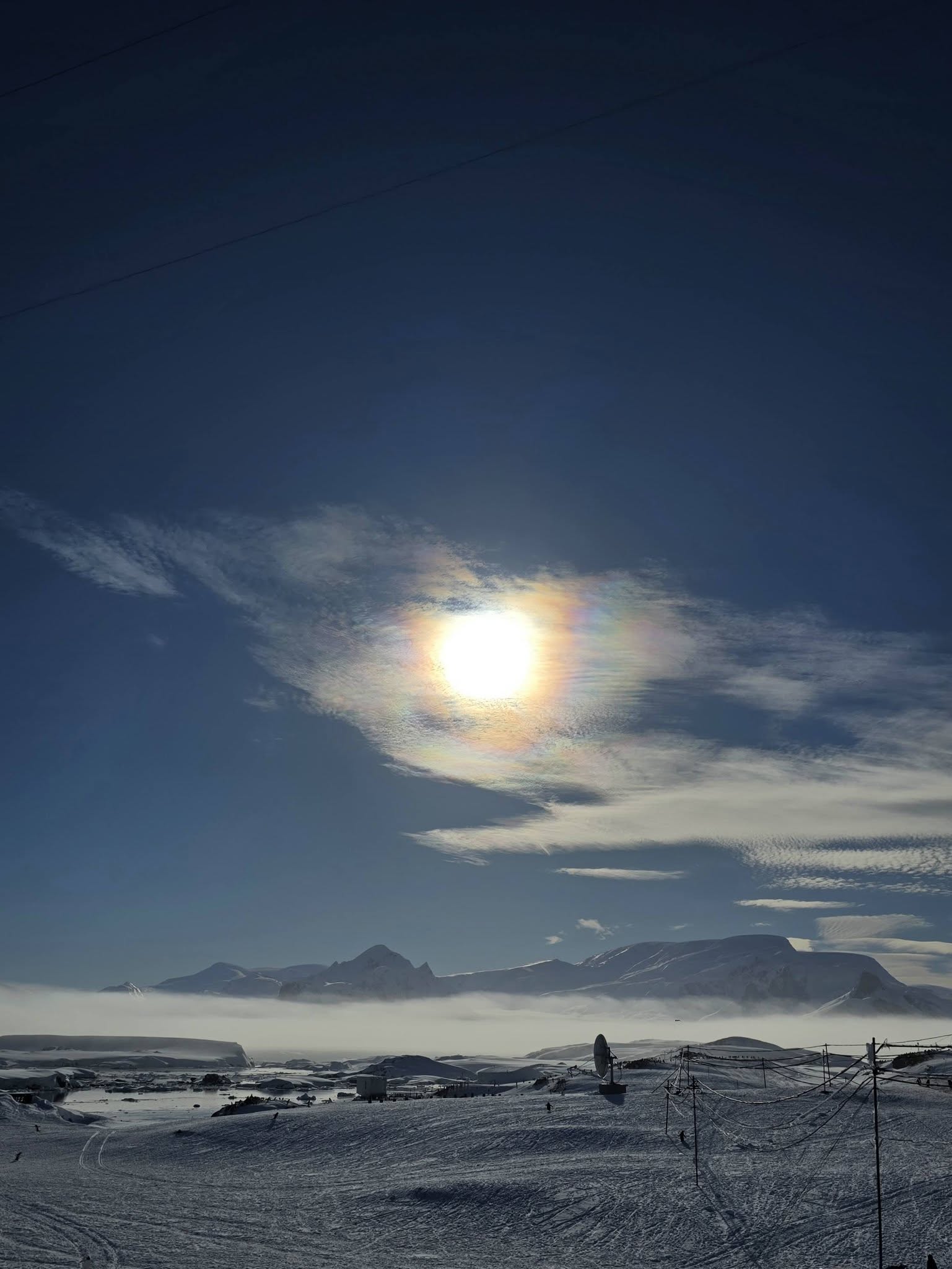
Iridescence in cirrus clouds near Vernadsky (photo: facebook.com/AntarcticCenter/Анжеліка Ganchuk)
"In cirrus clouds, these obstacles are tiny ice crystals, of which they are primarily composed," the NASC explains.
These are high-level clouds that, in polar regions, reside at altitudes of 4–6 km (where temperatures range from -20°C and below).
They are light and transparent, so the colorful play of light is clearly visible on them.
According to experts, the nature of the iridescence depends on:
- Size of the crystals
- Shape
- Distribution.
"But what's interesting is that the colors are always distributed unevenly, mirroring the cloud’s structure," notes the NASC.
This is what primarily distinguishes iridescence from other similar phenomena—such as a corona or a halo.
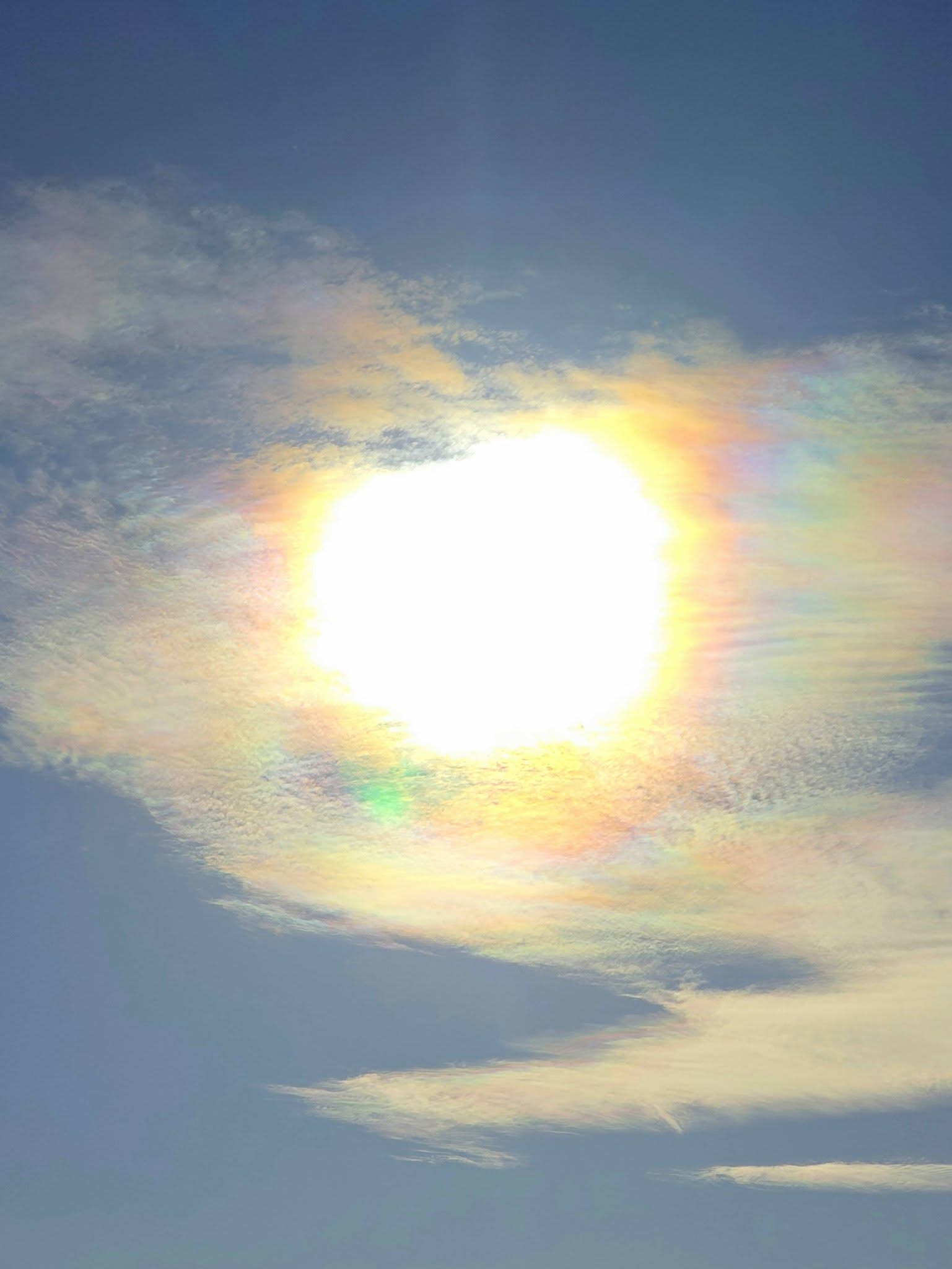
The nature of iridescence depends on several different factors (photo: facebook.com/AntarcticCenter/Анжеліка Ganchuk)
The latter have a distinct circular shape and are arranged symmetrically relative to the light source (albeit with varying radii).
Meanwhile, the shape of iridescence depends on the contours of the cloud.
"Incidentally, this phenomenon is more commonly observed in low- and mid-level clouds, but only at their edges. This is because such clouds are opaque but have transparent edges," the National Center for Space Research concludes.
In addition, an incredible reddish aurora and two neighboring galaxies appeared in the night sky near the Academician Vernadsky station.