Ukraine strikes Russian radar systems and command posts

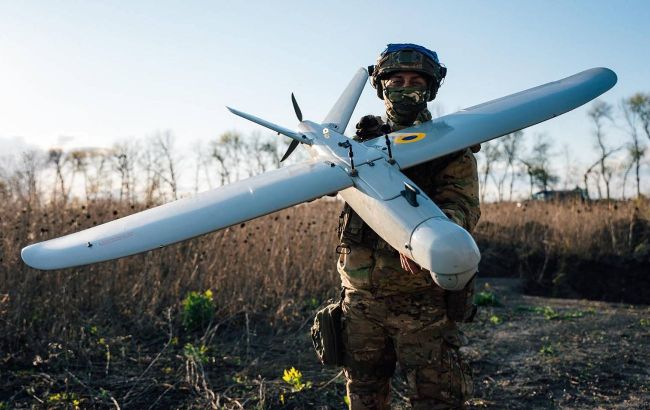 Photo: A Ukrainian soldier with a Leleka drone (Getty Images)
Ukraine's Defense Forces struck Russian radar stations in the Belgorod region, as well as command posts and troop concentration sites in several directions, reports the General Staff of the Armed Forces of Ukraine.
Units of the Defense Forces attacked Russian army radar stations near the settlements of Gostishchevo and Kurgannoye in Russia's Belgorod region.
Radar stations are used to detect aerial targets and monitor airspace. Striking them may weaken Russian forces' ability to monitor the relevant areas.
The General Staff noted that such strikes create gaps in the enemy's radar coverage. This also expands the capabilities of Ukraine's Defense Forces to deploy unmanned systems at various levels.
Command posts come under attack
The Ukrainian military also struck facilities used by the Russian army to command its units.
A Russian command post near Tarasivka in the Zaporizhzhia region was hit. An enemy command and observation post near Hola Prystan in the Kherson region was also struck.
Such facilities ensure the transmission of orders and coordination of military operations. Striking them may disrupt Russian military command and complicate coordination between units directly on the battlefield.
Where Russian troop concentrations were attacked
Another target for Ukrainian units was enemy troop concentration sites.
In the Donetsk region, strikes were carried out near Mykolaivka and Novoukrainka. In the Zaporizhzhia region, Russian troop concentration sites near Berdiansk, Okhrimivka, and Tarasivka were hit.
The General Staff emphasized that the Defense Forces will continue striking key enemy military targets until Russia's armed aggression against Ukraine is completely halted.
On the night of October 24, the Armed Forces of Ukraine struck two Russian military-industrial complex enterprises — Proton-Electroteks in Oryol and Tolyattikauchuk in the Samara region.
The first manufactures components for Russian missiles, while the products of the second are used, in particular, to manufacture solid rocket fuel.