Ukraine's mine producer says its factory is under threat: How it could affect the war front

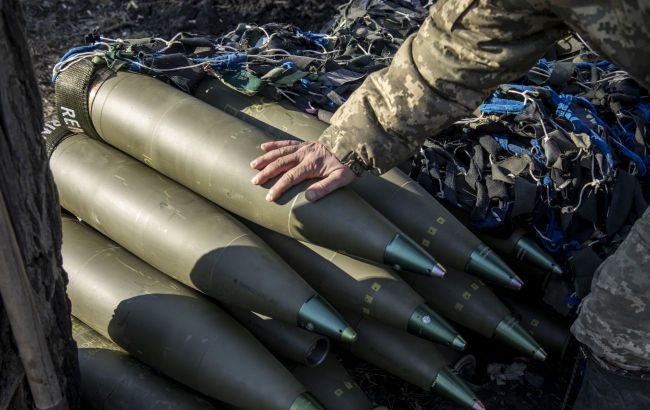 Photo: A mine manufacturer reports its operations are being blocked (illustration/Getty Images)
National ammunition manufacturer LLC NVC Tekhaviacom has reported that its operations are being blocked. The company, which resumed work after missile strikes and fulfilled defense orders in 2023, says that tens of thousands of mines are currently stuck in warehouses, while the plant’s unique developments are at risk of disappearing, according to an official statement released by the manufacturer’s press service and published on Interfax-Ukraine.
Tekhaviacom notes that recently, the information space has seen claims that the company is fictitious and that contracts are failing. The manufacturer calls these accusations groundless and provides evidence pointing to real operations and systematic pressure.
“The plant is not a ‘one-day company’ but a real design bureau and production facility established back in 2019 based on the capacities of the Chernihiv plant CheZaRa. This is the backbone of specialists that remained after the transformation of the space industry. Our engineers have been working for years on components without which Ukrainian armored vehicles neither move nor fire. We are production partners of key defense enterprises of Ukraine: the Kyiv Armored Plant, the Morozov Design Bureau, the Zhytomyr Armored Plant, Ukrainian Armor LLC, and others,” the statement says.
The company emphasizes that it has its own four-character developer letter code AATA and certification from the State Space Agency, which confirms its ability to design and manufacture rocket and space products.
Special attention in the statement is paid to accusations of poor mine quality. The company disclosed details of the conclusions of three independent examinations, including one by an SBU laboratory.
According to the manufacturer, the examinations confirmed full compliance of the explosive substance with technical specifications.
As it turned out, the reason for complaints about the ammunition was components that the plant does not produce.
“The problem is not the mine, which is the carrier. The problem is detonators from a third-party manufacturer that are not our products. When an appropriate high-quality fuze is screwed into our product, it works flawlessly, as has been repeatedly proven by range tests. We have not received a single warranty claim regarding our products,” the press service emphasized.
The manufacturer explained delivery delays by force majeure on a global scale — a global shortage of explosives (RDX/TNT) and border blockades, which have been officially confirmed by the Chamber of Commerce and Industry and court rulings.
Despite this, the company managed to contract 77% of the total volume of hexogen for which permits were issued in Ukraine.
As of the end of 2024, the plant had 100% of components under new contracts — only explosive filling remained to complete production. However, not only logistical blockades but also enemy attacks and actions from law enforcement prevented completion of this process.
The company recalled that in May, June, and July 2025, it survived a series of combined strikes, including a direct hit by a Kinzhal missile, which destroyed warehouses and equipment. The owners invested in restoration and fully restored the production process.
Now, however, the plant’s operations, the company says, are blocked by the law enforcement system. Finished components and products are sitting in warehouses, while the company's bank accounts have been frozen.
“The law enforcement system is choosing a path: to destroy an enterprise that proved its viability even under Kinzhal strikes. A direct consequence of such actions will be a shortage of mines on the battlefield,” the company warns.
The manufacturer said it is ready to provide all documents and evidence to journalists, inviting the media to visit the restored workshops.
Background
In mid-January, the State Bureau of Investigations announced the neutralization of a scheme to embezzle budget funds allocated for the purchase of engineering munitions for the Armed Forces of Ukraine.
According to investigators, members of the organization used a fictitious company; the funds received were allegedly misappropriated, and instead of reliable anti-personnel and anti-tank mines, the army received products of inadequate quality.
In addition to the organizer and heads of the structure, four military servicemen of the ministry and an official of a state-owned enterprise were notified of suspicion. They are accused of failure to perform official duties. A pre-trial investigation is currently ongoing.