Ukraine's Bradley vehicles could run out of spare parts: US seeks solution

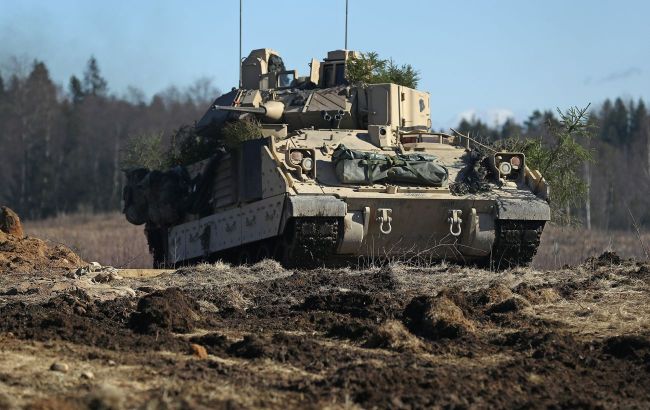 Photo: Bradley (Getty Images)
The US Army is looking for companies capable of supplying scarce and obsolete components for the M2A2 ODS-SA Bradley infantry fighting vehicles used in military aid to Ukraine, according to Militarnyi.
At this stage, it is only a market survey—the US command wants to identify companies capable of supplying the necessary components. The problem is that some parts are no longer officially manufactured: the production infrastructure is outdated, and certain suppliers have ceased production altogether.
The list of scarce components includes the turret drive control unit, the transmission control module, ammunition chutes, Dialight Corp. lens-type headlights, and other specialized vehicle components.
In addition to supplying spare parts, the future contractor must be able to repair and inspect the Bradleys, as well as quickly set up production of parts that are no longer manufactured by anyone.
The goal is to bring the vehicles to full combat readiness and transfer them to Ukraine without further delays due to a lack of spare parts. Additionally, the contractor is expected to assist in training Ukrainian mechanics—by developing training courses and manuals and providing the necessary equipment.
US officials emphasize that this public announcement is not yet a tender or a guarantee of a contract, but merely a way to identify potential contractors for future work.
The repair and maintenance of Bradleys for Ukraine's needs have long been a focus of US military aid programs. Last fall, Rheinmetall's US subsidiary was awarded a $31 million contract for the expedited repair of Bradley vehicles for the US and Ukrainian armies. In total, the US has already transferred more than 180 of these vehicles to Ukraine.
Bradley vehicles have repeatedly proven their effectiveness on the battlefield—in particular, one of the vehicles shot down a Russian drone with its Bushmaster cannon, and Ukrainian military officials emphasized at the time that this was a unique occurrence.