Turkish carriers flee Russia routes amid deadly Black Sea attacks

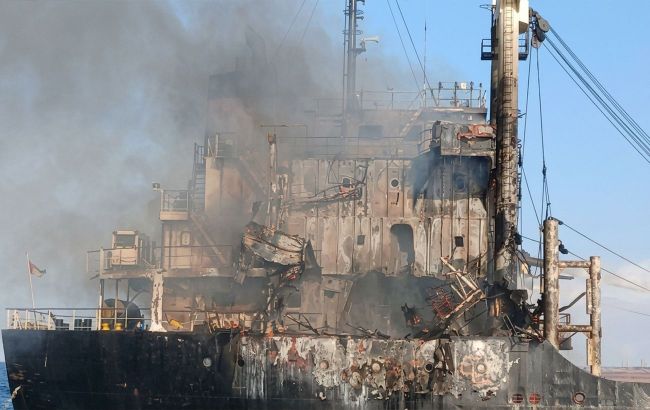 Illustrative photo: Turkish carriers are massively refusing voyages to Russia (navy.mil.gov.ua)
Turkish operator Akkon has completely refused to enter Russian ports - vessels heading to St. Petersburg have been turned back to Türkiye. This occurred after a drone attack on the company's container ship, according to The Moscow Times.
What happened with Akkon
Akkon was one of the largest carriers whose services were actively used after Russian company Fesco refused voyages through the Black Sea in early August, when Ukrainian maritime drones sank its container ship Yanina near Novorossiysk.
On August 10, Akkon had already temporarily redirected voyages from Novorossiysk to St. Petersburg with an additional charge of $2,500 per container, while other carriers who continued sailing from Türkiye to Novorossiysk charged an average of $1,000 per container for the risk.
However, on August 21, a drone attacked a container ship belonging to Akkon Lines itself - the vessel was damaged and caught fire, forcing the crew to evacuate.
Following a security situation assessment, the company concluded that further escalation creates heightened risks for the crew, vessel, and cargo, and therefore decided to completely refuse entry to Russian ports.
Cargo will be returned to the port of origin or unloaded at loading ports - in particular, cargo from the vessel heading to St. Petersburg is planned to be unloaded at the nearest port, likely in Klaipėda.
Other carriers are also refusing
Another Turkish carrier, Arkas, has completely ceased operations with Russia. Deniz Taşımacılığı, chairman of the board of directors of Turkish company Transbosphor, estimated Türkiye's losses from Ukrainian Armed Forces attacks on commercial vessels in the Black Sea over the past three months at $20 billion.
On August 26, one of the largest players in the global container market, MSC, also announced its refusal to enter Novorossiysk after drone attacks on its own container ship MSC Ulsan III - voyages are being redirected to St. Petersburg and other ports.
The company's fleet comprises about one thousand vessels with routes worldwide. Several other carriers who previously operated through Turkey have announced similar transitions.
Why this matters
The redirection of voyages to St. Petersburg has itself become routine news confirming the difficult shipping situation in the Black Sea, but does not mean a halt in cargo flow.
However, the refusal of Turkish container carriers to work with Russia will hit supplies of goods from Europe - "the Turkish route has stopped, St. Petersburg is in question," describes one importer of European furniture and home goods.
The situation in the Black Sea is escalating on several fronts simultaneously. Days ago, the empty and burned-out Russian vessel Omsky-107, attacked near Novorossiysk, washed ashore near the Turkish town of Şile. Against the backdrop of such incidents, Türkiye has intensified diplomacy to create a new grain corridor in the Black Sea - Ankara is negotiating with Ukraine and Russia to restore food exports and prevent a spike in global food prices.