Trump to let Saudi Arabia enrich uranium, CNN reports

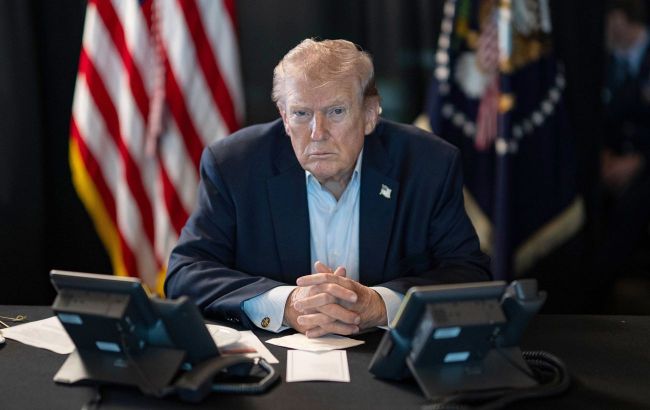 Photo: US President Donald Trump (Getty Images)
The Trump administration has tentatively agreed to allow Saudi Arabia to enrich uranium without the standard international nuclear nonproliferation safeguards, according to CNN.
What's delaying the deal?
A proposed nuclear agreement under which the US would support Saudi Arabia's civilian nuclear program is still awaiting President Donald Trump's signature, even though negotiations between Washington and Riyadh were completed in October 2025.
According to sources familiar with the matter, one reason for the delay is the ongoing conflict with Iran. Trump has said the war was launched to prevent Tehran from using enriched uranium to develop nuclear weapons.
Some members of Congress also believe the administration is delaying the signing to avoid triggering a bipartisan resolution of disapproval that could block the agreement.
What the White House says
The White House declined to comment on the agreement and instead referred CNN to remarks made by Energy Secretary Chris Wright in October 2025.
"We’ve come together on a deal for civil nuclear cooperation. Together, with bilateral safeguard agreements, we want to grow our partnership, bring American nuclear technology to Saudi Arabia and keep a firm commitment to nonproliferation," Wright said at the time.
What makes the agreement unusual?
According to one source, the Trump administration privately briefed some members of Congress earlier this year on the broad outlines of the deal. Even then, it was presented as containing a special provision allowing Saudi Arabia to conduct a limited level of domestic uranium enrichment and/or plutonium reprocessing.
The source described such a provision as "unprecedented" for this type of agreement.
While the proposed arrangement would include US-imposed restrictions on uranium enrichment, the exact limits remain unclear.
How it differs from the UAE agreement
Unlike the 2009 US-UAE nuclear agreement, the proposed deal with Saudi Arabia would not require the kingdom to adopt the International Atomic Energy Agency's (IAEA) standard enhanced safeguards agreement, known as the Additional Protocol.
Instead, the safeguards would be established through a bilateral agreement between the United States and Saudi Arabia.
This marks a significant departure from the UAE agreement, under which Abu Dhabi accepted enhanced IAEA oversight and agreed not to pursue uranium enrichment or plutonium reprocessing.
Background
Strengthening ties with the Gulf states has been a key objective of the Trump administration.
Last year, Trump announced more than $200 billion in agreements with the United Arab Emirates during his visit to the region.
At the same time, several other major deals were signed, including Saudi Arabia's commitment to invest $600 billion in the United States and a $142 billion US arms sale to the kingdom.
Trump also said at the time that Washington was close to reaching a nuclear agreement with Iran and that Tehran had agreed to its terms "to some extent."