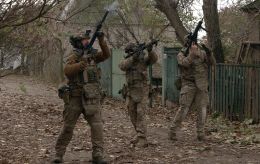
Trump rewrites NATO statement to put Ukraine on same footing as Russia

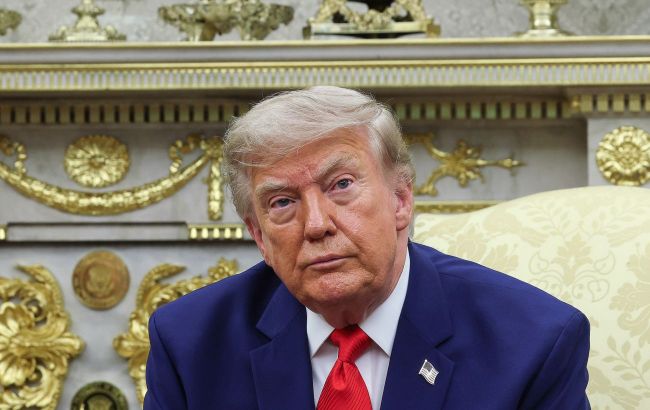 Photo: US President Donald Trump (Getty Images)
President Donald Trump unilaterally changed a joint statement with NATO on the war. The demand to avoid expanding hostilities now applies not only to Russia but also to Ukraine, Politico reports.
On the evening of November 25, Trump met with NATO Secretary General Mark Rutte at his Mar-a-Lago estate in Florida. Following the meeting, they released a joint statement, which was published by both the White House and NATO.
The statement said that the sides "discussed the importance of Russia avoiding any actions that intentionally, or unintentionally, expand the war, and the importance of obtaining a peaceful resolution to the war as rapidly as possible."
However, a few hours later, Trump rewrote the phrase on Truth Social, adding two words. In his version, "Russia and Ukraine" must refrain from such actions.
An unnamed NATO official told the publication that the first version was the one officially agreed upon. In other words, Trump changed the text on his own. The White House did not respond to Politico's request for comment.
The edit came just days after Ukraine struck a Russian corvette at the Libyan port of Benghazi, thousands of miles from Kyiv. Lawyers believe the attack may have violated international law. However, most of Ukraine's allies did not criticize it.
The media outlet also points to tensions between Trump and Ukrainian President Volodymyr Zelenskyy. Kyiv is not giving up strikes on Russian oil refineries and critical infrastructure, and last month Trump said it was "time for Ukraine to get a new President."
Meanwhile, Trump called Russian leader Vladimir Putin a "friend" during a trilateral meeting with him and Chinese leader Xi Jinping in Shenzhen last week.
Trump later addressed Moscow as well. He said he had discussed Putin extensively during his meeting with Rutte.
"I spent a lot of time talking about the fact that I would like to see President Putin pull back all Military aggression against territories throughout Europe," the US president wrote.
According to Politico, Trump's edit presented a new challenge for Rutte. The NATO chief regularly praises the US president publicly in an effort to preserve weapons supplies to Ukraine and maintain the Alliance's unity, but this incident exposed the limits of that approach.
Attention will now turn to the meeting of NATO foreign ministers in Brussels on December 2. Allies had expected the US to announce a review of its military presence in Europe before the meeting, but Washington said the announcement had been postponed.
The review was supposed to be the main topic of the meeting at Mar-a-Lago. Instead, Trump and Rutte discussed increasing defense production and Russia's hybrid attacks in Europe.
Earlier, the Kremlin responded to Trump's and Rutte's call by distorting the facts. Russian dictator's spokesperson Dmitry Peskov claimed that Kyiv was supposedly the one trying to expand the geographical scope of the war.
Following the strike in Benghazi, Libya demanded explanations from Kyiv. Ukraine's Foreign Ministry stressed that Ukraine is not expanding the war to new locations and strikes only legitimate military targets, relying on its right to self-defense under Article 51 of the UN Charter.
Reactions among Ukraine's allies were divided. Italian Defense Minister Guido Crosetto reportedly summoned the Ukrainian military attaché and demanded explanations regarding the attack.
France, however, supported Ukraine. Foreign Minister Jean-Noël Barrot stressed that Ukrainians are defending themselves against daily Russian shelling.