Trump refuses Congress approval to continue Iran war, calls limits unconstitutional

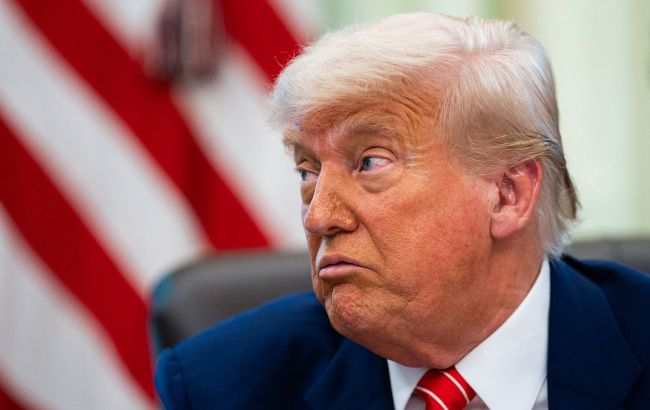 Photo: Donald Trump (Getty Images)
Donald Trump does not intend to seek authorization from Congress to continue military operations against Iran. The president considers restrictions on his war powers to be “totally unconstitutional” and points to alleged violations by his predecessors, according to a BBC analysis of similar actions by other presidents.
Read also: 'Thank you very much, we give up': Trump reveals plan to take over Cuba
Despite the expiration of the critical 60-day period since the start of the official conflict—after which congressional approval is required to continue hostilities—Trump is now, as of today, obligated under the War Powers Resolution of 1973 to cease the use of the military.
If lawmakers do not vote to extend the war, troops must return home. The law was adopted during the presidency of Richard Nixon to prevent prolonged conflicts like the Vietnam War. However, Trump has his own interpretation.
The US leader argues that previous presidents ignored such requirements for decades—so why shouldn’t he?
“So many presidents, as you know, have gone and exceeded it. It's never been used. It's never been adhered to. Nobody's ever asked for it before,” the White House chief said.
Trump and Hegseth’s legal workaround
The administration claims to have found a loophole. Trump and Defense Secretary Pete Hegseth argue that the clock has effectively stopped, saying the deadline was “frozen” when the current ceasefire took effect.
This has sparked heated debate among lawyers and politicians. Does a ceasefire count toward the legal 60-day limit? There is no clear answer.
History offers examples of lawful compliance:
- Ronald Reagan obtained approval in 1983 to deploy Marines to Lebanon.
- George H. W. Bush sought authorization for Operation Desert Storm in 1991.
- George W. Bush conducted wars in Afghanistan and Iraq with congressional approval.
At the same time, Trump points to different precedents:
- Bill Clinton bombed Kosovo for 78 days without approval.
- Barack Obama carried out operations in Libya for over seven months, arguing they did not qualify as “hostilities.”
A dangerous precedent: concerns in the US
The situation is raising alarm among academics and policymakers. Political science professor David Schultz noted that violations by past presidents do not justify Trump’s actions. In his view, Trump has effectively pushed the country into war without legislative backing.
“And if we go back to the founding of this country, go back to 1776, 1787, one of the fears that our framers had was strong executives committing us to wars without the support of the legislative branch,” Schultz told the BBC.
Trump continues to compare the current conflict to prolonged wars of the past, citing 19 years in Vietnam and nine years in Iraq.
He emphasizes that clashes with Iran have been brief. However, a resolution to tensions over the Strait of Hormuz and Tehran’s nuclear program remains elusive.
As Barack Obama said in 2014: “It's harder to end wars than it is to begin them,” the article concludes.
Current situation in US-Iran tensions
The US leader has informed Congress—once again—that the war with Iran is over.
However, the blockade of Iranian ports continues, as Trump seeks to pressure Tehran into a deal—primarily abandoning its nuclear ambitions. Iran’s latest proposal does not satisfy Trump.
The US president also admitted that during the seizure of Iranian vessels, the United States had acted “like pirates.” Some Iranian ships have been confiscated after leaving ports, alongside container vessels and Iranian tankers in Asian waters.