Trump could face lawsuit over paid access to his Truth Social posts

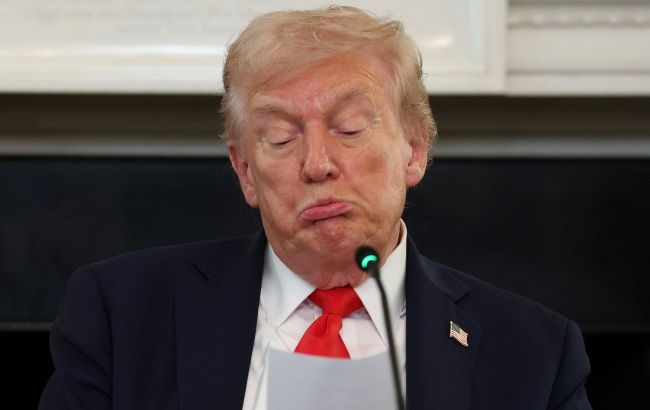 Donald Trump, President of the US (photo: Getty Images)
Donald Trump's posts on Truth Social can generate tens of thousands of dollars for his company each month through paid access. Now, this scheme has become the subject of a lawsuit, as it is alleged that the president cannot selectively restrict access to his official statements, according to CNN.
The lawsuit was jointly filed by The Intercept and the Freedom of the Press Foundation. The plaintiffs argue that paid access to the president's posts in real-time violates their rights under the First and Fifth Amendments to the US Constitution.
Trump regularly uses Truth Social to announce political decisions, executive orders, personnel appointments, and other important statements.
What paid access entails
Trump Media, the company that owns Truth Social, began selling direct access to the Truth API interface last quarter. Subscribers gain the ability to see Trump's posts almost immediately after they are published — the company claims a delay of milliseconds.
The exact delay for users without paid access remains unclear.
According to Trump Media, the company has already signed more than 10 agreements for Truth API usage, primarily with firms engaged in high-frequency trading. Clients, according to the company, are willing to pay between $60,000 and $100,000 per month for privileged access.
Why plaintiffs consider this a violation of the US Constitution
The plaintiffs' representatives emphasize that even a very short delay can matter. Nikhel Sus, chief counsel at Citizens for Responsibility and Ethics in Washington, told CNN that a lengthy ban on access is not necessary for a First Amendment violation.
The First Amendment protects freedom of speech and the press, limiting the government's ability to interfere with expression and information dissemination. The Fifth Amendment, among other things, guarantees due process and requires equal treatment by the state in matters covered by constitutional protections.
It is precisely these provisions that the plaintiffs cite, arguing that the government should not selectively restrict access to public information based on who is willing to pay the president's private company.
Can Trump sell what he does not own?
A separate question in the case concerns who legally owns the president's official statements. Sus argues that the president's official statements are not Trump Media's private data but belong to the United States under the Presidential Records Act.
The Freedom of the Press Foundation stated that restricted access via Truth API could complicate its efforts to collect all of the president's posts and analyze his statements. The Intercept, for its part, argues that delayed access could create competitive disadvantages in news coverage.
Congress has also called for scrutiny of Truth API
US lawmakers have already shown interest in the issue. Last month, Democratic Senators Elizabeth Warren and Adam Schiff called on federal regulators to examine the legality of Truth API. They described the sale of early access to the president's posts as a shocking abuse of office and asked the Securities and Exchange Commission to determine whether the scheme violates federal securities law.
According to the senators, early access to Trump's statements could be particularly valuable to Wall Street firms, wealthy investors, and high-frequency traders, as the president's posts may contain market-moving information.
The court will now have to determine whether such unequal access constitutes a constitutional violation — and whether the president's private company can sell an advantage in receiving his official statements.
Context
In July, Trump Media had already pledged to develop a paid access system for the social network after noticing that the US president's statements were of great interest to traders. The mechanism was developed very quickly and has now led to the journalists' lawsuit.
CNN also reported that Donald Trump, while serving as president, purchased shares in around two dozen companies on more than 40 occasions. He did so within days before publicly praising the firms — which could have positively affected those companies and likely influenced Trump's own investments.