Think your dishes are clean? Here’s how to be sure after washing

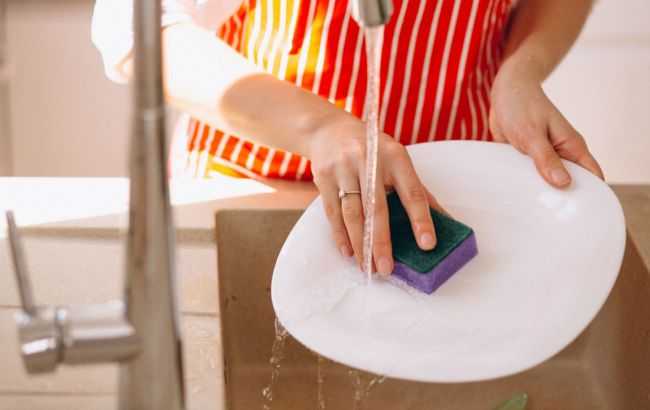 How to wash dishes properly so they are safe (photo: magnific)
Clean dishes are not just about the absence of visible dirt, but also about health and safety. Following simple washing rules helps eliminate bacteria, avoid detergent residue, and make kitchenware truly hygienic for everyday use, according to the website Martha Stewart.
First, clean the sink
Before you start washing the dishes, the sink needs to be prepared and cleaned. This is done to prevent dirt from the sink itself from getting onto the clean dishes.
First, remove all food scraps and debris from the sink. Then rinse it thoroughly with warm or hot water and dish soap to remove grease and buildup. If necessary, wipe the surface additionally with a sponge or brush, paying attention to the corners and the drain.
Only after this can you start washing the dishes. This order helps maintain cleanliness and makes dishwashing more hygienic.
Soak before washing
Soaking dishes before washing can be useful, but it is not mandatory and not always necessary.
When dishes have dried-on food residue, such as porridge, sauces, eggs, or baked goods, the residue sticks firmly to the surface. If you start scrubbing such dishes immediately, it takes more time and effort. In such cases, soaking helps: the food softens and comes off more easily during washing.
Soaking is also useful for greasy dishes. Warm water with a small amount of detergent partially dissolves the grease, making it easier to remove with a sponge. This is especially noticeable when dishes pile up and aren't washed immediately after use.
Usually, soaking for 5–20 minutes is sufficient. It is not advisable to leave dishes in water with food residue for longer, as this can cause unpleasant odors and create conditions for bacterial growth.
Check by touch
A sign that dishes remain insufficiently clean after handwashing is most often revealed by tactile sensations and the appearance of the surface.
If there is leftover grease or detergent on the dishes, it may feel slippery or slightly sticky to the touch, even after drying. This is because a thin fatty film or detergent residue left after rinsing forms an invisible layer on the surface.
In addition, there may be other signs:
- The surface doesn't "squeak" with cleanliness but feels smooth, as if coated with a film
- Streaks, cloudiness, or spots appear on glass, ceramics, or metal
- Sometimes a smell of food or detergent remains
- Water may run off unevenly, leaving traces
Normally, well-washed dishes after rinsing should have no smell, no stickiness, no film, and, to the touch, simply feel clean and "dry," without any foreign layers.
Wipe wet dishes with a towel
Wiping dishes with a towel after washing has several practical benefits at home. First of all, it allows you to get completely dry dishes immediately, without waiting for water to drip or evaporate. This is convenient when dishes need to be quickly put away or reused.
Another advantage is the absence of water spots and streaks. This is especially noticeable on glass, cutlery, and stainless steel, where water droplets often leave marks after drying. Wiping helps keep dishes looking neater.
This method is also useful for hard water, which contains minerals that leave a white residue after drying. A towel helps avoid this because the water does not have time to evaporate on the surface.
Additionally, wiping provides an opportunity to quickly assess the quality of the wash. As you run the towel over the surface, it is easier to notice leftover grease or dirt that may have remained after washing.