Switzerland's glaciers melt at record pace amid extreme heat

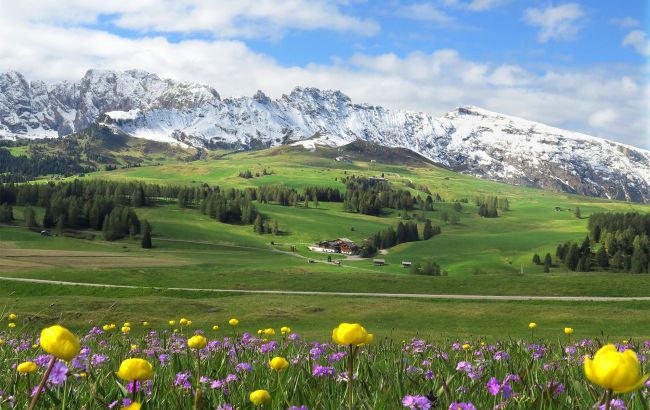 Photo: Swiss Alps, where glaciers are melting at record speed due to extreme heat (Getty Images)
Switzerland is experiencing one of the worst glacier seasons on record, with scientists saying the pace of melting is now nearly three months ahead of the usual schedule, according to AFP.
According to Matthias Huss, head of the Swiss Glacier Monitoring Service (GLAMOS), all winter snow on glaciers is expected to completely disappear by Monday.
What glacier loss day means and why it matters
Scientists call this moment the glacier loss day — the point when all winter snow accumulated on glaciers has melted, and only long-term ice remains exposed to further melting.
Since observations began in 2000, this day has only occurred earlier once, in 2022. This year is set to be the second-earliest on record.
"We're just seeing enormous ablation, ice melt rates and snow melt rates all over the Alps," Huss said. "We are three months too early compared to a healthy state."
He noted that nearly one meter of ice melted on the Rhône Glacier in just ten days.
Why glaciers are melting so fast
The main issue is not isolated heat days, but prolonged periods of high temperatures. The longer such conditions persist, the faster glaciers shrink.
The situation has been worsened by low winter snowfall and dust from the Sahara Desert, which has settled on the ice surface, increasing heat absorption and accelerating melting.
Consequences for the Alps and Europe
Preliminary estimates suggest Switzerland will again lose significant ice mass this year. Final results will be published in the autumn.
Of particular concern is that Alpine glaciers are a key water source for two of Europe’s largest rivers — the Rhine and the Rhône.
According to GLAMOS, Swiss glaciers have lost 38% of their volume between 2000 and 2024. Over the past 50 years, Switzerland has lost around 1,200 glaciers, leaving about 1,300 remaining.
Huss warned that if warming continues at the current pace, only small remnants of most Swiss glaciers may remain by the end of the century.
As a reminder, Europe was hit by an extreme heatwave at the end of June, causing temperature records, infrastructure disruptions, and fatalities.
Meteorologists compare the current heatwave to the 2003 event, one of the deadliest in Europe’s history.
In Germany, a new record of 41.5°C was registered, and forecasters warn temperatures could rise even further in the coming days.