Swedish ASC 890 early warning aircraft now in Ukrainian skies: How it boosts F-16s

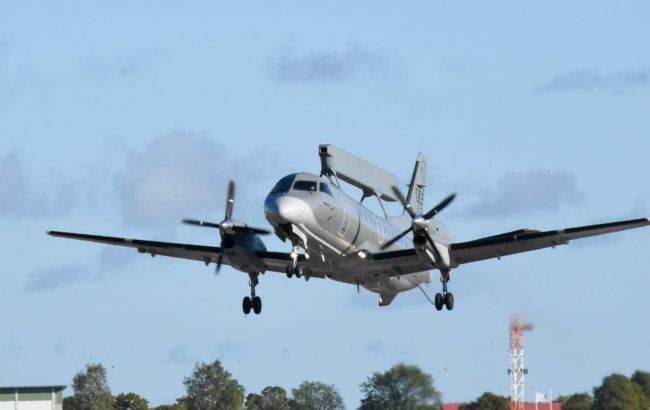 Photo: Swedish aircraft have begun combat missions (Jesper Sundström)
In May 2024, Sweden announced the transfer of an ASC 890 long-range radar detection and control aircraft to Ukraine. The Ukrainian Ministry of Defense confirms for the first time that the aircraft is already conducting combat sorties.
The Ukrainian Ministry of Defense clarifies that the Swedish aircraft has been conducting combat missions for the past 6 months, since March 2026.
It is known not only as the ASC 890. It is also often referred to as the Saab 340 AEW&C or S-100B Argus.
Swedish Defense Minister Pål Jonson was among the first to explain the uniqueness and importance of this aircraft for Ukraine.
According to him, it is the ASC 890 that opens up new opportunities for the Ukrainian Defense Forces in countering air and sea targets.
Moreover, when combined with F-16 fighter jets, this aircraft significantly enhances the combat capabilities of the Ukrainian Air Force.
As early as 2024, it was clear that the transfer of the ASC 890 would be a truly historic event for Ukraine and a major game-changer in the war against Russia.
Aviation expert Valerii Romanenko explains in a comment to RBC-Ukraine that after the collapse of the USSR, Ukraine did not receive any radar-detection aircraft. That is why, for several decades, Ukraine was forced to monitor the air situation using only ground-based radars. However, as a result of Sweden's decision, the situation changed dramatically.
As Romanenko explains, after receiving the ASC 890, Ukraine finally established a fully-fledged air defense system.
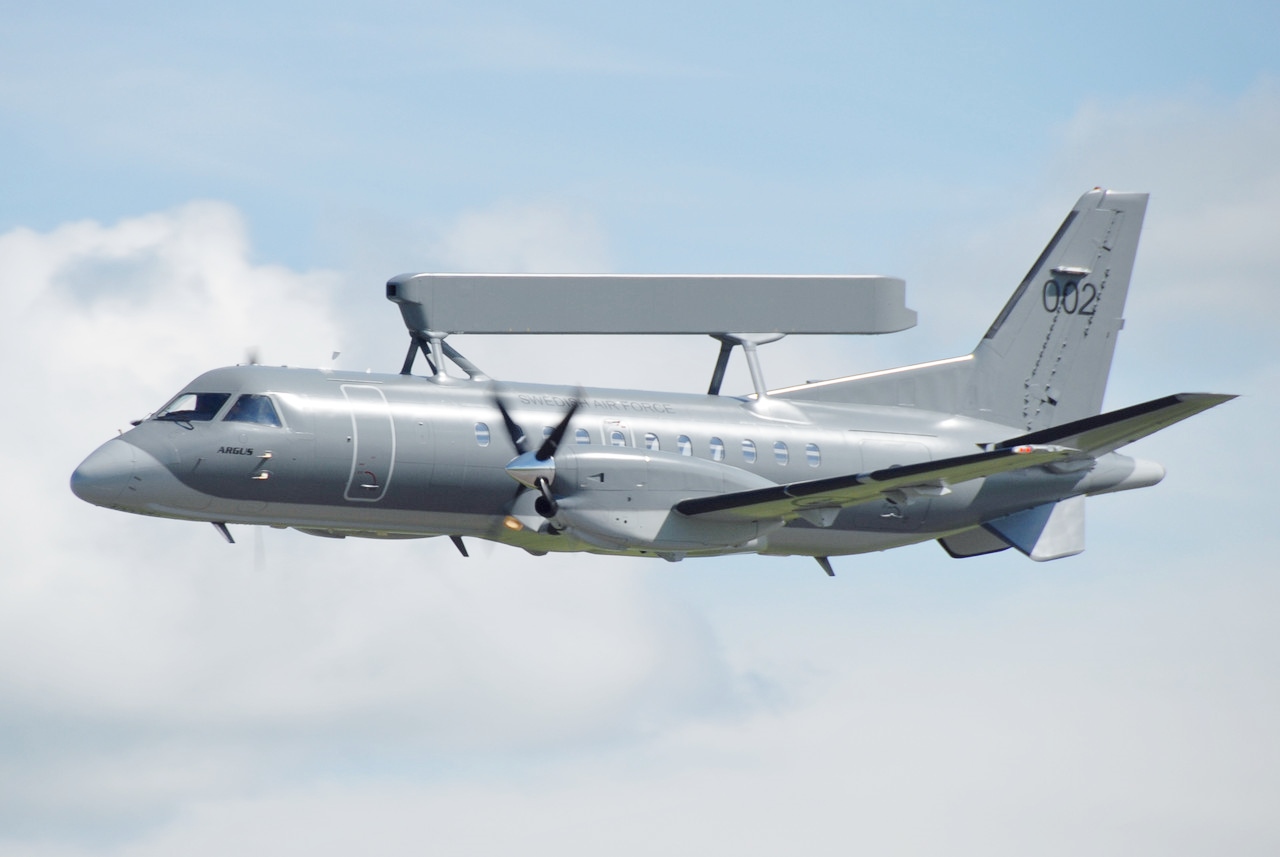 Swedish ASC 890 aircraft (Photo: wikipedia.org)
One of the key features of the ASC 890 is its ability to detect aerial targets at a considerable distance. It has no trouble detecting a Russian aircraft at a distance of 200–250 km or a missile at 150–200 km.
ASC 890 key characteristics:
- Purpose: long-range radar detection and control (AEW&C) aircraft—essentially a flying radar that provides detection, tracking, and classification of air and sea targets.
- Detection range: depending on the type of target and conditions—up to 300–400 km; some sources cite a maximum range of up to 450 km.
- What it can detect: aircraft, missiles, drones, and maritime targets.
- Crew: 6 people—2 pilots and system operators.
- Cruising speed: approximately 520–530 km/h.
- Maximum flight altitude: approximately 7.6 km.
- Flight duration: over 5 hours; some sources cite up to 7 hours depending on configuration and mission conditions.
- Length: approximately 20.6 m.
- Wingspan: 21.44 m.
- Communications and control: the aircraft can exchange data with other air and ground forces, allowing it to be used not only for surveillance but also for command and control of combat operations.