Sweden launches first spy satellite to track Russia

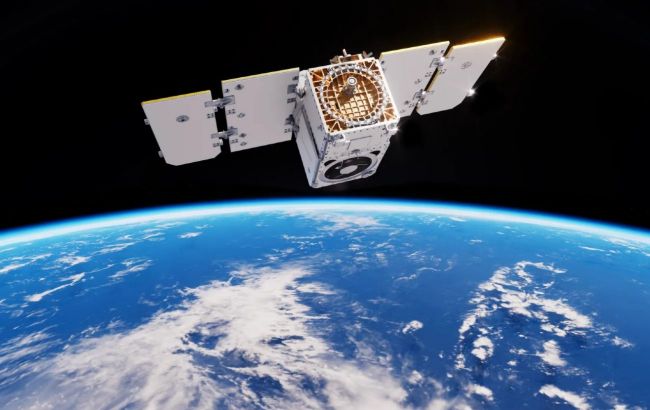 Swedish military satellite (Photo: Planet Labs)
Sweden has successfully launched its first-ever military satellite into orbit to monitor Russian territory. The spacecraft is the first in a major series of projects aimed at strengthening the country's defence capabilities, according to Swedish state broadcaster SVT.
Until now, Sweden's military had relied on imagery from commercial providers or NATO allies. That situation is now changing. Having its own satellite allows Stockholm to set its own intelligence priorities independently.
The country will now be able to map military targets inside Russia in near real time. The satellite can also detect Russian troop movements at an early stage.
"We will have the ability to control and prioritise an intelligence sensor that is always active and capable of conducting long-range reconnaissance. This is a significant leap in capability," says Anders Sundeman, head of the Swedish Armed Forces' space division.
Why has this become critically important
Sweden has shifted its defense strategy. Joining NATO has expanded the Swedish military's area of responsibility all the way to the Alliance's borders — and now, more intelligence is needed.
Key tasks of the satellite network:
- Monitoring the Baltic Sea region and the Arctic;
- Detecting threats from Russian military movements;
- Creating accurate maps of enemy assets.
The launch took place on Sunday from an airbase in California. The mission was carried out by Elon Musk's SpaceX, and the deployment lasted about 10 minutes.
The satellite is roughly the size of a standard washing machine. Despite its compact size, it is equipped with powerful optics.
The spacecraft will need about a month to reach its operational orbit. During the first year, the Swedish military will receive assistance from the manufacturer, Planet Labs.
Plan for 10 satellites and orbital defense
One satellite is just the beginning. Over the next two years, Sweden plans to have a constellation of ten military spacecraft.
What we know about the future network:
- Partners: Sweden is working with American company Planet Labs (cameras) and Finnish firm ICEYE (radars).
- Control: The space operations centre will be established at the Air Force headquarters in Uppsala.
- Mobility: If needed, the control centre can be relocated.
Sundeman specifically emphasised that Swedish satellites carry no offensive weapons. They will not attack or jam enemy satellites.
Currently, there are between 12,000 and 15,000 satellites in orbit worldwide. Sweden aims to become a full-fledged player in this domain, planning to eventually launch spacecraft from its own Esrange spaceport in Kiruna.
The threat Russia poses in the Baltic
Moscow is already laying the informational groundwork for an attack on the Baltic states. The Kremlin is unhappy with NATO's control over the region and with the fact that Ukrainian drones are using the airspace of Baltic countries.
Meanwhile, Britain and its allies are assembling a new naval task force to counter Russia. London views Kremlin provocations in the Baltic and North Seas with alarm. The main goal is to be ready to engage in combat operations immediately.