Spain imports record amount of Russian gas despite sanctions

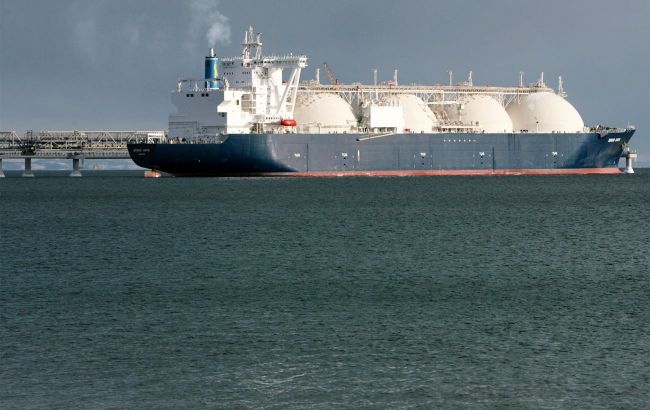 Photo: How Spain managed to seize the moment and purchase large quantities of gas from Russia (Getty Images)
In March 2026, Spain purchased the largest shipment of Russian gas in its history, against the backdrop of the war in the Middle East, which has significantly altered the structure of energy supplies to Europe, according to El País, citing data from gas system operator Enagás.
Record
According to Enagás, Spain received 9,807 gigawatt-hours (GWh) of Russian gas in March. This is more than during the 2023 energy crisis, when prices skyrocketed. Compared to February, this represents more than a twofold increase.
EU sanctions formally restrict energy purchases from Russia, but the schedule for their gradual implementation allows for gas imports from Moscow until 2027.
Why now
Gas market analysts have cited several reasons for the record purchases:
- US and Israeli strikes on Iran caused a sharp rise in gas prices, from around 30 euros per MWh to over 60 euros. Currently, the price on the TTF spot market is around 42 euros
- Due to hostilities in the Persian Gulf, Qatar and the UAE have sharply reduced exports following strikes on their own energy infrastructure
- Due to sanctions, Russia has fewer buyers, so it is lowering prices, and Russian gas has become more cost-effective than alternatives
- At the end of April, an EU regulation prohibiting the purchase of Russian gas on the spot market will take effect. This may have prompted traders to increase purchases ahead of time.
Not just a consumer
The country has six regasification plants in Barcelona, Cartagena, Huelva, Bilbao, Sagunto, and Mugardoz. This allows large international traders to store gas there, not only for the Spanish market but also for resale to other destinations.
At the same time, domestic consumption has also risen. Demand in March increased by 2%, while gas use for electricity generation rose by 46.8%. This is because the power grid operator Red Eléctrica ramped up operations at gas-turbine power plants to prevent widespread blackouts.
What's next for Russian gas
Major operators, such as Naturgy, maintain stable long-term contracts with Russia and are not increasing volumes. But the situation may change next year: the EU plans to ban imports of liquefied natural gas from Russia starting in January, and pipeline gas in the fall of 2027.
Some member states are already questioning these plans—closing the Russian route without alternatives is difficult.
Alternatives being sought, but time running out
Spain is actively seeking a replacement. Negotiations to increase the capacity of the Medgaz pipeline from Algeria—the country’s main supplier—are still ongoing. Since Donald Trump took office, purchases of American gas have doubled, partly as part of trade negotiations on tariffs.
Meanwhile, despite US sanctions imposed in January 2025, Russia's Gazprom has resumed liquefied natural gas (LNG) shipments to China. A second shipment has already been made from the Portovaya plant on the Baltic Sea to the Chinese port of Beihai.
Back in November 2025, the US announced its intention to oust all Russian gas from Europe. US officials have been traveling to European countries to promote their own energy sources.