Scientists crack mystery of universe’s most strangest star

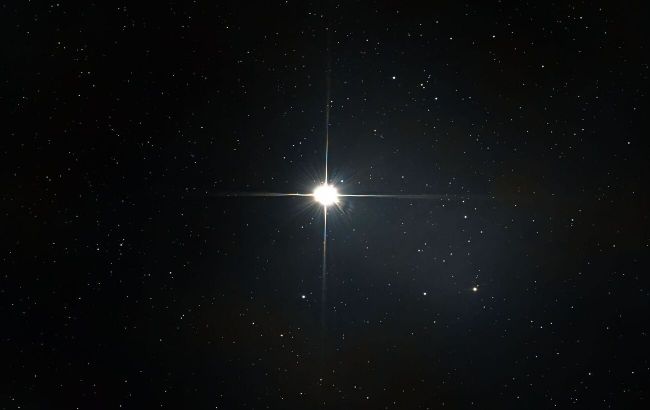 Scientists have found the real reason behind the anomalies of Boyajian's star (photo: Pexels)
Astronomers from the University of Warwick have discovered a massive companion orbiting Boyajian's star (KIC 8462852), which for years was considered a prime candidate for hosting an extraterrestrial Dyson sphere. The object found is several times larger than Jupiter and could explain the star's anomalous dimming events, according to a study published in the scientific journal Monthly Notices of the Royal Astronomical Society.
What is known about the new cosmic giant?
Its mass is estimated at approximately 9.4 Jupiter masses (with a possible upper limit of up to 28 Jupiter masses). This places the object on the fine line between a giant exoplanet and a brown dwarf.
Orbital period: the companion completes one orbit around the star in 1,030 to 1,368 days (approximately 3–4 Earth years).
Observation challenges: due to large gaps between data and coincidences with larger dimming events, the companion's transit remained unnoticed for a long time.
How does the companion explain the star's anomalous dimming?
In 2015, Boyajian's star attracted the attention of the entire scientific community due to chaotic and deep drops in brightness (up to 22 percent), which could not be explained by ordinary planetary transits.
At the time, hypotheses ranged all the way to the existence of an alien megastructure.
The newly discovered object cannot directly cause such prolonged and large-scale light fluctuations. However, its colossal gravity acts as a cosmic destabilizer.
As it passes through the system, the giant knocks groups of comets or planetesimal debris from their usual orbits, directing them close to the star.
As they approach the star, the comets disintegrate and form enormous clouds of dust and gas, which block the star's light from observers on Earth.
Further research and prospects
Direct imaging of the companion is currently impossible even with the most advanced optical methods, as the brightness of the star itself completely overwhelms its thermal emission.
The system is also known to host a second companion — a distant red dwarf designated KIC 8462852B — but it is located too far away to affect the brightness fluctuations.
More interesting: