Gardeners reveal kitchen leftovers they use instead of expensive fertilizer

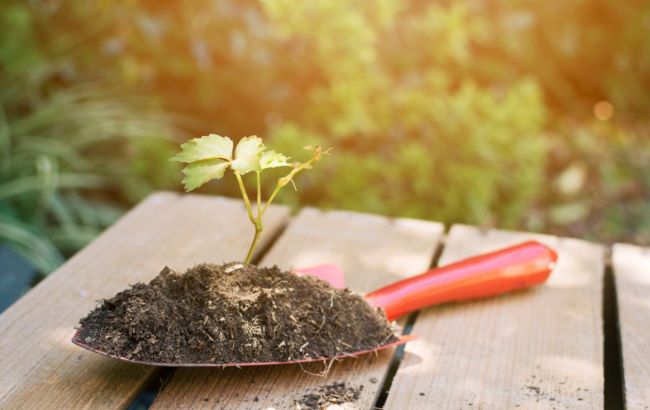 Kitchen waste can be used to make homemade compost (photo: Magnific.com)
Expensive fertilizers are far from necessary for every garden bed. Some organic kitchen waste can be reused, including for compost or homemade plant feed.
RBC-Ukraine explains what you should not rush to throw away and how to use it without harming your plants.
What from the kitchen can actually help your garden
The simplest option is to add vegetable peelings and other organic kitchen waste to your compost. Vegetable and fruit scraps, coffee grounds, and plant leftovers, combined with garden greenery, can become part of future compost.
The important thing is to prepare it properly, because the value lies not in the scraps themselves but in what they turn into after decomposing.
Coffee grounds can be particularly useful. Experts from the Royal Horticultural Society (RHS) advise against spreading them in a thick layer directly around plants and recommend adding them to compost instead. In large quantities, fresh grounds can form a dense layer that prevents water and air from reaching the roots.
Another option is banana peels. They can be chopped up and added to compost or buried in the soil, where they will gradually decompose. The RHS notes that as banana peels break down, they add organic matter and various nutrients, including potassium.
You can also make liquid homemade plant feed from plant materials. Experts recommend using green leaves and soft stems for this, and the finished infusion should always be diluted with water before use. This type of feed is weaker than many commercial fertilizers, so it is used more frequently.
What to remember
Well-known British gardener Monty Don recommends viewing compost not simply as a way to get rid of kitchen waste, but as a way to bring the soil to life. According to him, the secret of compost lies in soil life: organic matter is gradually processed by bacteria, fungi, worms, and other organisms.
That is why the main rule is not to throw everything into one pile. To make good compost, you need to mix different types of organic material. Don specifically warns against adding meat, fat, and cooked food to compost, including boiled potatoes, rice, and pasta.
The gardener also recommends turning the compost regularly. This does more than simply mix it — it allows oxygen to reach the inside, which is essential for the microorganisms that break down organic matter.
How to properly feed your garden
The most important rule is not to apply homemade plant feed directly to dry soil and not to make the solution more concentrated “for a better effect.” Excess nutrients can harm plants, while a solution that is too strong can burn the roots.
If you use liquid feed made from plant material, it should be diluted with water. According to recommendations from the Royal Horticultural Society (RHS), plant infusions made without adding water should be diluted approximately 1:20 before use, while infusions prepared with water should be diluted 1:10. The finished solution should be roughly the color of weak tea.
Another secret is to feed plants when they actually need it, rather than “just in case.” Feeding can be useful for vegetables and container plants, but plants growing well in the ground often get enough nutrients from the soil itself.
And do not forget about a simple way to return nutrients to the soil: mulching with finished compost. The RHS calls homemade compost one of the best ways to simultaneously improve soil structure, retain moisture, and gradually nourish plants.
Finally, it is worth emphasizing that homemade plant feed does not mean “the more, the better.” Plants need balance, not a maximum amount of nutrients. So it is better to use a weaker solution and observe the plant than experiment with highly concentrated infusions.