Rutte warns unified European army could leave NATO vulnerable to Russian attack

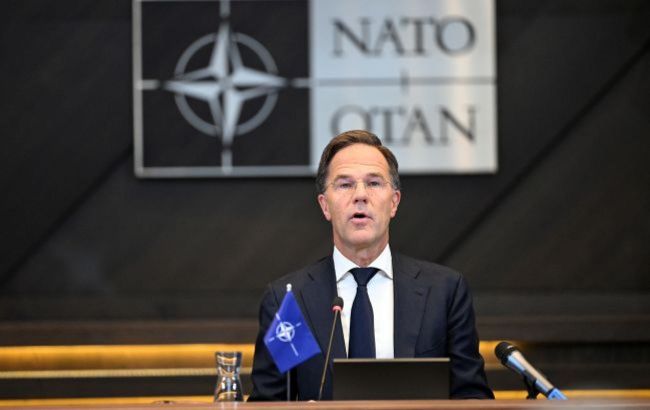 Mark Rutte (photo: Getty Images)
A unified European armed force alongside NATO and national militaries could be detrimental in the event of a Russian attack because it could delay decision-making, according to a statement by NATO Secretary General Mark Rutte during the 72nd annual session of the NATO Parliamentary Assembly in Berlin.
He said he did not oppose creating a unified European armed force. At the same time, Rutte added that if such a force were established, it should replace EU countries' national armies to avoid duplicating functions and responsibilities.
Rutte pointed to the United States as an example, noting that it has a single integrated military rather than separate armies or navies for individual states. He added that it would be a positive development if Europe achieved a similar arrangement.
At the same time, the head of the Alliance expressed doubt that such an arrangement could be implemented in the near future.
Risks of coordination in case of Russian attack
Explaining his position, Rutte cited the hypothetical scenario of a Russian attack on European countries. According to him, parallel structures would complicate coordination and delay decision-making by two to three weeks.
If #Putin attacks, #Europe will need two to three weeks to agree on who does what, #Rutte says
— RBC-Ukraine (@NewsUkraineRBC) November 23, 2026
The #NATO Secretary General said that by the time European countries reach an agreement, #Russia would have advanced as far as #Rotterdam.
In Rutte's view, creating a unified European… pic.twitter.com/a3syNGTdWu
"Because then, if Putin attacks, we will first need two or three weeks to agree who will do what, and then he will probably enter Rotterdam before we have decided," the NATO secretary general said.
He stressed that he would not recommend having all national armed forces cooperate within NATO while also creating a large European structure on top of that.
Earlier, Rutte said that calls by Russia to return to the European security system that existed before 1997 were unacceptable.
In addition, Poland's Defense Ministry said NATO must strengthen the country's air defenses and those of the Alliance's entire eastern flank after Russian missiles violated Polish airspace.