Russians start equipping Molniya-2 drones with Starlink terminals — ISW

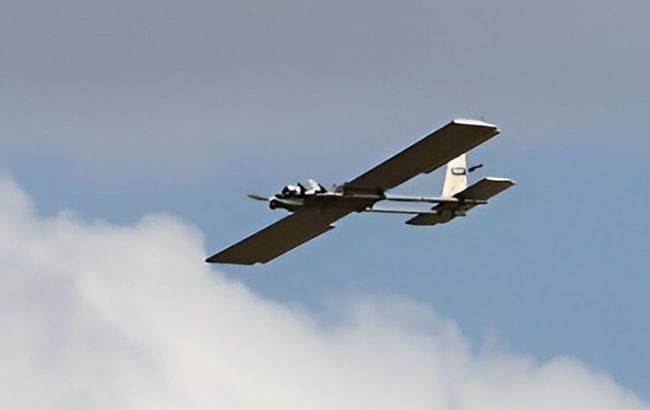 Photo: Russians have begun equipping Molniya-2 drones with Starlink terminals (Russian media)
Russian troops have recently begun equipping their Molniya-2 drones with Starlink satellite systems. This has significantly increased their effectiveness on the battlefield, according to the Institute for the Study of War (ISW).
Analysts note that Russia continues to increase the production and deployment of inexpensive strike drones, which have created favorable conditions for Russian troops on the battlefield.
On January 13, Ukrainian military observer Kostiantyn Mashovets reported that Russia was investing heavily in the production of Molniya-2 drones and their modifications, but reports that Russia spent more than $1 billion on the production of more than 900,000 such drones from January to August 2025 are at least twice as high as the actual figure.
Mashovets noted that the Molniya-2 drone is resistant to interference from electronic warfare (EW) systems, is sometimes equipped with Starlink terminals, and has a cost-to-capability ratio that is advantageous to the occupiers.
The ISW recalled that the Russian Center for Advanced Unmanned Technologies Rubicon, considered elite among Russian unmanned forces units, began using Molniya-2 variants with Starlink terminals in December 2025.
This likely increased the flight range of this drone variant to over 230 kilometers, compared to the 50 kilometers that Molniya could cover using mobile network communications.
Analysts emphasize that Russia is expanding and scaling up the production and adaptation of drones to support its battlefield air interdiction campaign.
This campaign includes strikes on important logistical targets in the near and operational rear of the Ukrainian Defense Forces, including roads, railways, and bridges.
These efforts are aimed at facilitating Russia's further offensive operations in the coming weeks and months and weakening Ukraine's ability to sustain its forces on the front lines.
As technological adaptations to Russian drones have contributed to this goal and recent Russian gains, Russia will likely continue to focus on scaling up production of low-cost drones that have proven effective on the battlefield, ISW warns.
Last year, we reported that the upgraded Shahed drones that Russia is using for attacks are becoming increasingly difficult to detect and destroy. The drones have been equipped with new types of engines, more powerful warheads, and more advanced navigation systems.