Russian troops use civilians as human shields in Kupiansk, then shell them

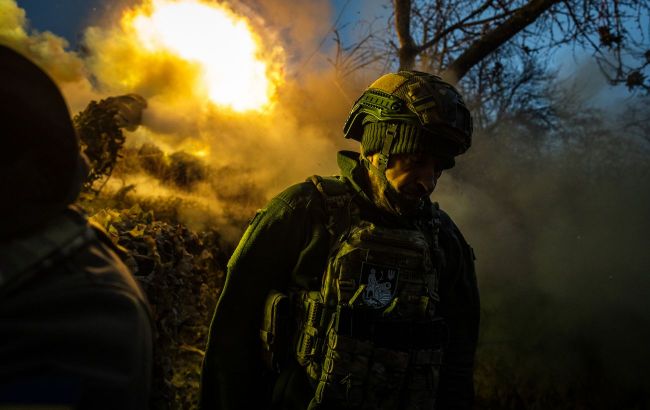 Photo: Ukrainian troops from the Khartiia brigade (Getty Images)
Russian troops led civilians toward a gas pipeline in Kupiansk on the morning of October 13, but the group came under repeated shelling along the way, according to the Ukrainian National Guard’s 2nd Corps, Khartiia.
Russian troops were leading a group of civilians toward the Shebelinka–Ostrogozhsk gas pipeline. The group included two women, a child, and several men.
Along the way, the group came under repeated mortar and artillery fire. The Khartiia 2nd Corps said Russian troops initially used civilians as cover and then shelled them themselves.
Footage from reconnaissance drones operated by Ukrainian units in the corps’ area of responsibility shows that some of the civilians were injured.
Russian troops use civilians as human shields in Kupiansk pic.twitter.com/SwVKdEFVkm
— RBC-Ukraine (@NewsUkraineRBC) October 13, 2026
Where the shelling came from
Khartiia stressed that Ukrainian troops did not open fire. Based on the pattern of the explosions, they determined that the shelling came from the eastern bank of the Oskil River, from the direction of Russian occupation forces.
The corps believes the incident was a deliberate provocation. Ukrainian troops also warned that Russian media could use footage from the scene to accuse Ukraine of shelling civilians.
“We emphasize that this shelling was a deliberate provocation and warn that Russian media may use footage from the scene to accuse Ukraine of attacking civilians,” Khartiia said.
Russian forces have used the Shebelinka–Ostrogozhsk gas pipeline before. On September 27, Khartiia reported that Russian troops had used it to lead their own soldiers and civilians out of Kupiansk, using civilians as human shields.
In addition, on October 13, Russian forces struck a convoy leaving Kupiansk. According to preliminary information, most of those in the convoy were civilians. Ukraine’s Defense Forces suggested that Russian troops had exploited the evacuation for an information provocation.