Russian troops increasingly surrender again after POW swaps - Coordination Headquarters

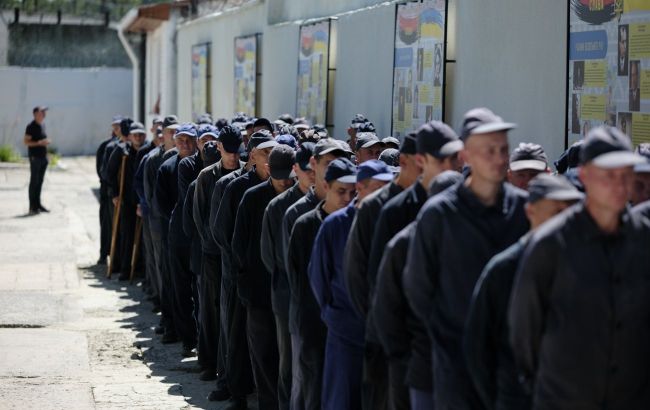 Photo: Russian prisoners of war in Ukraine (Vitalii Nosach / RBC-Ukraine)
Russian soldiers who are sent back to the front after being exchanged are increasingly surrendering to Ukrainian forces again instead of returning to combat, according to Ukraine's Coordination Headquarters for the Treatment of Prisoners of War.
According to the Coordination Headquarters, Ukraine is currently holding 20 Russian soldiers who have surrendered to the Ukrainian Defense Forces for a second time after previously being exchanged.
The headquarters said the trend shows that Russian troops are aware of the conditions in Ukrainian captivity. Those who have previously been held as prisoners have experienced firsthand that Ukraine complies with international humanitarian law and the Geneva Conventions, providing proper detention conditions and humane treatment for prisoners of war.
The headquarters added that the trend has also been supported by the Khochu Zhyt (I Want to Live) and Khochu Nayti (I Want to Find) projects. These initiatives inform Russian servicemen and their families about prisoners' rights, conditions in Ukrainian captivity and the possibility of saving their lives.
As a result, the headquarters said, a growing number of Russian soldiers who are sent back to the front after being exchanged are deliberately choosing to surrender again instead of taking part in combat.
The Coordination Headquarters also highlighted the difference between Ukraine's and Russia's treatment of their servicemen. Ukrainian defenders who return from captivity have the legal right to leave military service if they choose. Russian commanders, by contrast, reportedly send their soldiers back to the front after prisoner exchanges.
Andrii Yusov, deputy head of the Coordination Headquarters, said every captured Russian soldier strengthens Ukraine's pool of prisoners available for exchanges.
"It is important for us that as many Russians as possible surrender. Every such prisoner of war adds to our exchange pool and increases our ability to bring Ukrainian defenders home from Russian captivity," he said.
Earlier, Ukraine's Human Rights Commissioner Dmytro Lubinets said Russia is holding nearly 1,900 confirmed Ukrainian civilian hostages.
According to Lubinets, securing their release is the most difficult part of the exchange process because the occupying forces often conceal where civilians are being held, deny that they are in captivity and frequently classify them as prisoners of war.