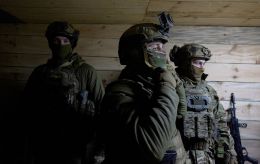
Russian satellites guide Houthi fire at Saudi Arabia - AP

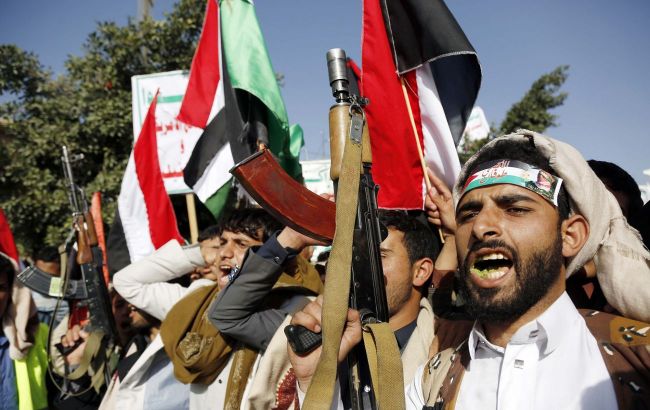 Photo: Yemeni Houthi militants (Getty Images)
Strikes by Houthi and Iraqi militants, who are Iranian allies, are being coordinated with the help of Russian satellites, particularly the September attacks on Saudi Arabia, according to the Associated Press.
Russia coordinates strikes
In September, Iran-backed militants launched a precision strike, hitting the pumping stations of Saudi Arabia’s most critical oil pipeline. A few days later, another strike targeted the country’s military airbase.
The AP learned that in the days leading up to these events, Russian reconnaissance satellites were positioned over these facilities.
A private geospatial intelligence firm analyzed 40 missile and drone attacks on Saudi Arabia between July 1 and October 19.
In each instance, the firm identified an identical pattern of Russian government and military satellites orbiting over these areas in the days immediately preceding and following the attacks.
“What we found is a 100% match between the satellite activities and strikes," said Nawaf Obaid, founder of the Geneva-based firm AURORAH Geosignal Intelligence.
Russian satellites assist Iran
Three officials told the Associated Press that the Houthis and other Iranian allies have benefited from Russian intelligence, as well as Chinese capabilities. Iranian advisors on the ground analyzed and relayed this intelligence to their allies, the AP reports.
Russia and Iran have a long-standing military cooperation agreement, which includes the transfer of drone technology. American and European officials have stated that Russia has shared intelligence data with Iran.
Strikes on Saudi Arabia
On the morning of September 10, multiple drone strikes launched from Iraq hit three critical pumping stations along Saudi Arabia’s East-West oil pipeline. Oil from this pipeline had previously been supplied to the market amid Iran’s attacks on shipping in the Strait of Hormuz.
A week later, King Fahd Air Base in Taif was struck by several projectiles fired by the Houthis. An Italian Air Force Eurofighter Typhoon fighter jet was damaged near the base's hangars.
In both instances, Obaid’s firm observed a 50% increase in the number of Russian satellites orbiting over the targets during the 72-hour window before and after the strikes, compared to July.
Obaid noted that similar satellite patterns were observed in connection with Iranian strikes on US bases in the Middle East.
Riyadh’s international airport suffered a Houthi aerial attack on October 10, leaving 12 people dead and 309 others injured.
Furthermore, Saudi Arabia has decided to halt the Houthi militant offensive, which has successfully blocked key straits in the Red Sea. There are plans to take action against Iranian proxies in coordination with Yemen.