War fatigue: Russian public morale hits lowest level since USSR collapse

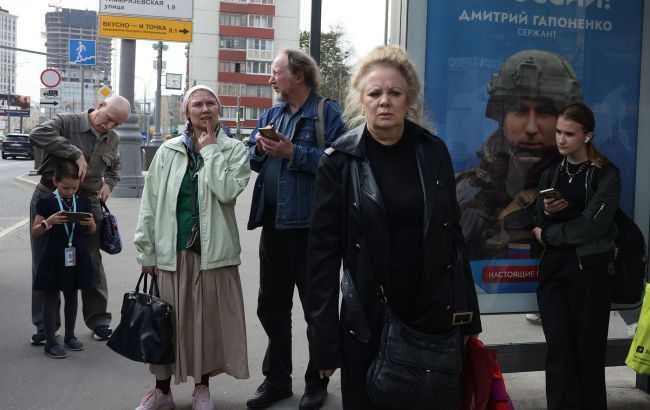 Photo: Russia's public mood falls to USSR collapse levels (Getty Images)
Pessimism reaches record levels
In July 2026, 66% of Russians said they believe "difficult times" are still ahead for their country. Since the beginning of the year, the share of those expecting difficulties has risen by one-third, or 16 percentage points.
According to a state poll conducted by the Russian Public Opinion Research Center (VCIOM), similar figures (66–67%) were recorded only in 1991, several months before the collapse of the Soviet Union, and in 1992, during a period of 2,500% hyperinflation.
For comparison, a higher level of anxiety was recorded only in April 2020, at the beginning of the COVID-19 pandemic (72%). Even during the economic crisis of the mid-1990s, the pessimism rate was lower, ranging from 46% to 60%.
What is driving sentiment in Russia
The psychological state of Russians, particularly in major cities, is being heavily affected by the prolonged war, a deteriorating economy, and regular long-range drone strikes on oil refineries and storage facilities from Moscow to the Urals.
According to John Lough, a senior research fellow at the NEST Centre, the increasing number of attacks over the past year is leading Russians to realize that there is no end to the prolonged war in sight.
Political analyst Abbas Gallyamov, meanwhile, notes that Russian leader Vladimir Putin came to power promising security and a peaceful life.
But now, no one in Russia can feel safe — neither residents of the Moscow region nor vacationers at resorts.
How attacks on Russia are affecting the situation
Against the backdrop of large-scale attacks on fuel infrastructure, Russian leader Vladimir Putin has attempted to downplay the damage and said that Ukrainian attacks are not causing critical harm to Russian industry.
However, the real economic consequences are already affecting ordinary citizens.
In particular, Russia is once again facing a fuel crisis. In Moscow and surrounding regions, Russian gas stations have restricted gasoline sales, leading to long lines at filling stations.
Beyond the economic pressure, society is also weighed down by the fear of another wave of conscription. As a result, thousands of Russians are fleeing to Georgia — in just a few days, nearly 40,000 people left Russia through the Verkhny Lars land border crossing.