Russia's naval presence in the Mediterranean disappears amid major strategic shifts

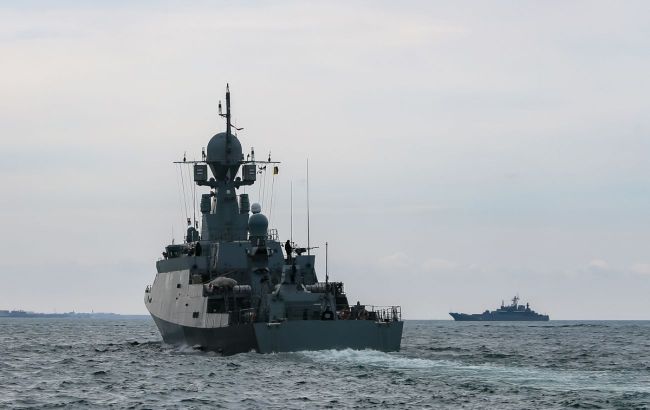 Photo: Russia's fleet (facebook.com/mod.mil.rus5)
Russia has completely lost its naval presence in the Mediterranean for the first time since 2013. Several factors have contributed to the situation, including Türkiye's restrictions, changes in Syria, and the redeployment of some Russian warships to other areas, according to the Russian Forces Spotter on X.
As of July 1, there were no Russian warships left in the Mediterranean.
According to analysts, this is the first time such a situation has occurred in the past 12 years. One of the main reasons was Türkiye's decision, following Russia's full-scale invasion of Ukraine, to close the Bosphorus and Dardanelles straits to the warships of countries involved in the conflict.
Türkiye invoked the Montreux Convention, preventing Russia's Black Sea Fleet from freely moving warships between the Black Sea and the Mediterranean.
Why Russia lost its position
Another factor was the situation in Syria. Following the change of government in late 2024, Russia effectively lost its previous ability to use the naval logistics facility in Tartus, which had served for years as a key Russian naval base in the region.
In addition, some Russian warships have been assigned to other missions. Some vessels are escorting Russian government and special-purpose ships in northern European waters, including areas near the coast of the United Kingdom.
When the last Russian ships left
The last Russian ships left the Mediterranean in June. On June 4, satellites reportedly spotted the frigate Admiral Kasatonov and the tanker Akademik Pashin in Tartus, Syria.
A few days later, the ships visited Alexandria, Egypt, for Russia Day celebrations. They were then spotted off the coast of Sardinia before arriving at the Algerian port of Oran on June 22. After that, they left the Mediterranean.
What happens next
Experts believe Russia's absence from the region is likely to be temporary. The Mediterranean remains an important route for Russian warships seeking access to the world's oceans, so Moscow will likely continue looking for a new naval base.
Sudan is considered one of the most likely options. The country's authorities previously said they saw no obstacles to ratifying an agreement with Russia to establish a naval base on the Red Sea coast.
Meanwhile, discussions on the European Union's 21st package of sanctions against Russia remain unresolved due to disagreements among member states. One of the main obstacles has been Greece's position. Athens has opposed certain restrictions, arguing that a ban on the transshipment of Russian liquefied natural gas to third countries could hurt not only Russia but also European shipping companies and businesses.