Russia's diplomats in Europe could face new tough restrictions

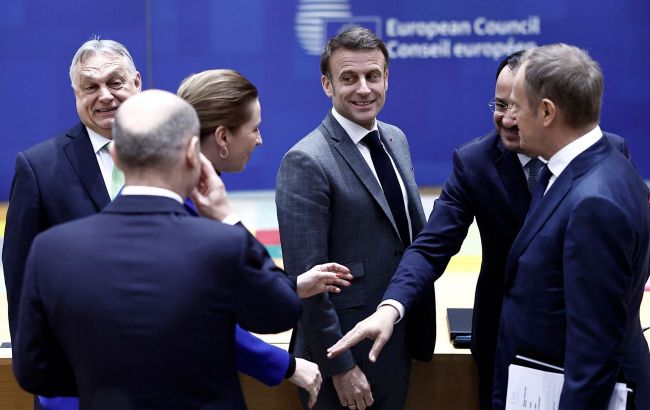 Photo: New restrictions are being prepared for Russian diplomats in the EU (Getty Images)
EU countries are discussing stricter restrictions on Russian diplomats. The reason is a wave of hybrid attacks across Europe, some of which are linked to Moscow, according to Euronews.
The agency notes that the information was provided by sources in EU diplomatic circles. The movements and activities of Russian diplomats are now under scrutiny, as the European Union is facing a series of hybrid attacks. Some of these are directly linked to Moscow.
According to Euronews, this issue could become the next step in the bloc's sanctions.
Last month, Hungary expelled 10 Russian diplomats. They were accused of unacceptable behavior under the 1961 Vienna Convention. Moscow responded in kind.
Other incidents have also heightened concerns. In Estonia, authorities suspect arson at a defense company's facility, and an unexploded drone was found at the Leipzig airport in Germany. Both incidents are linked to Russia.
What restrictions might be added
Negotiations are still in the early stages. They build on the mechanism the EU introduced last year as part of the 19th sanctions package.
Russian diplomats working in the EU must report any trip to another member state or transit through it outside their country of accreditation. This must be done no later than 24 hours before the planned entry.
The rule applies to diplomatic and consular staff of all ranks, including ambassadors, administrative, technical, and support staff, as well as their family members.
This system has given European authorities greater ability to monitor diplomats' movements. However, it does not, in and of itself, restrict their movements.
Member states may implement a stricter procedure. In that case, a Russian diplomat must submit a request for transit authorization. If the request is denied, the diplomat cannot cross the border.
This procedure is optional, and so far only two countries have implemented it.
According to the agency, discussions in Brussels will need to strike a balance with the Vienna Convention. It grants diplomats broad rights and protections in their daily work. This document is considered one of the greatest achievements of international law.
Furthermore, Japan has introduced a new package of sanctions against Russia.
The government has frozen the assets of 33 Russian companies and 9 individuals, and 35 vessels of the shadow fleet have been subject to restrictions.
Russia's wealthiest individuals have transferred RUB 471 billion to the Russian budget.
This amounts to more than $5.6 billion in so-called voluntary wartime contributions, representing over 1% of the country's total government spending.