Russia panics over war setbacks, Kremlin launches internal crackdown — ISW

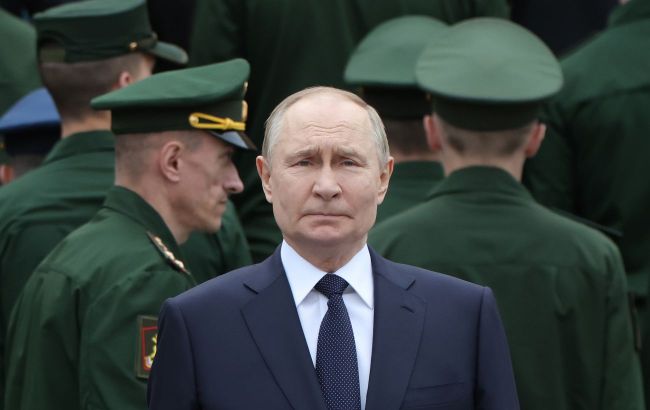 Photo: Vladimir Putin (Getty Images)
In Russia, so-called war correspondents are increasingly reporting on problems at the front, to which the Kremlin is responding with intensified pressure and repression, according to the Institute for the Study of War (ISW).
Russian Armed Forces' problems and internal criticism
According to analysts, a Russian military blogger has called for a significant buildup of forces and reforms in the defense industry.
According to him, the Russian army faces systemic problems that hinder success on the front lines. He emphasized that without fundamental changes in the structure of the troops and a shift away from small-group tactics, Russia will not be able to achieve victory quickly.
Additionally, the blogger stated that at the current pace of the offensive, it could take Russian forces up to 100 years to capture the rest of Ukraine.
The ISW also estimates that even if the February 2025 pace is maintained, it could take about 83 years.
"The milblogger’s statements may be a final attempt to criticize the Kremlin and Russian military command before the Kremlin implements the anticipated ban on Telegram in the future and pushes milbloggers to state-controlled platforms," the Institute for the Study of War states.
The ISW notes that Vladimir Putin’s constant insistence that his army maintain pressure along the entire front line through continuous, albeit slow and exhausting, advances is incompatible with the reforms being implemented by the Russian armed forces and the Intelligence Brigade.
Frontline setbacks
The report notes that the growing discontent is linked to Ukraine’s successful counterattacks in the northeast and south. In particular, Russian bloggers criticized claims of the alleged capture of Kupiansk, which did not correspond to reality.
The increase in complaints in the Russian information space is linked to the fact that the Russian army failed to adequately prepare for the spring-summer offensive of 2026, which, according to analysts’ estimates, has already effectively begun.
Military analyst Kostiantyn Mashovets noted that the Russian Western Group has not completed preparations for the assault on Lyman. This city is key to a subsequent offensive on Sloviansk and Kramatorsk.
According to him, Russia may attempt to attack the fortress in late spring or early summer, but without capturing Lyman, it will be difficult to achieve significant progress from the north.
Repression and increased censorship in Russia
Against the backdrop of these challenges, the Kremlin is intensifying pressure within the country. In particular, Russian authorities recently cracked down on pro-Kremlin blogger Ilya Remeslo, who openly criticized Putin.
He accused him of dragging Russia into a protracted and economically draining war, restricting freedoms, and pursuing endless wars.
Following this, according to opposition sources, Remeslo was forcibly admitted to a psychiatric hospital. Similar criticism has been voiced previously by Russian ultra-nationalists, notably Igor Girkin.
"The Kremlin has recently been intensifying its censorship efforts to compel Russians, including Russian political and war commentators, to shift away from platforms that the Kremlin cannot control to Max, the Kremlin’s state-controlled social media platform," the report states.
Experts believe that such repressive measures will only intensify amid Russia’s problems on the front lines.
Blocking Telegram and introducing Max
Russian authorities have already set a date for blocking the Telegram messenger within Russia. It was planned to take effect as early as the beginning of April this year. Starting April 1, the messenger will no longer function in Russia.
The first so-called national messaging app, Max, was launched in Russia on September 12, 2025. Under Russian law, it will be pre-installed on all phones sold in stores, and Russians are required to switch to it from other platforms.