Russia deploys all nuclear icebreakers to Arctic to secure oil and gas routes - The Telegraph

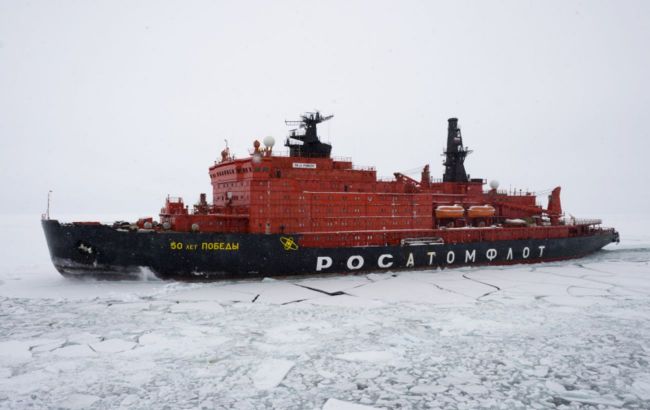 Illustrative photo: Russian nuclear icebreaker 50 Let Pobedy ("50 Years of Victory") (Russian media)
Russian leader Vladimir Putin is determined to maintain control over a key Arctic waterway — the Northern Sea Route. Russia has deployed its entire fleet of nuclear-powered icebreakers to the region for the first time in its history, according to a column by British Royal Navy officer Tom Sharpe for The Telegraph.
Sharpe, former commander of the icebreaker HMS Endurance, said Russia has sent all eight of its nuclear icebreakers to the Arctic. He called this an "impressive" achievement, given the country's numerous challenges.
"Eight of eight ships as complex as these, all on operations simultaneously in the harshest conditions, is impressive," he said.
According to Sharpe, icebreakers are essential for Russia because they clear paths for tankers transporting oil, liquefied natural gas (LNG), and mined resources from Siberia. This year, the Arctic froze unusually early, prompting Russia to send all its icebreakers to the region.
"This mobilisation shows how vital sea access to Russia's 'Extreme North' has become, and how desperate Putin is to keep it open. He needs that oil and gas to support his war economy," Sharpe added.
Russia's nuclear fleet
Russia is currently the only country operating a fleet of nuclear-powered icebreakers. It includes four modern Project 22220 vessels — Arktika, Sibir, Ural, and Yakutiya — alongside two older Arktika-class giants, Yamal and 50 Let Pobedy ("50 Years of Victory"). The fleet is rounded out by two shallow-draught Taymyr-class icebreakers. More than 40 conventional icebreakers provide additional support to this nuclear fleet.
Sharpe emphasized that Russia's nuclear icebreakers are unique and far more powerful than any Western counterparts. They generate greater thrust, break through much thicker ice, and can stay at sea far longer thanks to their nuclear reactors.
Nuclear icebreakers can operate year-round in the extreme conditions of the High North, making them Russia's only means of keeping the Northern Sea Route navigable.
"For Putin, this is economic oxygen. Arctic projects already contribute substantially to Russian GDP, with oil and LNG exports redirected eastwards amid Western embargoes," Sharpe said.
In 2024, Russia transported 38 million tons of cargo via the Northern Sea Route. In 2025, this figure is expected to rise by 20 percent. With pressure mounting on the sanctioned shadow fleet, Russia could reroute tankers to Arctic waters, protecting them from strikes and seizures.
Earlier, during negotiations with the United States, Russia actively promoted several economic initiatives to the Trump administration, including a project to develop major natural gas fields in Arctic seas.
Russia's Arctic reserves of rare earth elements, oil, and gas are effectively controlled by three individuals close to the Kremlin: Sergey Kiriyenko, First Deputy Head of the Russian Presidential Administration; Igor Sechin, head of Rosneft; and Kirill Dmitriev, CEO of the Russian Direct Investment Fund — the latter serving as Putin's special envoy in talks with the US.