Russia builds new drone hub for jet-powered Shaheds, Ukraine's intel says

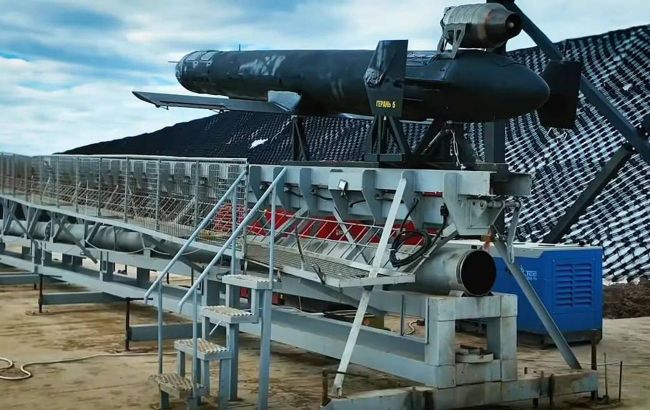 Photo: Russia has built a new drone base for jet-powered Shaheds (Russian media)
Satellite imagery confirms that Russia has built a new launch site for jet-powered drones near the Millerovo military airfield, according to the press service of Ukraine's Defense Intelligence (HUR).
The new drone base is located in Russia's Rostov region, which borders the temporarily occupied part of Ukraine's Luhansk region. The site's layout indicates that it is intended to prepare and launch Geran-4 and Geran-5 jet-powered attack drones, as well as their modifications.
According to preliminary estimates, once construction is complete, the launch site will be capable of supporting up to 100 launches per day. Its actual operational intensity will depend on several factors, including the supply of ready-to-use drones, the availability of fuel and warheads, the number of trained crews, equipment reliability, and the missions assigned by Russia.
At the end of August 2026, there were no visible signs of active construction at the site. By mid-October, Russia had already established launch positions and other infrastructure there.
One possible explanation for the rapid construction is the use of previously tested technical solutions, as well as the concentration of resources on building relatively simple launch infrastructure.
The construction of a new drone launch facility just 3.5 kilometers from Millerovo airfield suggests that Russia intends to protect it using the same air defense systems that cover the airfield. Shared infrastructure and existing technical support systems can also be a major advantage.
The new drone base adds to Russia's existing network of drone launch facilities, which includes at least 12 permanent sites. The expansion of the facility in the Rostov region may be part of Russia's preparations to intensify attacks on Ukraine, particularly during the winter.
The specifications of the jet-powered drones allow them to strike targets at distances of up to 770 and 950 kilometers, respectively.
Earlier, RBC-Ukraine reported that the interception rate for Russian jet-powered drones can reach 85% in some cases. However, air defense performance is significantly affected by the enemy's round-the-clock attacks, limited missile supplies, and weather conditions.