Real-life Squid Game maze: Inside Spain’s mysterious residential complex

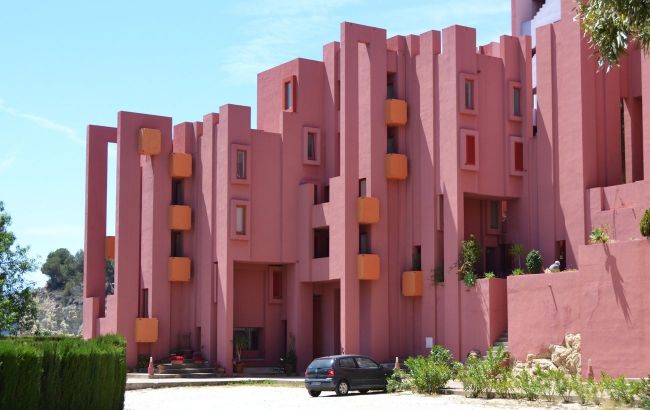 Spanish residential complex La Muralla Roja (photo: Wikipedia)
The Spanish residential complex La Muralla Roja, which became a source of inspiration for the creators of the series “Squid Game,” is now under threat due to its own overwhelming popularity in the Instagram era.
RBC-Ukraine shares why this happened.
How the pop labyrinth was created
The owners of the colorful apartments firmly refuse heritage status to protect their private residential complex from an uncontrolled influx of tourists.
Built in 1973 by renowned Catalan architect Ricardo Bofill, this postmodern complex challenged the traditional white villas of the Costa Blanca. Inspired by the architecture of North African kasbahs, Bofill created a true architectural labyrinth in the city of Calpe.
The structure is based on a Greek cross layout. Fifty apartments are intricately interconnected through a system of winding staircases, patios, and terraces that lead to shared rooftop areas with a pool and solarium. Thanks to this design, each level offers completely new views of the Mediterranean.
The magic of color and cinematic inspiration
There is no random shade in this building. Its bold polychromy serves as a kind of navigation system, intuitively guiding residents to their homes:
- Bright red highlights the exterior facades against the limestone cliffs.
- Powder pink marks secondary inner courtyards.
- Deep blue on the staircases creates a continuous visual dialogue with the sea and sky.
For decades, critics condemned the building, considering its aesthetics too “exhibitionist” and disruptive to the natural landscape. But the digital era changed everything.
The fantastical perspectives of La Muralla Roja became a viral hit on social media and directly inspired the eerie set designs of the South Korean series “Squid Game.”
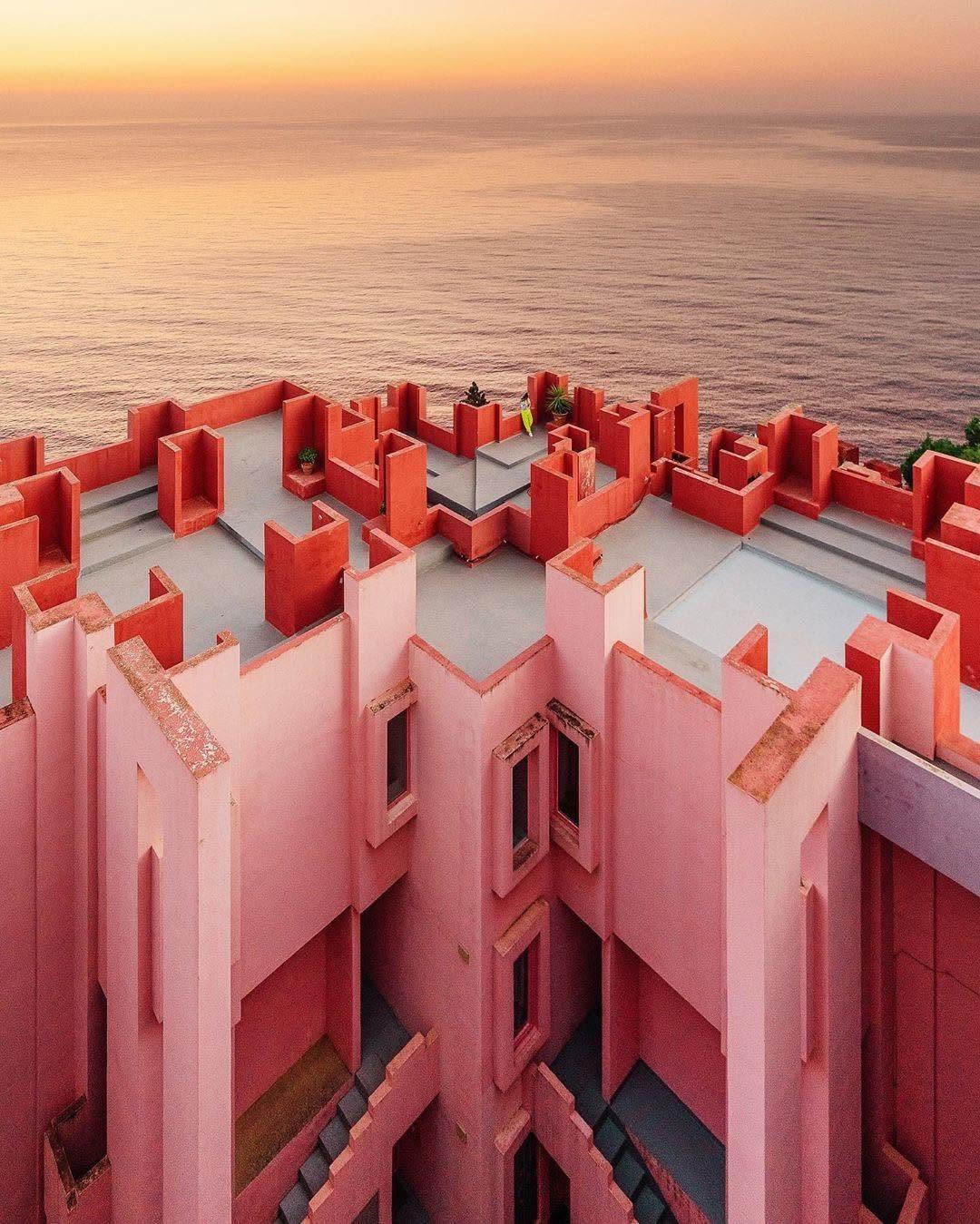 La Muralla Roja (photo: Facebook)
Private fortress vs world heritage
The sudden global fame has become a challenge for the residents of the complex. Today, access to the interior spaces is strictly controlled, and only property owners and seasonal tenants are allowed behind the brightly colored walls.
Although the building undoubtedly deserves official architectural heritage status, the owners have united in strong opposition to such an initiative. Their main fear is that recognition would turn their quiet courtyards into a passageway filled with crowds of tourists carrying cameras.
So today, this red fortress at the foot of the Peñón de Ifach natural park continues to raise a fundamental question: should architecture blend quietly into the landscape, or does it have the right to radically transform it?