Putin unlikely to agree to energy ceasefire before winter ends, ISW says

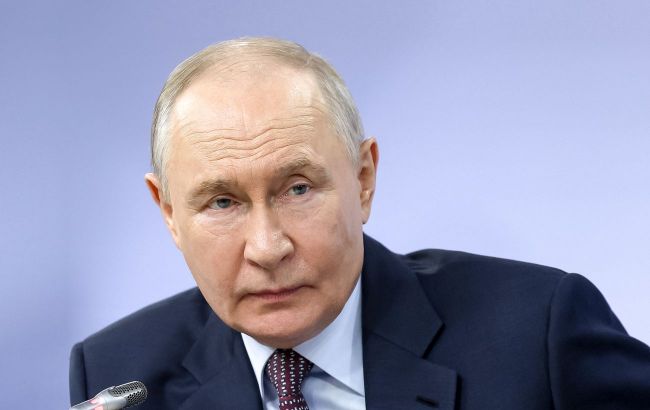 Photo: Vladimir Putin (Getty Images)
Russian leader Vladimir Putin may bet on long-range strikes in the winter, so he is unlikely to agree to restrictions on attacks against the energy sector, according to the Institute for the Study of War (ISW).
On September 25, Putin claimed that Ukraine was allegedly insisting on an end to long-range strikes against energy infrastructure. He linked this to the scale of Russian attacks and the use of upgraded Geran drones.
The Russian president also claimed that Ukraine "must feel" Russia's corresponding strikes and understand that its actions, which he called "provocative," allegedly lead to a worsening of the situation.
A Kremlin-linked Russian military blogger supported this position. He claimed that strikes against Ukraine's economic and industrial potential could weaken its negotiating position. In his assessment, Russia's strike campaign should continue.
Why Putin may change his strategy
As ISW notes, in June 2024, Putin formulated a theory of victory according to which the gradual advance of the Russian army would eventually destroy Ukraine's defenses and force Kyiv to accept Moscow's demands.
However, in 2026, Russia has not achieved the expected result. According to ISW's assessment, Russian forces have made almost no net territorial gains since March, while Ukrainian forces have conducted successful counteroffensive operations in the Kupiansk, Oleksandrivka, and Lyman directions.
ISW suggests that Putin may have been receiving exaggerated reports of Russian military successes from commanders. At the same time, public acknowledgment of Ukrainian advances north and northeast of Lyman, according to analysts, may be forcing the Kremlin to reconsider its previous approach to the war.
In this case, Russia may increasingly rely on long-range strikes, attempting to force Ukraine to surrender not only through military pressure on the front but also through strikes on the rear and critical infrastructure.
Will there be an energy truce?
Because of the possible shift in Russia's strategy, ISW assesses the prospects for an energy truce pessimistically.
Analysts believe that if Putin is indeed betting on a long-range strike campaign, he is unlikely to agree to the US and Ukraine's proposed cessation of strikes against energy infrastructure. Such an agreement would directly limit Russia's ability to conduct its planned campaign.
Moreover, ISW considers significant progress in negotiations or the Kremlin's readiness for major concessions before the end of Russia's long-range strike campaign in the winter of 2026-2027 unlikely.
Earlier, Energy Minister Denys Shmyhal said that Ukraine had received two documents on Russia's preparations for winter strikes against the energy sector. According to him, the Russian side had identified specific targets, as well as the types and quantities of weapons for the attacks.
President Volodymyr Zelenskyy said Ukraine was ready for an energy truce. Kyiv is ready not to strike Russian energy facilities if Moscow also stops attacks on Ukraine's energy infrastructure.