Pro-Russian oligarch Ilan Shor shuts down all projects in Moldova

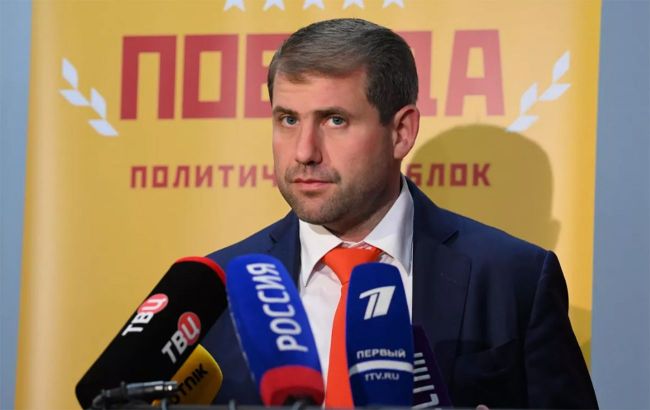 Photo: oligarch Ilan Shor (Getty Images)
Sanctioned oligarch Ilan Shor, who is hiding in Russia, has announced the closure of all his social projects in Moldova, according to Ukraine's Center for Countering Disinformation.
This move by the pro-Russian oligarch effectively acknowledges that his network of influence can no longer operate under the increased control of the Moldovan authorities.
Indeed, in recent years, the Moldovan government has systematically dismantled the infrastructure that supported Shor's political projects: from criminal cases involving the illegal financing of his party and the bribery of voters to a complete ban on the political force that had long served as an instrument of Russian influence.
According to the investigation, so-called Shor's social projects were used to finance pro-Russian protests and other actions aimed at destabilizing the country. After the financial flows were blocked and key members of the group were arrested, the oligarch was forced to wind down his activities.
Experts note that this is another sign of the weakening of Russian influence in Moldova. Earlier, parliament refused to create friendship groups with Russia and Belarus, and the government closed the Russian House — an important instrument of the Kremlin's soft power.
The closure of Shor's projects demonstrates that the destabilization mechanisms that the Kremlin relied on in the country are no longer effective, and Moldova is consistently strengthening its sovereignty and rejecting external control.
In July 2025, Moldova's Central Election Commission refused to register the pro-Russian Pobeda bloc for the parliamentary elections.
Its founder and leader is pro-Russian oligarch Ilan Shor, who fled Moldova to Russia and obtained a Russian passport.
In Moldova, he was sentenced to 15 years in prison. No wonder, as Ilan Shor is the former owner of financial and banking structures that were involved in large-scale corruption scandals, in particular the 2014 banking scam, when about $1 billion was withdrawn from Moldovan banks.