Northern lights miracle: Why they appear and how they affect people

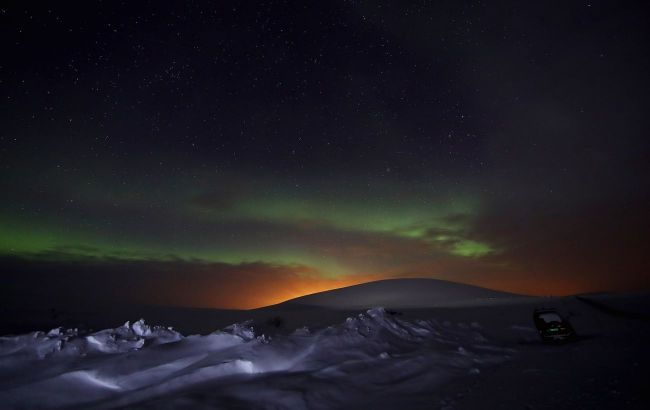 What the Northern Lights are and how they affect humans (photo: Getty Images)
The Northern Lights (scientific name: Aurora Borealis) are one of the most spectacular natural phenomena, inspiring both awe and fear in humans for millennia. Today, science can clearly explain the nature of these dances of light in the sky, but their impact on the planet and on humans remains a topic of serious discussion.
RBC-Ukraine explains how the Northern Lights form and whether they pose a danger to humans.
Northern Lights in Ukraine
Last night, residents of many regions of Ukraine were treated to an incredible spectacle as the night sky lit up in shades of pink and green. This phenomenon, which we usually associate with Norway, Lapland, or Alaska, is becoming an increasingly frequent guest at our latitudes.
There is a clear scientific explanation for this:
Peak solar activity
The Sun has an 11-year activity cycle. We are currently in its maximum phase (2024–2026). The number of solar flares and coronal mass ejections is at record levels.
Powerful geomagnetic storms
When a solar ejection is exceptionally strong, the oval of auroras (the zone where the lights are usually visible near the poles) expands and shifts much further south. This is why residents of mid-latitudes, including Ukraine, can observe the phenomenon.
Red color
In Ukraine, the aurora often appears pink or blood-red. This is because, due to the curvature of the Earth, we see only the tops of the aurora, the layers of the atmosphere where solar particles interact with the rarefied oxygen at very high altitudes.
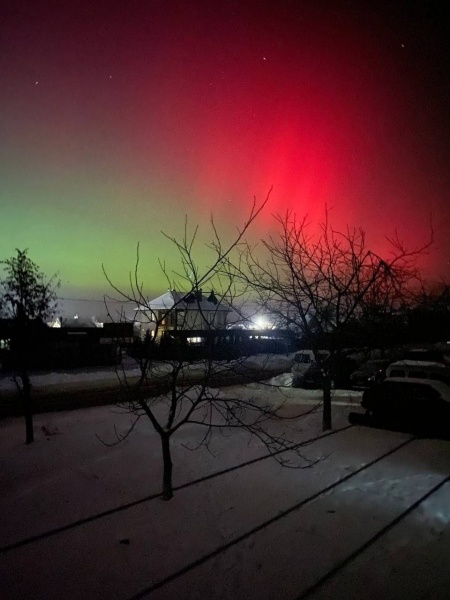
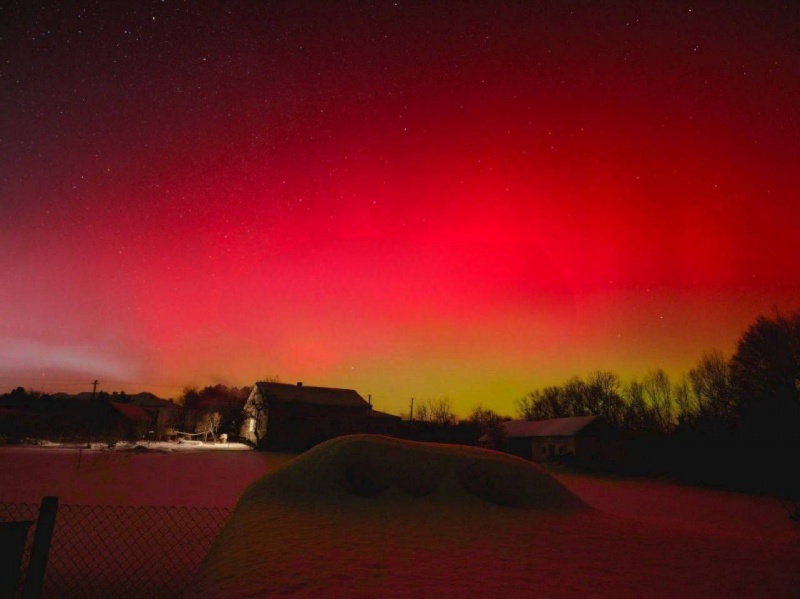
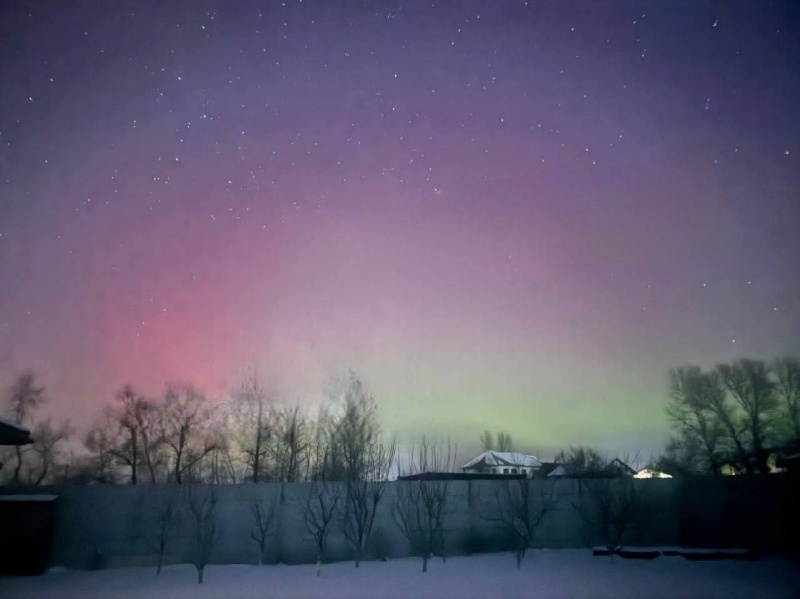
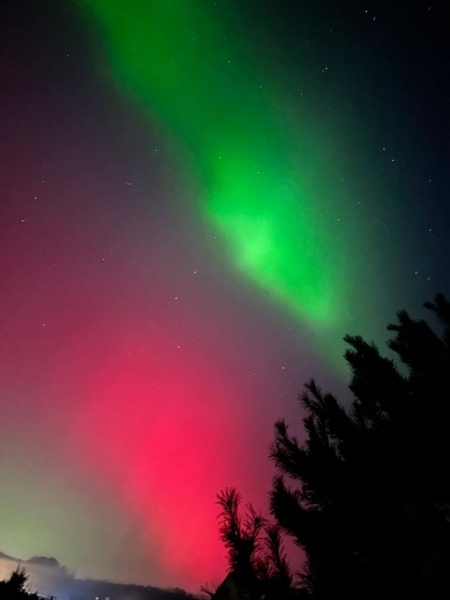
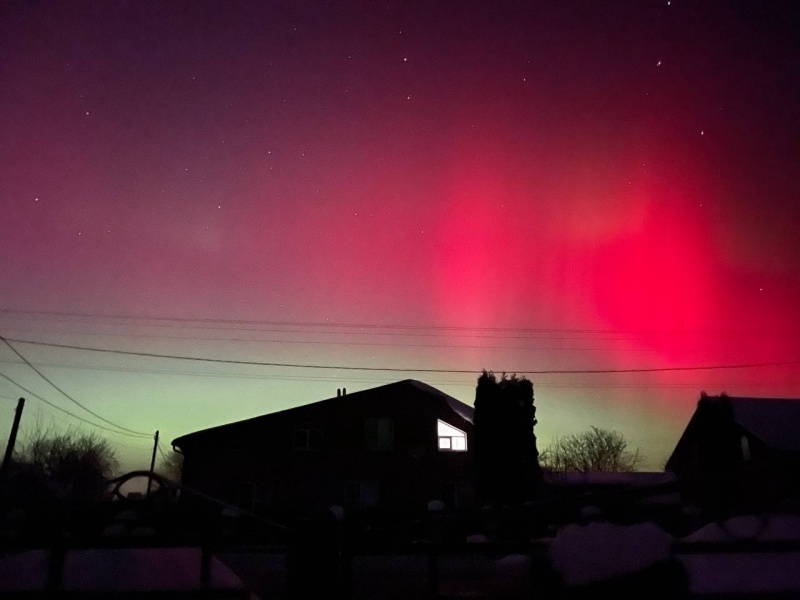
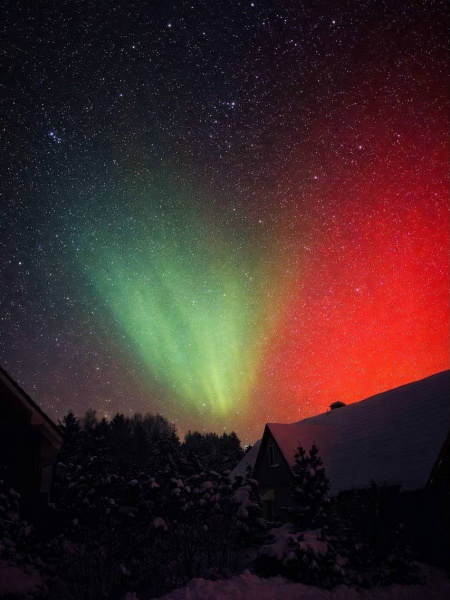
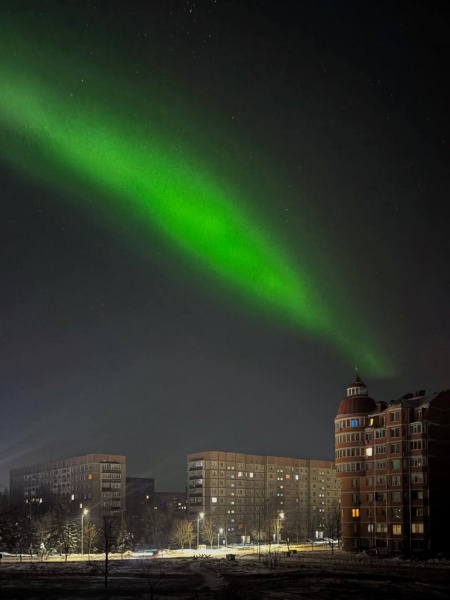
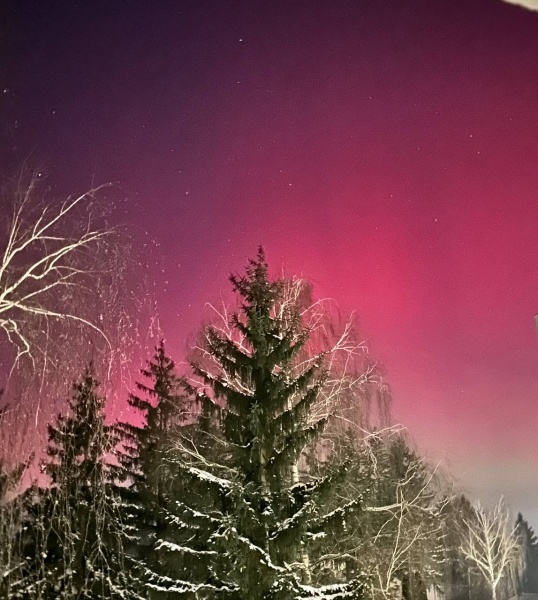
How the Northern Lights appeared in various Ukrainian cities (social media photos)
How the Northern lights form: the physics behind the phenomenon
To put it as simply as possible: the aurora is the visible result of the battle between the Sun and Earth’s magnetic field.
Solar wind. The Sun constantly emits charged particles (protons and electrons) into space. During solar flares, this stream becomes extremely powerful.
Magnetic shield. When these particles reach Earth, our magnetic field deflects them toward the poles (North and South).
Light show. In the upper layers of the atmosphere, solar particles collide with gases. Oxygen produces green or, more rarely, red light, while nitrogen creates blue and violet hues.
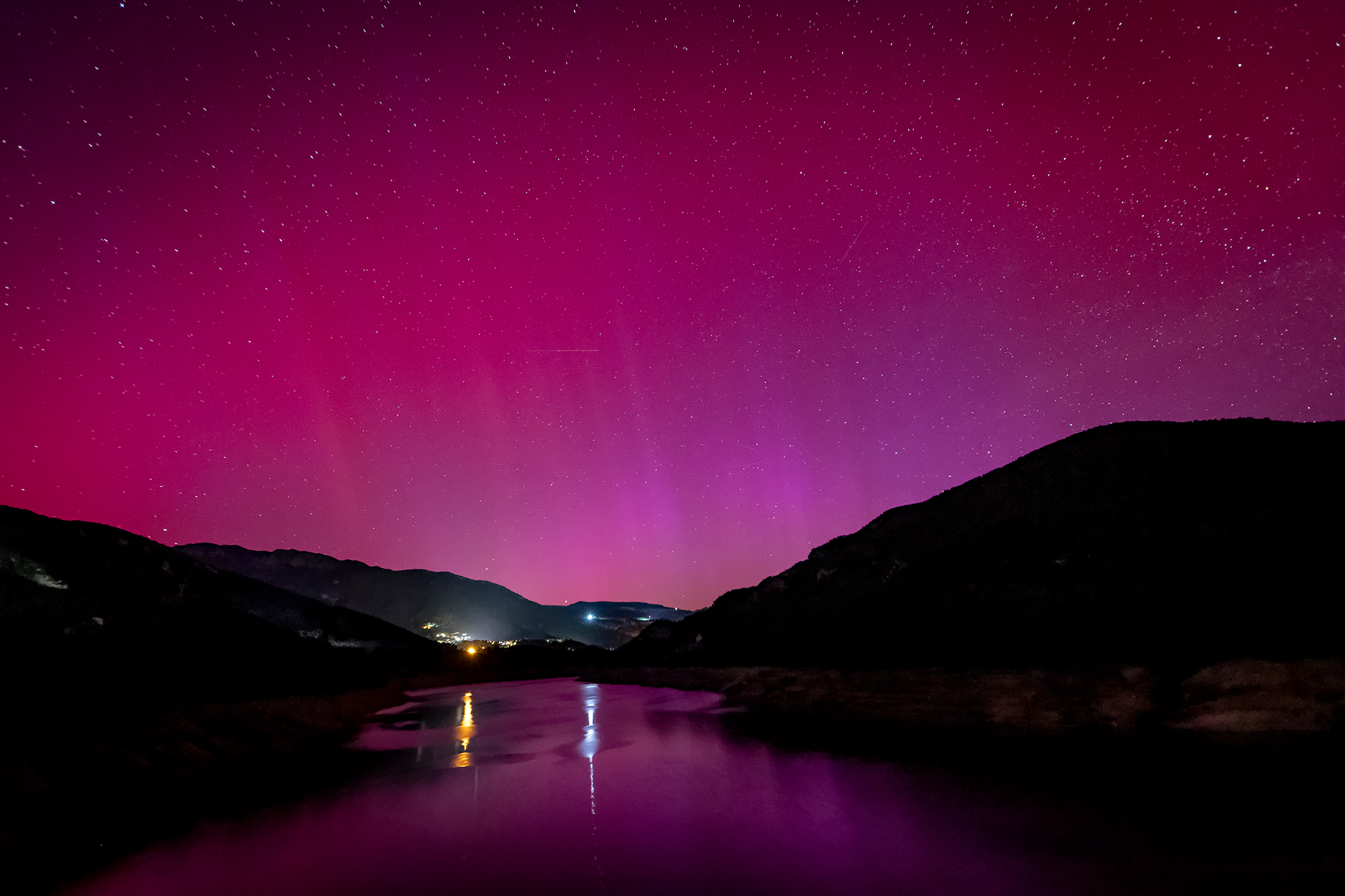 Northern Lights in Europe (photo: Getty Images)
How the northern lights affect humans
The impact of this phenomenon can be divided into technical, physical, and psychological effects.
Impact on technology and communication
The Northern Lights are the visible part of a geomagnetic storm. The brighter the aurora, the stronger the effect on technology:
-
GPS disruptions. Strong disturbances in the ionosphere can cause navigation errors of hundreds of meters.
-
Radio communication. Shortwave radio signals may disappear entirely.
-
Power grids. Geomagnetic storms can induce currents in power lines, sometimes causing blackouts (as happened in Quebec in 1989).
Scientists still debate whether humans can perceive the light itself. However, geomagnetic disturbances that accompany the aurora affect people sensitive to weather changes:
-
Headaches and blood pressure. Changes in the magnetic field can affect blood viscosity and circulation.
-
Physical effects on the bodySleep disturbances. During strong auroras, many experience insomnia or anxiety.
Psychological effects
There is a phenomenon known as auroral euphoria. People seeing the aurora for the first time often experience overwhelming excitement, bordering on catharsis. Meanwhile, Northern peoples historically believed the lights were the souls of the dead, and prolonged viewing was thought to be dangerous for the psyche, sometimes causing Arctic hysteria.
Interesting fact: Can you hear the aurora?
For a long time, reports of the aurora crackling or hissing were considered a myth. However, in 2012, Finnish scientists confirmed that during very strong solar flares, acoustic effects can occur at about 70 meters above the ground, producing faint clicks or sounds similar to static on a radio.
Earlier, we explained what an S4 radiation storm is and what threat it poses to the planet.
Sources: articles from NASA, SpaceWeather.com, and research from Aalto University on the Northern Lights.
This material is for informational purposes only and should not be used for medical diagnosis or self-treatment. Our goal is to provide readers with accurate information about symptoms, causes, and methods of detecting diseases. RBС-Ukraine is not responsible for any diagnoses that readers may make based on materials from the resource. We do not recommend self-treatment and advise consulting a doctor in case of any health concerns.