NATO prepares new strategy to hit Russian military and industrial targets far behind the front

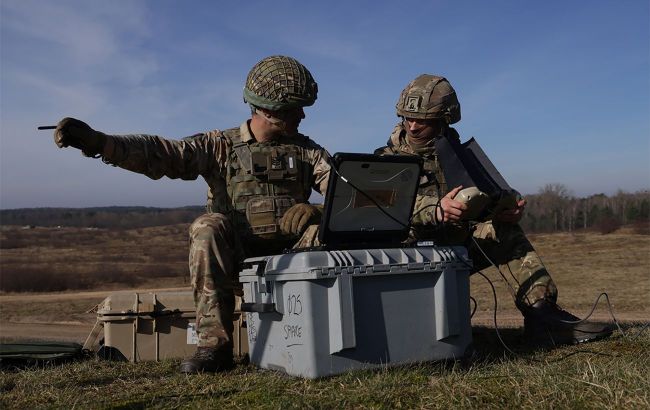 Photo: NATO is preparing for modern warfare (Getty Images)
The wars in Ukraine and the Middle East are forcing NATO to rethink its approach to countering a possible Russian attack. In particular, the Alliance is considering striking military and industrial targets deep behind enemy lines, according to The Wall Street Journal.
In June, senior military commanders and representatives of NATO member states gathered for the Alliance's first-ever Deep Strike Symposium. The event was organized by US General Alexus Grynkewich, NATO's Supreme Allied Commander Europe.
During the meeting, participants discussed new approaches to defending NATO territory in Europe, including during a war game focused on a potential confrontation with Russia.
For decades, Europe's defense strategy was built primarily around deterring an adversary and preventing its forces from advancing. However, after nearly five years of Russia's full-scale war against Ukraine, NATO military strategists have concluded that simply blocking an offensive would not be enough to prevent a Russian invasion.
To deter the Kremlin's conventional forces, the Alliance now needs a more proactive strategy to prevent an attack, known in military terminology as a "denial strategy."
It involves not only destroying troops that could cross the border but also striking military bases, supply depots and industrial facilities deep inside Russia.
Grynkewich recently provided a more detailed explanation of this approach during a speech outlining his "theory of victory." According to him, NATO's defensive forces must first stop the initial wave of an attack and then weaken the enemy's ability to continue its offensive.
If Russia continues its offensive operations, the Alliance must "disrupt the enemy's system of warfare" by striking not only advancing troops but also everything that supplies, supports or controls them. The general made these remarks during a speech in Warsaw.
The strategy does not involve moving toward the use of nuclear weapons.
Long-range precision strike capabilities are expected to play a key role in the new strategy, including both expensive, advanced systems and relatively inexpensive missiles.
The US has recently been modernizing and expanding its arsenal of precision long-range weapons. These include Tomahawk cruise missiles and ATACMS missiles, as well as systems currently under development.
European allies, which lag behind in this area, are trying to accelerate the development of their own weapons and expand their limited stocks of Storm Shadow, SCALP and Taurus cruise missiles.
The term "deep strike" has no single definition. Depending on the approach, it refers to hitting targets approximately 100 miles to several hundred miles beyond the front line.
In the event of hostilities, long-range missiles, rockets and drones would be used for this purpose. Their targets could include not only traditional military facilities, such as remote air bases and army installations, but also Russian industrial plants, critical infrastructure and resource facilities located thousands of miles from NATO borders.
This approach is often described as the need to attack the archer rather than simply defend against his arrows. Ukraine is already applying this strategy in its war against Russia.
Earlier, it was reported that the US wants to ask its NATO allies to contribute more money for weapons for Ukraine.
Meanwhile, Secretary of State Marco Rubio came up with a reason why Ukraine, as he claims, will never become a member of the Alliance.