Merz accuses Moscow of using AfD to split Germany and erode backing for Ukraine

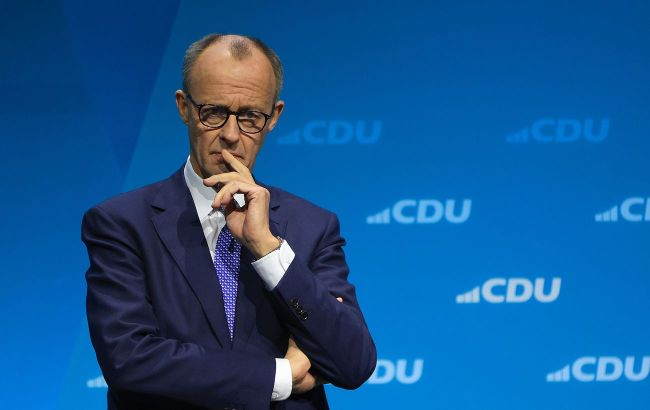 Photo: German Chancellor Friedrich Merz (Getty Images)
Official Berlin is openly linking the far-right Alternative for Germany (AfD) party to the Kremlin. According to the German authorities, Moscow is seeking to divide the country and weaken its support for Ukraine. The allegations were made by German Chancellor Friedrich Merz during a speech in Münster on October 1, according to Bloomberg.
The chancellor spoke at the International Westphalian Peace Prize ceremony, where NATO was this year's recipient. In his speech, he described Russia as a destabilizing force for Germany and a threat to democracy.
"We will not let ourselves be divided — not by hybrid attacks, not by hate stirred up on social media by Moscow-controlled bots and not by the slogans of the AfD and their Russian backers," Merz said.
According to him, the Kremlin wants Germany to reduce its support for Ukraine and stop investing in deterrence.
"The Russian government wants to unsettle us. It is looking for every opportunity to divide our society and weaken our country," the chancellor stressed.
Merz did not provide specific evidence of Moscow's support for the AfD.
Alternative for Germany advocates ending military aid to Ukraine and resuming imports of Russian gas. Some of its politicians have had contacts with pro-Russian networks. However, there is no evidence that Russia finances the party or influences its decisions.
The AfD secured its first victory in a state election this year on September 6 in Saxony-Anhalt. At the time, Merz described the result as a serious shock and warned about the consequences for Ukraine, noting that the far-right party's victory would please Putin.
On September 20, the party led the election in Mecklenburg-Vorpommern, while Merz's CDU trailed by nearly a two-to-one margin. The far right's latest success put the chancellor's position at risk, but Merz refused to resign.
The German government fears that the pro-Russian party could pass sensitive information to Moscow. As a result, Berlin plans to restrict the AfD's access to a classified contingency plan for responding to possible Russian aggression, a document that reportedly runs to around 1,000 pages.