Latvia arms advanced Hunter fighting vehicle with anti-drone technology

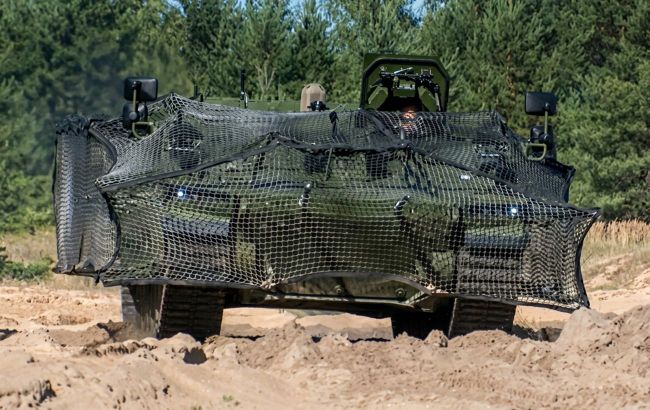 Photo: Hunter IFV with drone defense (screenshot from a video)
The Latvian Ministry of Defense held a demonstration at the Ādažu military base of anti-drone systems installed on the new Hunter infantry fighting vehicle, according to the Latvian public broadcaster LSM.
Which systems were tested
The Hunter IFV, known in Latvian as Mednieks, was equipped with systems from the Spanish company GDELS-Santa Bárbara Sistemas, the manufacturer that supplies the vehicle itself to Latvia. Both active systems, capable of independently engaging approaching drones, and passive systems, which merely detect threats and alert the crew, were tested.
At the same time, the vehicle's interaction with Latvia's own ground-based drones was tested; these drones operate not against the vehicle but alongside it, detecting and jamming the signals of enemy drones.
This approach mirrors the logic of tests previously conducted by the US Army on its own equipment: mounting equipment on an armored vehicle capable of shooting down or jamming a small drone before it drops a grenade or dives onto the armor from above.
Why this matters
The Hunter is built on the ASCOD platform, which is used by several NATO countries and has been adapted to Latvia's needs. The vehicle was modernized for contemporary mechanized infantry operations, with an emphasis on firepower, modular armor, and interoperability with allied equipment.
The name for the IFV was chosen by the soldiers of the Mechanized Infantry Brigade themselves, who will eventually operate it.
Latvia signed its first contract for 42 Hunter vehicles with GDELS-Santa Bárbara Sistemas in January 2025, and by June of that same year, it had doubled the order to 84 units.
The first IFVs are scheduled to be delivered to the National Armed Forces in October, so Thursday's demonstration was Latvia's last chance to finalize its anti-drone defense package before the vehicles enter service, rather than having to piece it together after the fact.
The threat driving this urgency is well understood in the region: Russia's war against Ukraine has shown how cheap FPV drones can disable armored vehicles worth millions of dollars, and Latvia shares a direct border with Russia along NATO's eastern flank.
Earlier, Latvia's Prime Minister acknowledged that the country had purchased specialized anti-drone systems to repel Russian attacks but had failed to secure the necessary ammunition for them. The issue of aerial threats to Latvia came to a head earlier this month when NATO fighter jets shot down a drone that had entered the country's airspace near several municipalities on the border with Belarus and Russia.