Kyiv hit amid freezing cold - Aftermath of Russia's strike on capital

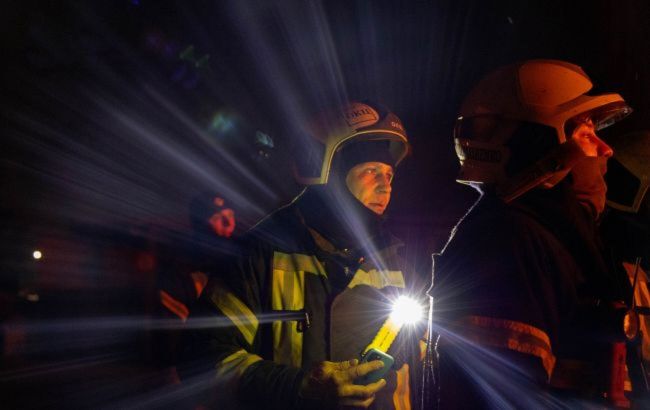 Photo: Kyiv comes under fire from Russia (facebook.com/DSNS.GOV.UA)
Russia attacked Kyiv with drones and missiles on the night of February 3. The strike on the capital coincided once again with a period of severe cold in Ukraine.
RBC-Ukraine has compiled everything known so far about the consequences of the night attack on Kyiv.
Key points:
-
Kyiv was attacked by drones and ballistic missiles.
-
A series of powerful explosions was reported across the city.
-
Medical teams were called, and damage occurred in the Dniprovskiy and Desnianskyi districts.
Weapons used
"Russia decided to launch another massive strike on Kyiv in the freezing cold," said Tymur Tkachenko, head of the city’s military administration.
The capital was first hit by several groups of attack drones. Later, ballistic missiles from the Bryansk region joined the assault, causing a series of powerful explosions across the city.
Attack aftermath
As of 01:30 AM Kyiv time, medical teams had been called to the Dniprovskiy and Desnianskyi districts, according to Mayor Vitali Klitschko.
The Kyiv city military administration reported possible damage to several residential high-rises and an educational facility in the Dniprovskiy district. In the Desnianskyi district, preliminary reports indicate damage to outbuildings.
In the Desnianskyi district, preliminary reports indicate damage to outbuildings.
Around 01:54 AM Kyiv time, another series of explosions was heard in Kyiv. Following this, the mayor reported that a non-residential building in the Darnytskyi district was hit, as well as a fire at a kindergarten in the Dniprovskiy district.
Initial damage assessment as of 03:40 AM Kyiv time
Kyiv city military administration head Timur Tkachenko reported that the consequences of the attack were recorded in the Darnytskyi, Desnianskyi, Dniprovskiy, Pecherskyi, and Shevchenkivskyi districts. Details for each area are as follows:
-
Darnytskyi district: a fire broke out at a non-residential site. Damage was recorded to a 25-story residential building and, at another location, a five-story building.
-
Desnianskyi district: a non-residential building was damaged.
-
Dniprovskiy district: debris from hostile objects was found at two locations in open areas. Damage was also recorded on the grounds of a kindergarten. At another site, a five-story residential building was damaged.
-
Pecherskyi district: a gas station was damaged, along with parked vehicles and the station building.
-
Shevchenkivskyi district: preliminary reports indicate damage to a 22-story residential building.
Casualties
According to the head of the Kyiv city military administration, one person was injured in the Dniprovskiy district and received medical assistance on site. Later, it was confirmed that the number of injured had risen to two.
Earlier on the same night, Ukraine faced a combined Russian attack, with explosions also reported in Dnipro and Kharkiv. All details have been compiled in a separate report.