Kremlin's recruitment drive falters despite record incentives

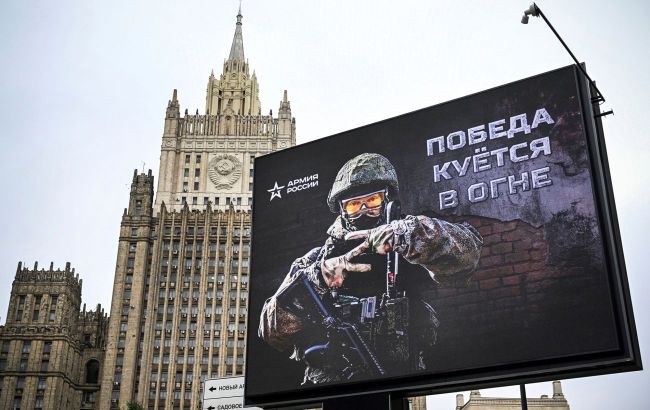 Photo: Propaganda in Moscow (Getty Images)
Russia is finding it increasingly difficult to recruit soldiers for the war in Ukraine. Despite offering multimillion-dollar payouts and promises to write off debts, fewer people are willing to fight — and the impact is beginning to be felt across the country, according to CNN.
Bonuses are no longer enough
Russia is advertising payments of up to $80,000 and debt forgiveness of up to $140,000 for signing a military contract. Billboards, social media campaigns, and promises of citizenship are all being used to attract new recruits.
But the results are the opposite of what was expected. Recruitment in the first quarter of 2026 fell by 20% compared to 2025.
Losses exceed recruitment
“There are signs that this incentive may no longer be working effectively, and that Russia has begun to lose more troops than it can recruit,” said Nigel Gould-Davies, senior fellow for Russia and Eurasia at the International Institute for Strategic Studies.
According to some Western intelligence estimates, around 500,000 Russian soldiers have been killed since the start of the war. Monthly losses are estimated at between 30,000 and 35,000 troops. Ukrainian Armed Forces Commander-in-Chief Oleksandr Syrskyi stated that Ukrainian drone operators killed or wounded more Russian personnel in May than Russia managed to recruit during the same period.
Where Russia is looking for recruits
Moscow has already sent tens of thousands of former prisoners to the front, enlisted three waves of North Korean soldiers, and recruited immigrants. It is now offering men with outstanding debts debt relief of up to $140,000 in exchange for signing military contracts.
Analysts also do not rule out a second wave of forced mobilization, potentially accompanied by restrictions on leaving the country, especially for military-age men. The first mobilization in 2022 proved highly unpopular and prompted hundreds of thousands of Russians to emigrate.
The economy is under strain
“The whole Russian economy is suffering from the most severe labor shortage in history,” Gould-Davies said.
As more men are sent to the front, civilian employers are struggling to find workers. Defense industry factories are already operating around the clock and have reached maximum production capacity. Wages are rising but continue to lag behind inflation. Food prices have increased by more than 18% compared to January 2024.
As previously reported, Ukraine's Security Service (SBU) struck an oil facility in Russia's Yaroslavl region overnight, more than 700 kilometers (435 miles) from the Ukrainian border.
In addition, facilities in Russia's Tula region were hit during a large-scale drone attack.
RBC-Ukraine also reported that Russia has reduced the activity of its sabotage and reconnaissance groups along the borders of Ukraine's Chernihiv, Sumy, and Kharkiv regions. According to representatives of Ukraine's State Border Guard Service, the enemy currently has other priorities along those border areas.