'It just went really badly': EU leaders split over budget at summit

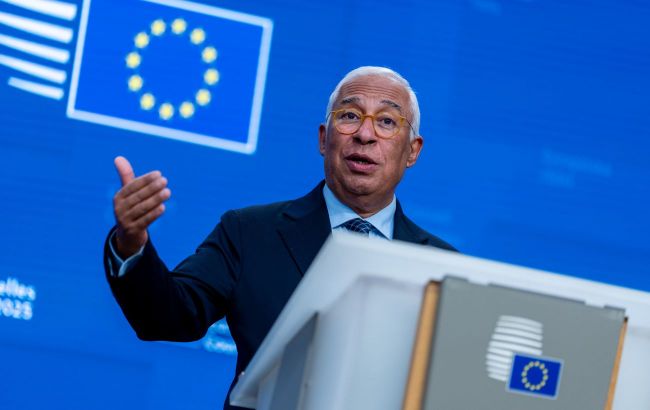 Photo: António Costa (Getty Images)
The leaders of Denmark, Sweden, Belgium, and Austria walked out of the EU summit negotiations on Thursday, November 26, in protest. The talks focused on the bloc’s 2028–2034 budget, according to Politico.
European Council President António Costa organized the extraordinary summit not to reach a final budget agreement, but to bring leaders together around one table and try to overcome the differences between countries.
EU countries have split into two camps. Some, including Spain and Italy, are demanding more “traditional” spending, such as funding for agriculture.
Others, including Germany and Sweden, are pushing to scale back ambitions and redirect funds toward defense and security.
Why the leaders walked out
Four countries — Denmark, Sweden, Belgium, and Austria — are calling for a smaller budget. They left after hours of meetings in small groups, saying the format was designed to turn countries against one another.
“It was obvious this was a move to divide us, to buy each of us off with a gift. It just went really badly. It was not a real discussion,” said a diplomat from a country advocating a smaller budget.
It was obvious that this was a move aimed at dividing us by bribing each of us with a gift. The whole thing went terribly. It was not a genuine discussion,” said a diplomat from a country advocating a smaller budget.
A diplomat from a country seeking a larger budget said Costa’s strategy of bringing small groups of leaders together “was not the best idea.” According to the diplomat, governments did not want to reveal their “red lines” to their competitors.
The decision to boycott further meetings came after Finnish Prime Minister Petteri Orpo became “very angry” over the European Council president’s approach, one EU diplomat said.
“Members of the S7 [the self-declared “Sensible Seven” of governments wanting a smaller budget] attended two breakout sessions, after which we concluded that further sessions would not bring us closer to a solution,” Austria said in a statement.
What happens next
Costa abandoned plans to resume discussions on the second day. He shortened his closing press conference with European Commission President Ursula von der Leyen to 11 minutes.
The leaders of the 27 EU member states will now try to reach an agreement at the December summit. Officials expect it could last several days and nights.
Formally, the European Union still has another year to agree on its seven-year budget. However, the bloc’s leadership wants to settle the issue before France’s April elections, where far-right leader Marine Le Pen is the favorite for the presidency.
French President Emmanuel Macron, who appeared visibly angry, warned that continuing negotiations after the new year would be “democratically impossible” because they would take place too close to the election.
Against this backdrop, one EU diplomat gave the French president the nickname “Monsieur Chantage” (“Mr. Blackmail”).
“It’s rich to come here and take hostage the negotiations because of your national election,” the diplomat said.
Earlier, 24 EU countries backed the European Commission’s initiative to provide Ukraine with an additional €45 billion loan for 2027. The European Council plans to revisit the issue in December.
German Chancellor Friedrich Merz had previously threatened to block approval of the EU’s seven-year budget unless all member states agreed to support Ukraine.