Israel criticizes Trump after reports of advancing US-Iran deal — Ynet

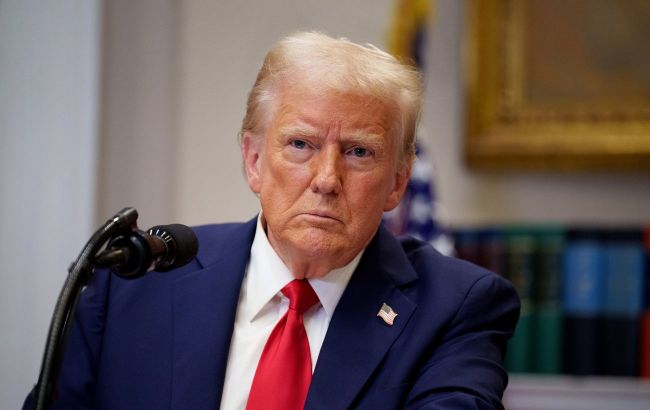 Donald Trump (photo: Getty Images)
Israeli officials believe that the future US-Iran deal harms Israel's interests and does not eliminate the threats posed by Tehran's nuclear and missile programs, according to Ynet.
One official told the publication that there is serious concern in Israel about the deal. The country's biggest worry is that Tel Aviv cannot influence the document's content.
"Its voice is not being heard. This is a bad deal. No one is satisfied with it. Everyone understands that this is bad for us and harms Israel's interests," the source said.
Another Israeli official spoke even more harshly, saying: "Trump threw us under the bus."
A third source said that in the region, this deal is seen as a result of Iranian pressure and US concessions. He also expressed doubt that the deal would be durable.
"Either way, that's the mood in our region, and therefore the deal — at least in the short term — will be seen as a failure. I remain skeptical both about the signing of the deal and about its durability," he added.
Ynet also published a more detailed article on the topic. The publication notes that the current framework agreement the parties intend to sign does not meet any of the principles Israel outlined at the beginning of the military operation.
In particular, the agreement contains no substantial provisions regarding Iran's missile program, does not require the dismantling of its regional proxy network, and does not address regime change.
There is also a nuance regarding the nuclear issue. The US talks about removing and destroying, while Iran only talks about dilution. Therefore, there are concerns that in the future — perhaps the day after Trump leaves — the regime could quickly resume the race for nuclear weapons.
Israeli officials believe that Trump wants to quickly end the war and show a significant diplomatic achievement. As a result, the US is ready to compromise on issues that Israel considers critical to its national security.
Another worrying point for Israel is the economic issue. Specifically, even if Iranian assets are unfrozen for the purchase of food and medicine, lifting restrictions on Iranian oil exports could fill the regime's coffers with billions of dollars.
Because of this, there are concerns that part of that money will be directed toward restoring military potential, developing missile systems, and strengthening proxy organizations in the region.
US-Iran deal
Washington and Tehran are discussing the signing of a framework agreement that would extend the ceasefire and give the countries about two months to finalize a final document to end the war.
Yesterday, US President Donald Trump stated that under the new agreement with Washington, Iran would completely abandon the development of nuclear weapons (although there had been talk that this issue would be resolved during the preparation of the final agreement). He also said the agreement could be signed today, June 14.
At the same time, Iran's Foreign Ministry denies that the agreement will be signed today, but does not rule out that it could happen in the very near future.