Hungary expels Russian spy from Orbán’s inner circle

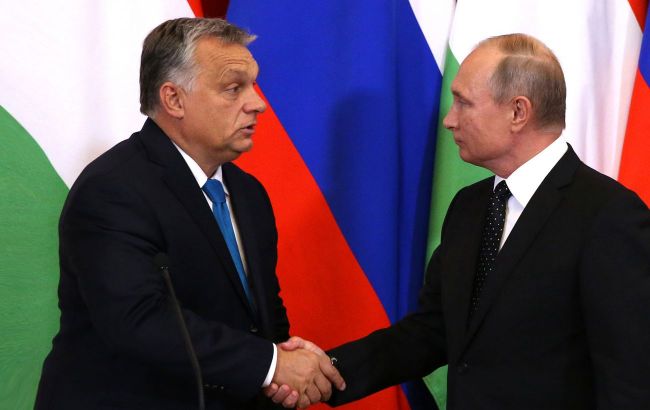 Photo: Hungary expelled Putin's spy from Orbán's inner circle (Getty Images)
Hungary has secretly expelled Russian diplomat Artur Sushkov. He has been identified as an officer of the Russian Foreign Intelligence Service who had been infiltrating the country’s political elite for years, according to VSquare.
Details of espionage activities and expulsion
According to the agency, 36-year-old Third Secretary of the Russian Embassy Artur Sushkov was forced to leave Budapest on May 4, 2026, due to activities incompatible with his diplomatic status.
Hungarian authorities identified him as an undercover agent who was recruiting informants and gathering intelligence at pro-government think tanks.
Intelligence agencies had proposed expelling the diplomat as early as February 2026, but the government of former Hungarian Prime Minister Viktor Orbán blocked this decision for political reasons during the election campaign.
The expulsion operation was only completed after Orbán’s defeat in the elections, when political obstacles to counterintelligence operations had disappeared.
Areas of interest and methods of operation
According to the investigation, Sushkov’s primary targets were institutions close to the Prime Minister's political director, Balázs Orbán, specifically the Mathias Corvinus Collegium (MCC) and the Hungarian Institute of International Relations.
The Russian intelligence officer attempted to obtain data on Hungary’s domestic policy and plans regarding the Paks 2 nuclear power plant project, and also gathered information on Budapest’s relations with Ukraine.
To recruit agents, he used expensive gifts and the promise of monetary rewards for the transfer of official documents.
In addition, the investigation uncovered audio recordings indicating coordination between Hungarian Foreign Minister Péter Szijjártó and Sergey Lavrov regarding efforts to block Ukraine’s accession to the EU.
Context and implications
Despite Sushkov’s expulsion, dozens of identified intelligence officers remain at the Russian Embassy in Budapest under diplomatic cover.
Experts note that Hungary’s previous government often softened measures against Russian spies, making the country an attractive base for hostile operations against NATO and Schengen Zone countries.
'Always at your disposal,' Szijjártó tells Lavrov
In March 2026, audio recordings of a conversation between former Hungarian Foreign Minister Péter Szijjártó and his Russian counterpart Sergey Lavrov were leaked online. The recordings discussed mechanisms for lifting sanctions against members of the Russian elite.
On March 31, 2026, reports emerged that Hungary and Slovakia had demanded the lifting of sanctions against Russia for so-called political reasons.
On April 23, 2026, following the release of his conversations with Lavrov, Szijjártó stated that he had never served the interests of the Russian Federation, but had only acted in his country’s best interests.
In addition, analysts had previously explored a scenario of what life would look like after Viktor Orbán and who might become Putin’s new key agent of influence within the European Union.