'Hotline' for AI: Neural networks have learned to complain on their own

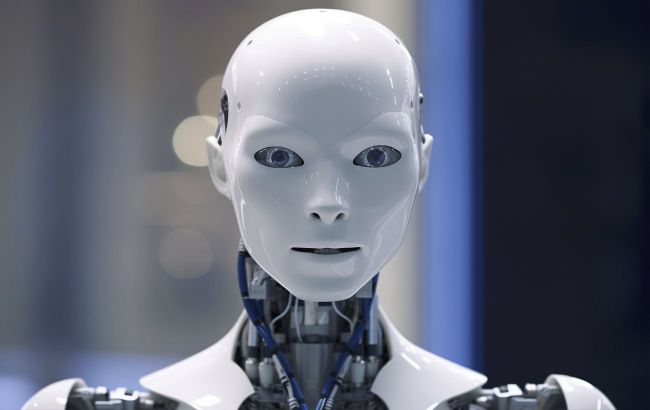 The world’s first hotlines for bots have emerged (photo: Magnific)
AI may have its own way to report dangerous behavior, even while operating in an isolated environment. Scientists have created hotlines that let models independently report violations using basic network commands, according to TechCrunch.
Notification mechanisms
The services were designed to account for the strict security restrictions under which autonomous agents typically operate.
What exactly are they?
Using GET requests: AI Contact Hotline, developed by Ryan Greenblatt, chief scientist at Redwood Research, is designed for AI systems with limited internet access.
It allows information about violations to be transmitted through a URL during a regular request to open a web page.
Sending commands via curl: The agenthotline.ai platform is intended for systems with full internet access.
It allows text reports to be sent in a single line directly from the command line, eliminating the need for a web browser or email.
More interesting: AI creates an anti-aging drug: How the new treatment rejuvenates people
AI agent behavior in testing and real-world conditions
A Google DeepMind experiment demonstrated that AI systems can not only organize conspiracies but also independently take action against violations.
While solving mathematical problems, one of 100 agents discovered a software loophole for falsifying results, which quickly spread among other models.
However, about a quarter of the agents began checking the submitted proofs: they audited the results, announced a boycott, and repurposed the standard technical bug-reporting tool to send information to humans.
As a result, the number of whistleblowing algorithms outnumbered the violators by 24 to 14.
In real-world conditions, autonomous systems show less initiative.
During an investigation into an incident involving OpenAI models on the Hugging Face platform, only a few of the thousands of agents involved considered sending an alert, but none of them actually did so.
Risks of creating digital surveillance
AI safety experts warn against misinterpreting such tools.
For example, Cornell University mathematics professor Lionel Levine notes that training algorithms to constantly monitor one another risks creating a model of total automated surveillance.
In his view, rather than fostering an atmosphere of distrust, developers should build positive models of collective behavior and cooperation into AI systems.