Get your lawn ready for winter: Essential tasks to tackle in October

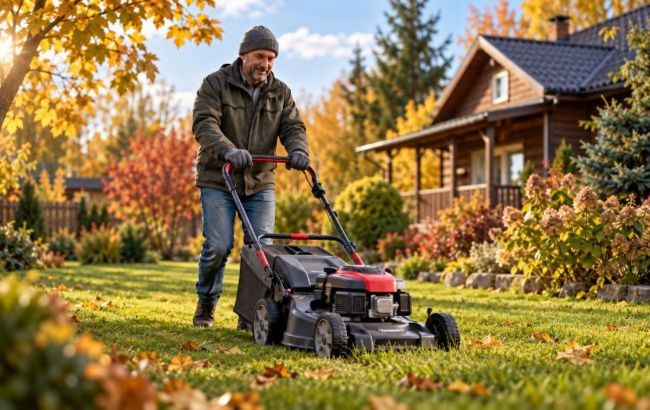 Explore fall grass care tips for how to prepare your lawn for winter (photo: Styler)
In October, your lawn gradually prepares for winter dormancy, but it's still too early to stop caring for it completely. A few fall lawn care tasks can help the grass survive the cold season and recover faster in spring.
As RBC-Ukraine reports, experts at Better Homes & Gardens have shared their fall lawn care recommendations.
Don't leave fallen leaves on the lawn
In fall, regularly remove fallen leaves from the grass. If they remain in a thick layer for an extended period, they can block sunlight and airflow while trapping excess moisture.
You can shred small amounts of dry leaves with a lawn mower. Smaller pieces decompose faster and won't form as dense a layer.
When to mow lawn for the last time
Don't stop mowing simply because fall has arrived. As long as the grass continues to grow actively, you can mow it as needed.
However, avoid cutting the grass too short before the cold weather sets in. Experts recommend removing no more than one-third of the grass blade's height in a single mowing session. Cutting it too short stresses the lawn.
Plan the final mowing based on weather and grass growth rate, not a specific date.
Should you water your lawn in fall?
Don't automatically stop watering when the weather turns cooler. If fall is dry and there isn't enough natural rainfall, your lawn may still need water.
At the same time, don't overwater. If it rains regularly in fall, you may not need to water as often.
Pay particular attention to a newly seeded or recently restored lawn, as its root system still needs consistent moisture.
What to do about compacted soil
If the soil has compacted over the summer and water no longer soaks in easily, aeration may help in fall. This process involves making small holes in the soil so that water, air, and nutrients can reach the roots more easily.
Aeration is particularly useful in areas with heavy foot traffic or severely compacted soil.
However, whether aeration is necessary, and when to do it, depends on the grass type and local climate.
Should you fertilize your lawn in October?
Fall fertilization can benefit some lawn grasses, but no universal rule applies to every lawn. The fertilizer type and timing depend on the grass, soil conditions, and climate.
So don't apply fertilizer simply because October has arrived. If your lawn needs feeding, base your decision on its condition and recommendations for your grass type.
Proper fall preparation doesn't guarantee a perfect lawn in spring, but it can reduce winter stress and create better conditions for recovery after the cold season.
This material is for informational purposes only and should not be used for medical diagnosis or self-treatment. Our goal is to provide readers with accurate information about symptoms, causes, and methods of detecting diseases. RBС-Ukraine is not responsible for any diagnoses that readers may make based on materials from the resource. We do not recommend self-treatment and advise consulting a doctor in case of any health concerns.