Germany's secret defense team finds weapons for Ukraine in just two weeks, FT reports

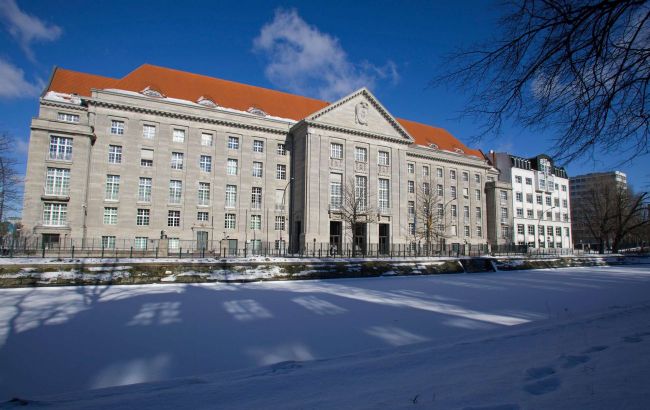 Photo: German Ministry of Defense (bmvg.de website)
In the safest wing of Germany’s Ministry of Defense, a small team called the Sonderstab Ukraine has been working for years. It is behind the annual 11.5 billion euros in military aid to Kyiv and is capable of concluding agreements to supply weapons in just two weeks, reports the Financial Times.
The unit called 'guerrilla'
The Sonderstab Ukraine emerged several months after Russia’s full-scale invasion. It began as a situation center that monitored the course of the war and informed the political leadership, and from July 2022 it was transformed into a separate structure.
It operates in a wing of Germany’s Ministry of Defense under special protection — so closed off that its head had to speak with FT journalists from an office outside the wing.
The team is so secretive that some call it a guerrilla unit, while one interlocutor close to the team describes it as “surprisingly un-German” — too atypical for the country’s large bureaucratic machine.
The head of the unit, Brigadier General Joachim Kaschke, a former Tornado fighter pilot, explains the phenomenon this way: short decision-making chains give the team flexibility and speed. This allows the unit to bypass the maze of procurement procedures and circumvent the 13,000-person agency responsible for procurement for the Bundeswehr.
A deal in two weeks: What is the secret of the speed?
The key reason for the efficiency is the legal structure: the contracts are signed not by the German government, but by Ukraine. Berlin only pays the bill, allowing the unit to bypass the maze of procurement procedures that slow down supplies for Germany’s own armed forces.
According to Kaschke, the team has extremely short decision-making chains — and this is what allows it, in some cases, to conclude agreements to purchase weapons for Ukraine in just two weeks.
According to Matthias Puschnig, a reserve officer who worked at the unit for the past three years, this is how Berlin first realized the effectiveness of the approach — after the story involving reconnaissance drones from Quantum Systems, which Ukraine connected to Starlink and used to identify targets during the fighting for the Siverskyi Donets River in the spring of 2022.
This was the first time they understood why the Ukrainians were successful — because they did things like this, Puschnig recalls.
After that, Germany began not only transferring equipment from its own stocks, but also purchasing weapons directly from Ukrainian and German manufacturers according to a list drawn up by Kyiv.
From helmets to Patriot
Germany’s aid to Ukraine was not always decisive: on the eve of the invasion, Berlin faced a wave of criticism for proposing to transfer 5,000 helmets to Kyiv. But the full-scale war and pressure from allies forced Germany to abandon its long-standing policy of not supplying weapons to conflict zones.
The Sonderstab Ukraine paid for Kyiv’s first IRIS-T air defense system manufactured by Diehl, which later, together with American Patriot systems, became a key element in protecting Ukrainian cities — and was even ordered by the Bundeswehr for its own needs.
Last year, after US military aid was reduced under President Donald Trump, Berlin became the largest weapons supplier to Kyiv, having already spent about 58 billion euros on weapons.
Over the past year, the unit’s role has been changing again. Now it is increasingly becoming a platform for exchanging experience between German and Ukrainian military personnel and the defense industry. Kaschke draws attention to Ukraine’s wealth of tactical and operational experience. Unlike Britain, Germany does not keep its own personnel in Ukraine.
Instead, the more cautious Bundeswehr invites dozens of Ukrainian military personnel to Germany so that they can share their combat experience in using drones and countering them, while also gaining access to data from Ukraine’s Delta system.
The practice under which Kyiv decides what to spend German funds on raises concerns about corruption risks. Kaschke claims that the team carefully checks all contracts, comparing prices with market rates and establishing delivery schedules.
Agreements on mutual defense cooperation, signed this year by Chancellor Friedrich Merz and President Volodymyr Zelenskyy in Berlin, opened NATO-country markets to Ukrainian companies — this caused concern among some members of the German defense sector.
Germany’s Foreign Minister Johann Wadephul publicly acknowledged this week that Berlin is “not completely satisfied” with the extent to which German companies are involved in the procurements for Ukraine that it funds.
The situation with the shortage of Patriot missiles mentioned in the Financial Times article has worsened in recent weeks. Back in mid-August, RBC-Ukraine reported that EU countries, including Germany, were approaching the limits of their own capabilities to supply interceptor missiles for Patriot systems. Berlin has already transferred systems and missiles to Kyiv, but has to take into account its own defense needs and NATO requirements.
At the beginning of September, the situation began to move forward. RBC-Ukraine reported that Germany would urgently transfer PAC-2 interceptor missiles for the Patriot system to Ukraine from Bundeswehr stocks, while Defense Minister Boris Pistorius called on other participants in the Ramstein format to review their own stocks. Germany was additionally increasing deliveries of IRIS-T and AIM-9 missiles as part of preparations for Ukraine for the winter.